
A second home needs the same care as a primary residence, but nobody is there to notice a drip, a cold room or a failed alarm. This checklist covers what to inspect, how often, and what to document, so a vacant property in British Columbia or elsewhere in Canada stays protected and your insurance position stays clear. It is organized by risk: insurer conditions first, then water, heat, fire safety, exterior, security and records, with a section for Whistler winters.
TL;DR
- Tell your insurer if the home will be empty for more than 30 days, and confirm in writing what check-in schedule your policy requires.
- In winter, arrange a check of the property every few days at most. Water and heat failures are the costliest problems in an unoccupied home.
- Test smoke and carbon monoxide alarms, service the furnace and clear eavestroughs on a fixed annual schedule.
- Keep a dated log of every visit, repair and photo. It protects you if you ever have to claim.
- Decide who holds the keys, the contractor list and the emergency authority before you leave, not after something fails.
Table of Contents
- Start with your insurance conditions
- The checklist at a glance
- Water and freeze protection
- Heat, fire and air safety
- Exterior, roof and grounds
- Security, mail and vehicles
- Whistler and mountain-town specifics
- A seasonal rhythm for the year
- Records and contacts to keep
- Our perspective: oversight beats good intentions
- When to hand the checklist to someone else
- Before you leave and when you return
- FAQ
- Sources
Start with your insurance conditions
Before any task list, read your policy. The Insurance Bureau of Canada notes that insurers often expect owners to inspect, maintain and winterize seasonal properties when they are not in use, and that coverage may be more limited when a property sits unoccupied for long periods.
Two specifics matter most:
- Notification. IBC advises that if your home will be unoccupied for more than 30 days, you should tell your insurer. In winter, most insurers require someone to visit to confirm the heating is working so pipes do not freeze.
- Check frequency. The same IBC guidance says that in winter someone should check the home every three days while you are away, and that failing to do so could result in a denied claim if a pipe bursts and causes damage.
Policies differ. IBC also explains that standard coverage for freezing and burst pipes generally applies when the pipes are in the heated part of the home and reasonable steps are taken to maintain heat, while most policies exclude frozen pipes or water damage if the home is vacant. Ask your broker which category your second home falls into, and whether a seasonal or vacant-property endorsement is needed. Coverage conditions around heat and regular checks are worth understanding in any region, as in this look at wildfire insurance for rental homes.
The checklist at a glance
Use this table as the master schedule. Details for each area follow.
| Frequency | Task | Why it matters |
|---|---|---|
| Every visit | Walk every room, check for moisture, odours, pests, open windows | Catches leaks and entry points early |
| Every visit | Confirm heat is on and thermostat reads correctly | Frozen pipes are the main winter loss |
| Every visit | Flush toilets, run taps briefly in unused bathrooms | Keeps traps filled and exposes slow leaks |
| Monthly | Test smoke and carbon monoxide alarms | Whistler Fire Rescue recommends monthly tests |
| Monthly | Inspect exterior, roof edges, gutters, walkways | Storm and snow damage compounds if ignored |
| Quarterly | Check sump pump, backup power, water heater setting | Failures show up only under load |
| Seasonally | Open or close the home, service HVAC, adjust irrigation | Matches the property to the weather ahead |
| Annually | Furnace service, chimney and fireplace cleaning, fire safety inspection | Reduces fire risk and supports insurance compliance |
| Annually | Review insurance, contacts and the home binder | Keeps the plan current |
Water and freeze protection
Water is where unoccupied homes lose the most value. Work through these in order.
- Know your shut-offs. Everyone who may visit should know where the main water valve is and how to close it. IBC lists knowing where the shut-off valves are among its basic steps.
- Insulate vulnerable pipes. Focus on pipes near outside walls, in basements and in crawl spaces. IBC also suggests sealing cracks and openings around windows and doors and fitting insulation sleeves on pipes.
- Choose heat or drain, deliberately. If you keep the home heated, Chubb Canada recommends a stable indoor temperature of at least 13°C in cold climates, with temperature monitors and alarms. If you winterize instead, that means draining water lines, shutting off the main valve and insulating pipes. Do not mix the two approaches without confirming what your insurer expects.
- Handle appliances and the water heater. A vacant-home checklist from Direct Energy includes setting the water heater to vacation mode or draining it, running faucets to empty pipes after shutting off the main, and unplugging non-critical appliances.
- Septic systems. The same checklist advises planning to drain the septic tank before winter. If your second home has a septic system, book the service before freeze-up, not after.
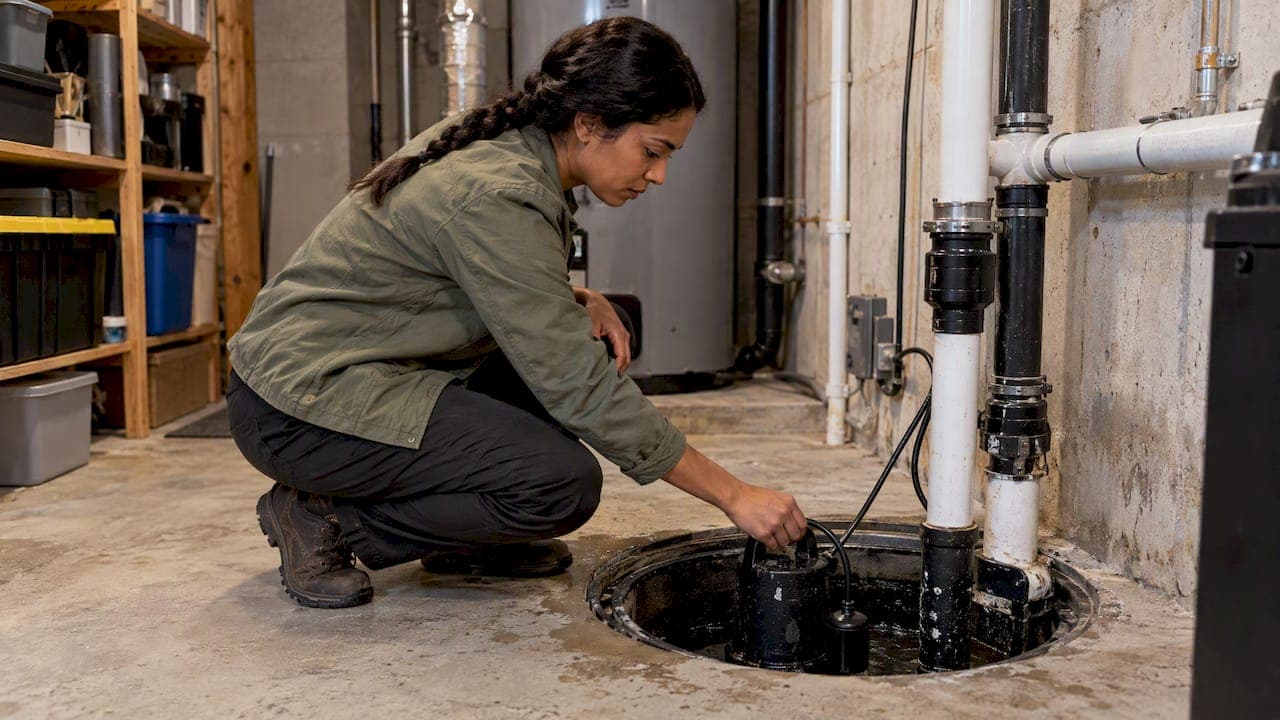
- Sump pump and backup power. TD Insurance advises testing the sump pump and backup power before you leave. A sump pump that has never been tested is not a safeguard.
- Drainage. Keep floor drains and eavestroughs clear, and direct downspouts away from the foundation. Disconnect garden hoses before winter.
The scale of the risk is real. IBC reported that a deep freeze in Western Canada in January 2024 caused over $180 million in insured damage.
For the full sequence with insurer documentation, see our guide to winterizing a vacation home.
Heat, fire and air safety
A vacant home still has ignition sources and fuel. Whistler Fire Rescue publishes guidance that applies well beyond Whistler. It recommends an annual Home Safety Inspection, with smoke alarms on every level and in sleeping areas, tested monthly and replaced within 10 years, plus accessible fire extinguishers.
For the heating season, the same municipal guidance recommends:
- having the furnace checked annually;
- inspecting and cleaning the fireplace and chimney every year;
- keeping combustibles at least three feet from furnaces and water heaters;
- storing propane tanks and other fuels outside.
Add carbon monoxide alarms to the list. IBC includes installing and regularly checking smoke and carbon monoxide alarms in its year-round risk-management actions. In a home with infrequent occupants, replace batteries on a calendar date rather than waiting for the chirp, which nobody will hear.
Note also that Whistler requires permits for plumbing, heat pump, fireplace and wood-burning appliance work. If a contractor is replacing a heating component while you are away, confirm who is applying for the permit.
Exterior, roof and grounds
Exteriors deteriorate in silence. On each monthly visit:
- Look for missing shingles, lifted flashing and stained soffits.
- Check for ice dams and icicles in winter, and clear eavestroughs and downspouts in fall and spring.
- Walk the foundation line for pooling water or new cracks.
- Trim branches that overhang the roof or lean on power lines.
- Secure outdoor furniture, barbecues and anything wind can move.
- Keep walkways and driveways clear, so the property reads as occupied and visitors can reach the door safely.
If you have gas or electric service at the exterior, mind the meters. FortisBC advises removing built-up snow from meters by hand so the regulator and shut-off valve stay uncovered, keeping a clear path to the meters, and avoiding snowplows or blowers near them.
Wildfire-affected areas
If your property sits below or downslope of a recently burned area, add a drainage review. The Government of British Columbia states that severe wildfire damages vegetation and soil, and that structures near creeks, gullies or alluvial fans downstream of it face localized flooding and landslide risk. The most common trigger is intense rainfall, and risk rises after a prolonged dry period because fire-altered soils absorb water slowly. Provincial signage guidance adds that these risks may last five years or more in severely burned areas. After heavy rain, an owner far away needs someone who can look at drainage the same day.
Security, mail and vehicles
An empty home advertises itself through full mailboxes, uncut grass and dark windows. Layer the basics:
- Lighting. Use light timers inside, and consider motion-sensor exterior lights, which Chubb recommends for vacant homes.
- Alarm and cameras. Test the security system on a schedule and confirm that monitoring contacts are current.
- Mail and packages. Arrange forwarding or a scheduled pickup. Our guide to vacation home mail forwarding in Canada compares the options.
- Vehicles. Cars left in a garage still need battery, tire and fluid attention. See what owners should expect from vehicle oversight.
- Garbage and food. Remove perishables and garbage, and pest-proof entry points. Direct Energy's checklist includes removing food before you leave.
If you use connected sensors for leaks, temperature and entry, read our insurer checks for smart home monitoring. A sensor only helps if a person is assigned to respond when it alerts.
Whistler and mountain-town specifics
People searching for a vacation home checklist for Whistler usually face three extra issues: snow, fire and parking.
Snow load and building rules. The Resort Municipality of Whistler lists a snow-load bulletin, zoning information and the BC Building Code among its building permit resources. Ask your contractor or inspector what roof snow-clearing arrangement suits your building, and who is authorized to arrange it in your absence.
Winter parking. Whistler's winter-parking guidance says neighbourhood parking is prohibited on odd-numbered street sides at any time, and on even-numbered sides from November 1 to March 31, Monday to Friday, 9 a.m. to 5 p.m., excluding holidays. Overnight parking is also prohibited in Day Lots 1 to 8 over the same period. Details are on the municipality's winter parking page. A caretaker or arriving guest who parks the wrong way risks a ticket or tow.

Ski-season readiness. If the home is also rented or hosts guests, a Whistler cleaning company suggests secure ski and board storage, boot trays or drying racks, durable entrance mats, well-vented laundry equipment, spare blankets and extra turnover time for snowy travel. These are sensible for family use too.
Fire. Wood stoves and fireplaces are common in the mountains. Apply the annual chimney and furnace schedule above without exception.
A seasonal rhythm for the year
| Season | Focus |
|---|---|
| Spring | Open-up inspection, check for freeze damage, test sump pump, clear eavestroughs, inspect roof and drainage, service HVAC |
| Summer | Irrigation and landscaping, pest checks, exterior cleaning, test backup generator, confirm smoke alarm batteries |
| Fall | Furnace service, chimney cleaning, disconnect hoses, insulate pipes, clear gutters, decide heat or drain, notify insurer if vacancy exceeds 30 days |
| Winter | Scheduled interior checks, snow clearing near meters and entries, temperature alarm tests, document each visit |
For the spring and summer sequence, our summer home opening guide walks through safety-first order. Our seasonal maintenance checklist for luxury homes goes deeper on claim-denial risks.
Records and contacts to keep
A checklist is only useful if you can prove it was done. IBC recommends documenting property loss or damage, and a good log makes that easy. Keep a single binder or shared folder with:
- Visit logs: date, time, who attended, thermostat reading, what was inspected, photos.
- Insurance file: policy number, the notification you sent about extended vacancy, and the check frequency your insurer requires.
- Shut-off map: photos of the main water valve, electrical panel and gas shut-off, with labels.
- Contacts: plumber, electrician, HVAC technician, roofer, alarm company and a neighbour. Add after-hours numbers.
- Service records: furnace, chimney, septic, sump pump, water heater, with dates and invoices.
- Authority note: who may approve emergency repairs, and up to what amount.
- Access list: who has keys or codes, and when codes were last changed.
The point of documented visits is accountability. A dated record showing a visit every three days in winter answers the question an adjuster will ask first. For property owners in Vancouver specifically, concierge records can also support vacancy declarations. See our note on the Vancouver empty homes tax.
Our perspective: oversight beats good intentions
Most second-home losses we see described are not caused by exotic events. They come from a gap: a heating failure on a Tuesday night that nobody notices until Saturday, an alarm battery that died in August, a contractor who was never told the owner was away. A checklist closes the gaps on paper. A named, accountable person closes them in practice.
We approach a second home as a system with a single point of contact. That means scheduled residence checks, documented visit logs, vendor coordination with vetted local trades, and arrival and departure preparation, so the home is warm, stocked and safe when you walk in. We think owners should ask three questions of any arrangement, whether it is a friend, a neighbour or a professional: who goes in, how often, and what do they record? If the answers are vague, the insurer's expectations are probably not being met either.
Your residence, attended to as if you never left.
— Veil
When to hand the checklist to someone else
Owners with a property in Vancouver, the Lower Mainland or Whistler often reach the same point: the list is clear, but the time is not. Veil Concierge provides property oversight for secondary residences, including scheduled residence checks, maintenance coordination, housekeeping, contractor supervision, vehicle checks, mail and package management, and arrival preparation. You can review the options on our home watch and property oversight page, or compare service levels in our membership packages.
If you arrive by road, our chauffeur services are published at $128.13 to $410 CAD per hour. Our Veil Home Setups service can prepare a property before a first stay. For a broader view of what to expect, read our practical guide to absentee homeowner services in Vancouver and our guide to an insurer-ready vacation home inspection.
Before you leave and when you return
TD Insurance suggests a short pre-departure routine: arrange check-ins by a trusted person, keep the heat on in colder months, consider shutting off the main water and draining appliances, test the sump pump and backup power, secure outdoor items, use light timers and review your insurance requirements. Run through it the day before you leave, and photograph the home's condition.
If you return to damage, the same guidance is to put safety first, stop the source if it is safe to do so, document the damage and contact your insurer. Do not begin cleanup that removes evidence before the insurer has what it needs.
FAQ
How often should someone check a second home?
In winter, IBC advises a check every few days, and says someone should visit every three days if your insurer expects it. Policies vary, so confirm the exact frequency with your broker. In milder months, a monthly visit plus after-storm checks is a reasonable baseline.
Do I have to tell my insurer if the home is empty?
IBC advises notifying your insurer if the home will be unoccupied for more than 30 days. Requirements may include having someone check the home occasionally. Get the conditions in writing, because vacancy can limit coverage for water damage.
Should I drain the pipes or keep the heat on?
Both approaches can work. Keeping heat on at a stable level, with monitors and alarms, suits homes that are visited regularly. Draining and winterizing suits homes that will sit longer. Your insurer's conditions decide which is acceptable, so ask before you commit.
What extra should I plan for a Whistler vacation home?
Focus on the annual fire safety inspection, furnace and chimney service, snow clearing, and winter parking rules. From November 1 to March 31, overnight parking is prohibited in Whistler Day Lots 1 to 8, and neighbourhood parking has weekday restrictions on even-numbered street sides.
Sources
- What to Know About Seasonal Property Insurance, IBC
- What is covered when I go on a March Break vacation?, IBC
- Winter Storm Warning: What Homeowners Should Do Now, IBC
- How to manage risks at home, IBC
- Western Canada deep freeze causes over $180 million in insured damage, IBC
- Vacant but protected: Tips for safeguarding vacant homes, Chubb Canada
- Tips to Protect Your Home on Vacation, TD Insurance
- Winterize Vacant Home Checklist, Direct Energy
- Prevent Fires at Home, Resort Municipality of Whistler
- Development and Building Permits, Resort Municipality of Whistler
- Building Permit Resources, Resort Municipality of Whistler
- Know Before You Go: Winter Parking in Whistler
- Ski Season Prep for Whistler Rentals
- Meter safety, FortisBC
- Landslide and Flooding Risks, Government of British Columbia
- Post Wildfire Risks Sign Update, Government of British Columbia
- Wildfire insurance for rental homes