
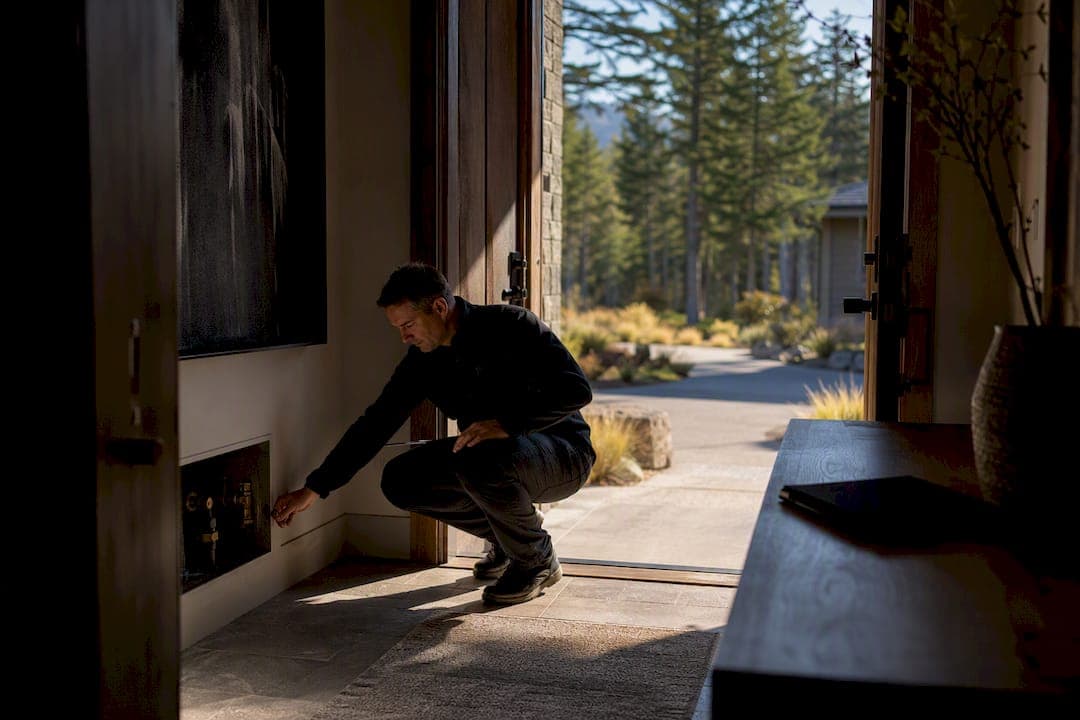
Inspect the exterior before you touch anything, restore power with the main breaker on and branch circuits off, then energize each circuit one at a time. Restore water slowly and make sure the water heater tank is full before it gets power. Only after that should you test appliances, alarms, septic and well systems. If you see downed lines, smell gas or spot visible leaks, stop and call a professional instead of proceeding.
TL;DR:
- Power should be restored sequentially, with circuits turned on one at a time after confirming all have been switched off before flipping the main breaker.
- Water systems must be filled slowly, and electric water heaters must only be powered once the tank is fully filled to avoid damage.
- Conduct an exterior walkaround to inspect for winter damage, structural issues, and hazards, photographing anything suspicious before attempting repairs.
- Schedule trades like septic pumping, well testing, and electrical inspections early, and confirm insurance and liability coverage for vacancy or guest use before leaving home.
- Using a property management service can simplify the process for owners managing high-value homes or those who cannot coordinate trades and safety checks themselves.
Table of Contents
- At-a-glance checklist for opening weekend
- Pre-arrival planning: insurance, bookings and the essential opening kit
- Exterior walkaround before entry: what to inspect and why documentation matters
- Power-up safely: what the utility sequence protects against
- Water and plumbing: slow restoration and well safety
- Septic and well systems: servicing intervals and safe use
- Interior sweep, pests and housekeeping before guests arrive
- Repairs and trades: what needs a call today versus next week
- Documentation, insurance and guest-readiness before you hand over the keys
- When a managed opening makes more sense than doing it yourself
- How Veil Concierge can manage your summer home opening for you
- Sources
- FAQ
At-a-glance checklist for opening weekend
Opening a summer home safely means working through tasks in order, not by convenience. Rushing the sequence is how avoidable damage happens.
- Call ahead: confirm utility reconnection, and if trades are booked, confirm approximate arrival windows.
- Walk the exterior before entering: roof, siding, foundation, docks, allowing sufficient time for a thorough inspection.
- Power up safely: main breaker on, branch circuits off, then energize one at a time, taking care to observe for issues.
- Restore water slowly, checking fixtures and the water heater fill level carefully during the process.
- Test smoke and carbon monoxide alarms, HVAC and appliances thoroughly before use.
- Check septic and well systems, and avoid heavy water use until confirmed (varies; may need a booked trade).
- Sweep interior spaces for pests and clean before guests arrive, allowing adequate time for preparation.
- Photograph and log conditions, receipts and serial numbers for your records as part of your documentation routine.
Some of these steps, like septic pumping or well testing, depend on a scheduled trade rather than your own timeline.
Pre-arrival planning: insurance, bookings and the essential opening kit
The calls you make before you leave home often matter more than what you do once you arrive. Contact your insurance broker first: seasonal and vacancy rules vary by policy, and some insurers require notification before extended vacancy or before guests occupy the property. Insurer cottage-opening guidance recommends scheduling utilities and service providers before you travel, since spring lead times for chimney sweeps, septic pumpers, well labs and electricians run long.
- Confirm your policy's vacancy and guest liability terms with your broker before travel.
- Book chimney sweep, septic servicing, well-water testing and electrical inspection early in the season.
- Pack bottled drinking water, a flashlight or headlamp, spare smoke and CO alarm batteries, basic tools and copies of your policy and service records.
Pro Tip: Keep utility and trade contact numbers in your phone and on paper, since cell coverage at many summer properties is unreliable.
Exterior walkaround before entry: what to inspect and why documentation matters
Before you unlock the door, walk the full perimeter. This single task surfaces most of the problems that would otherwise complicate the rest of your opening day, according to insurer cottage-opening guidance.
- Check the roof, flashing, eavestroughs and chimney for winter damage.
- Look over siding, foundation, windows and doors for cracks or gaps.
- Inspect decks, railings, docks and paths for rot, movement or ice heave.
- Scan the property for fallen trees, animal burrows or signs of water pooling near the foundation.
Photograph anything unusual before you move debris or attempt repairs. Insurance claims go smoother with dated photos of damage in its original state, and concealing suspected insured damage, even accidentally by cleaning it up first, can complicate a claim later.
Power-up safely: what the utility sequence protects against
Electrical restoration is where opening weekend goes wrong most often, and the fix is a strict order of operations, not caution alone. If you see a downed or damaged power line anywhere on the property, stay at least 10 metres away and call your utility's emergency line rather than approaching it.
- Confirm all branch circuits are switched off before touching the main breaker.
- Turn the main breaker on, then switch on branch circuits one at a time, watching and listening for flickers, burning smells or sparks.
- If a circuit trips immediately or you smell burning, shut it off and call a licensed electrician instead of resetting it yourself.
This sequence exists for a reason: Hydro One's seasonal residents guidance notes that energizing circuits one at a time makes a fault easier to locate and reduces the risk of damage to major appliances.
Water and plumbing: slow restoration and well safety
Water systems need the same patience as electrical ones. Close any winterizing drain valves, open a hot tap somewhere above the water heater tank, then slowly open the main supply valve to purge trapped air and watch for leaks at joints and fixtures as pressure builds.
- Never energize an electric water heater until the tank is completely full.
- Check every faucet, toilet and outdoor tap for slow drips or full leaks as you go.
- If you rely on a private well, bring your own drinking water until testing is complete.
Powering an empty tank ruins the heating elements almost instantly, according to Hydro One's seasonal opening checklist, which is why the fill-before-power step is non-negotiable. For well water, HealthLink BC recommends bacteriological testing at least once a year and nitrate screening at least once annually, since clear, odourless water is not a reliable sign of safety on its own.
Septic and well systems: servicing intervals and safe use
Before running multiple loads of laundry or filling the property with guests, review your septic system's maintenance records and as-constructed drawing. HealthLink BC's guidance on onsite sewage systems notes that these systems need a maintenance plan and servicing by an authorized person, typically every 2 to 5 years depending on use and system type.
- Avoid several showers, multiple laundry loads or heavy irrigation near the dispersal field on your first day back.
- Watch for surfacing effluent, unusual odours or slow drains, which signal the system needs attention now.
- If you notice any of these signs, restrict water use and call a certified septic service provider immediately.
Interior sweep, pests and housekeeping before guests arrive
Once power and water are confirmed safe, turn your attention indoors. Check cupboards, attics and other hidden spaces for droppings, nesting material or chewed wiring, since rodents and insects often move in over winter.
- Remove droppings or evidence of pests carefully, and call pest control if you find signs of an active infestation.
- Test every smoke alarm and carbon monoxide detector, replace batteries, and check that fire extinguishers are charged.
- Change HVAC filters, run the system briefly to confirm it works, and open windows to air out closed rooms.
- Photograph interior conditions and record appliance serial numbers before guests arrive.
Repairs and trades: what needs a call today versus next week
Not every problem you find needs to be fixed before dinner. Electrical faults, active water leaks, structural deck failures and sewage backups are safety and functional issues that need immediate attention, ideally from a licensed tradesperson rather than a DIY fix.
- Treat anything involving wiring, gas lines or structural failure as urgent, not optional.
- Book chimney sweeps, septic pumpers, well labs and electricians as early in the season as possible, since spring calendars fill quickly.
- Keep a short repair log with photos and receipts attached to each entry.
Pro Tip: Confirm the scope of any trade visit in writing before they arrive, so there's no ambiguity about what's included in the quoted price.
Documentation, insurance and guest-readiness before you hand over the keys
Before anyone else arrives, close the loop on paperwork and final safety checks. Call your broker to confirm vacancy periods, notification requirements and whether guest liability or dock and boat coverage need updating for the season.
- Keep policy pages, well and septic test results, trade receipts and photos in one folder, printed and digital.
- Run a final check on alarms, hot water, heating and any propane appliances before guests step inside.
- Leave a written list of emergency contacts and basic instructions for guests or caretakers.
When a managed opening makes more sense than doing it yourself
Owners who live far from the property, work against a tight arrival timeline, or manage a high-value home with docks, boats and multiple trades often find a self-managed opening harder than it looks on paper. Coordinating an electrician, a septic pumper and a well lab in the same week, while also confirming insurance terms, is a scheduling problem as much as a technical one. A single point of contact who vets vendors, times arrivals and tracks documentation removes most of that friction, which is exactly the gap property oversight services are built to close.
— Veil
How Veil Concierge can manage your summer home opening for you
If coordinating trades, insurance calls and safety checks isn't how you want to spend opening weekend, Veil Concierge's comprehensive home management service handles it as a single, accountable process instead of a list of separate phone calls.

Through Veil Home Setups, property management teams coordinate scheduled residence checks, trades supervision, housekeeping and arrival preparation to ensure properties are ready before clients or their guests walk in. Documentation, from photos to service records, is kept and shared with you rather than left scattered across contractors.
- Scheduled residence checks and arrival preparation before you travel.
- Trades coordination for electrical, septic, well and pest visits through a network of vetted providers.
- Housekeeping and documentation handled and reported back to you.
| Scope | Best for |
|---|---|
| One-off opening | Owners who want the season's first visit handled professionally |
| Ongoing property oversight | Owners who want continued checks, maintenance coordination and reporting through the season |
Reach out through our comprehensive home management page to discuss a one-off opening or ongoing oversight for your property.
Sources
For procedures specific to your own utility, insurer and region, these are the resources this guide draws from:
- Hydro One — seasonal residents overview
- Intact — cottage opening checklist
- HealthLink BC — well water testing
FAQ
What should a seasonal checklist include?
A seasonal checklist should move from exterior inspection to safe power-up, slow water restoration, then safety-device and system checks, in that order. It should also include insurance confirmation, pest and septic checks, and documentation of conditions before guests arrive, as outlined by insurer cottage-opening guidance.
How often should well water be tested?
Private well owners should test bacteriological quality at least once a year and after any change in water clarity, taste or flooding. Nitrate testing is also recommended at least annually, according to HealthLink BC.
How often does a septic system need servicing?
Septic and other onsite sewage systems typically need servicing by an authorized person every 2 to 5 years, depending on use and system conditions, per HealthLink BC guidance. Owners should also watch for surfacing effluent or odours, which signal the system needs attention sooner.
Why shouldn't I power on the water heater right away?
Turning on an electric water heater before its tank is completely full will damage the heating elements almost immediately. Always restore water first, confirm the tank is full, then restore power to the unit, as noted in Hydro One's opening checklist.
When should I hire a property management service instead of doing it myself?
A managed opening tends to make sense for owners who live far from the property, face a tight arrival timeline, or manage a high-value home with multiple systems to coordinate. Veil Concierge's comprehensive home management service can handle residence checks, trades coordination and documentation as a single, accountable process.