
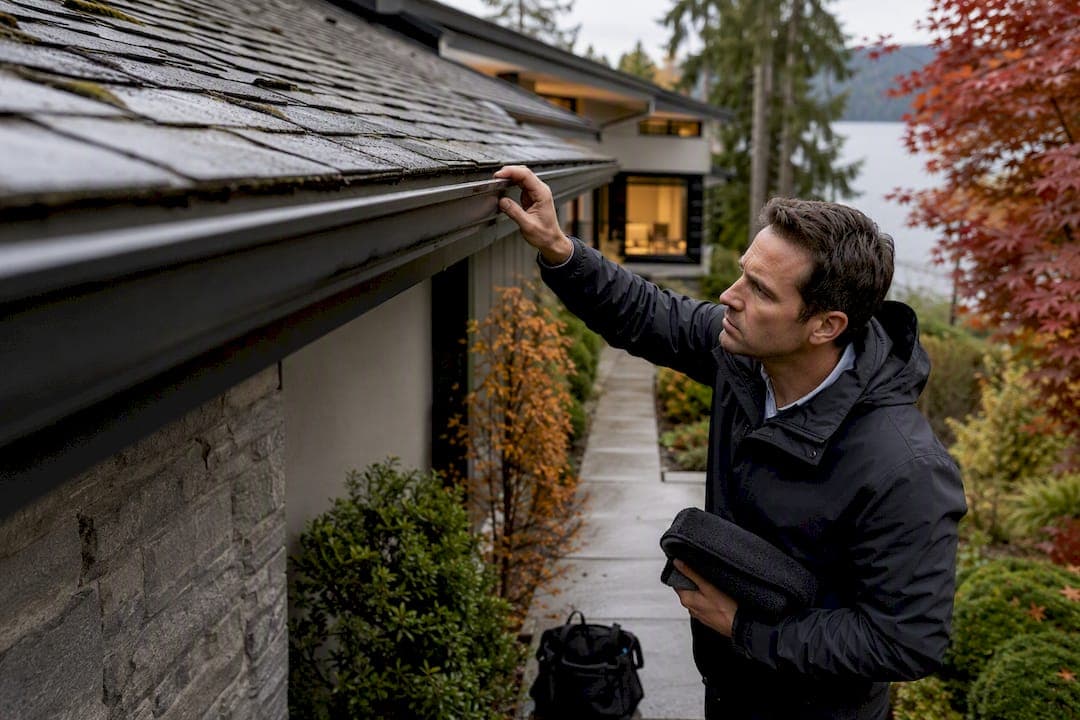
A concierge-grade seasonal maintenance checklist organises season triggers, asset-specific procedures, vendor scheduling, insurance-aligned inspection cadences, and exception reporting into one governed system. It is executed by a single point of contact, not performed piecemeal by the homeowner. The first move is appointing a contact and locking in vendor bookings before spring and fall demand peaks hit.
TL;DR:
- Vendor bookings for spring projects should be secured before peak demand starts in March or April to ensure timely maintenance for roofs, HVAC, and pools.
- Summer upkeep requires ongoing water quality logs, pest monitoring, and preparing staff and vendors in advance for potential events or short-notice visits.
- Fall tasks must be completed before the first freeze, including roof inspections, winterizing irrigation systems, and confirming insurer-mandated inspections with written approval.
- Winter procedures depend on whether the property is occupied or vacant, with strict inspection cadences and documented checks to meet insurance requirements.
- Specialty assets like wine rooms or elevators need detailed records, scheduled testing, and certified vendor reports to prevent operational gaps or costly damage.
Table of Contents
- Spring checklist: when to schedule each task
- Summer checklist: protecting assets and staying guest-ready
- Fall checklist: winter-prep priorities before contractors book solid
- Winter checklist: occupied vs. vacant strategy and emergency readiness
- Codifying specialty assets: pools, wine rooms, art, elevators, vehicles, smart systems
- Vendor coordination and the documentation workflow that ties it together
- How a concierge service can apply this checklist in practice
- Manage every season without managing it yourself
- Sources
- FAQ
Spring checklist: when to schedule each task
Spring is one of the two principal transition windows for a luxury or secondary residence, and the work confirms whatever damage winter caused before it becomes expensive. A spring preventive maintenance program is typically planned between March 1 and May 31, with confirmed vendors and documented scope before the first task begins.
Priorities for this window include:
- Roof, gutter, and drainage inspection, with remedial work scheduled immediately if issues appear.
- HVAC changeover to cooling: professional service call, filter replacement, and condenser inspection.
- Irrigation start-up and a full landscape refresh.
- Pool and spa pre-season checks, covering equipment, water chemistry, and safety features.
- Specialist bookings for any wine rooms, art environments, or elevators on the property, since these vendors book out fastest.
Local weather always introduces contingency risk, so the booking window needs slack built in rather than a hard deadline.
Pro Tip: Book roofing and HVAC vendors in the same week you confirm the pool opening. These three trades share the busiest calendars of the entire season, and waiting even ten days can push your start date back a month.
Summer checklist: protecting assets and staying guest-ready
Summer maintenance is less about damage control and more about sustained preservation and readiness. A property that might host guests, family, or short-notice visitors on a few days' warning needs a different maintenance rhythm than one sitting empty.
- Optimise HVAC settings and indoor air quality, adjusting filter cadence for pollen and wildfire particulate that spike in warmer months.
- Keep pool and spa service ongoing, with water-quality logs updated after every visit.
- Inspect decking, shading structures, and monitor for insect or pest activity before it spreads.
- Run generators under load and check vehicle storage conditions, even if nothing appears wrong.
- Coordinate staffing and delivery schedules in advance for any planned events or arrivals.
A property that looks effortless to a returning owner or an arriving guest usually isn't. It reflects a maintenance calendar that ran on schedule while nobody was watching. If an event is planned, event coordination needs its own staffing timeline layered onto the maintenance one, not bolted on at the last minute.
Fall checklist: winter-prep priorities before contractors book solid
Fall is the second principal transition window, and it carries more urgency than spring because the tasks are time-sensitive against falling temperatures. Miss the window and a contractor may simply not have capacity left before the first freeze.
- Clean eavestroughs, inspect flashing and roofing, and address any conditions that could contribute to ice damming.
- Winterize irrigation systems and outdoor faucets: drain lines, tag hose bibs, and confirm shutoff valves are accessible.
- Service heating systems, set a thermostat strategy for occupied or vacant periods, and insulate any exposed piping.
- Arrange snow and ice vendor contracts early, and verify that ramp heaters and parking systems are functional before the first snowfall.
- Document the insurer-required inspection cadence in writing and obtain confirmation from the carrier, not just a verbal assurance from an agent.
CCI's seasonal checklists list this fall to winter handoff as the most consequential in the calendar, precisely because so many of these tasks are irreversible once the ground freezes.
Pro Tip: Ask your insurer to confirm inspection requirements in an email, not a phone call. A written record is the only thing that matters if a claim is ever disputed.
Winter checklist: occupied vs. vacant strategy and emergency readiness
Winter demands a decision most owners never formalise: is the property occupied, staffed, or sitting vacant with the water left on? That choice changes almost every other task on the list.
- Decide between a water-on or fully drained approach, and document the choice against your insurer's specific requirements.
- Set minimum interior temperatures, and deploy smart sensors with remote alerts for temperature drops or moisture events.
- Test-run sump pumps, generators, and battery backups, logging the results rather than assuming they'll work when needed.
- Confirm the access plan: who holds keys, which vendors have standing authority to enter, and what happens if the driveway is impassable.
- Photograph conditions at every visit and log them against the inspection record, not just a mental note.
Insurance guidance on winterizing while away points to a common threshold: many policies require documented checks every 3 to 7 days when water remains on, with different expectations for a fully winterized cottage. Ignoring that cadence, even by a few days, is often the reason a claim gets denied rather than the damage itself.
Codifying specialty assets: pools, wine rooms, art, elevators, vehicles, smart systems
A generic checklist fails the moment it meets a wine room or an elevator, because generalist vendors applying standard procedures to specialty assets is exactly where operational readiness gaps hide. Each specialty asset needs its own entry in the property's asset register, not a line item buried inside a general maintenance form.
- Record model, serial number, standard operating procedure, assigned vendor, and full service history for every specialty asset.
- Define explicit pass and fail criteria and environmental tolerances, such as the humidity and temperature band a wine room must hold.
- Schedule specialist start-up and shutdown procedures, and log every test run alongside the vendor's own report.
- Require documented vendor certification wherever the manufacturer or insurer calls for it.
Pro Tip: A wine room that drifts two degrees outside its tolerance band for a week can cost more in spoiled inventory than a year of maintenance fees. Treat its logs with the same seriousness as the HVAC system's.
Vendor coordination and the documentation workflow that ties it together
None of the seasonal work holds together without a coordination layer that runs year round, and this is where most self-managed properties fall apart. Vendors get booked reactively, records live in scattered inboxes, and nobody owns the decision when something needs urgent attention.
The workflow that prevents that looks like this:
- Pre-book seasonal vendors and pre-negotiate emergency rates with guaranteed response times before the season starts, following the same discipline preventive maintenance programs recommend for spring.
- Standardise every checklist entry with status, findings, required action, assigned owner, deadline, and photographic evidence.
- Align inspection frequency with insurer requirements, and keep the written confirmation on file, not just referenced from memory.
- Produce an exception-based report for the owner: what passed without issue, what needs a decision, the deadline attached, and who holds spend authority.
Sourcing vendors also carries operational risk worth checking before signing, including the kind of rental agreement and liability terms that seasonal property operators routinely overlook. Underneath all of it sits a controlled asset log, the mechanism that keeps institutional knowledge intact even when the person who managed last season isn't the one managing this one.
How a concierge service can apply this checklist in practice
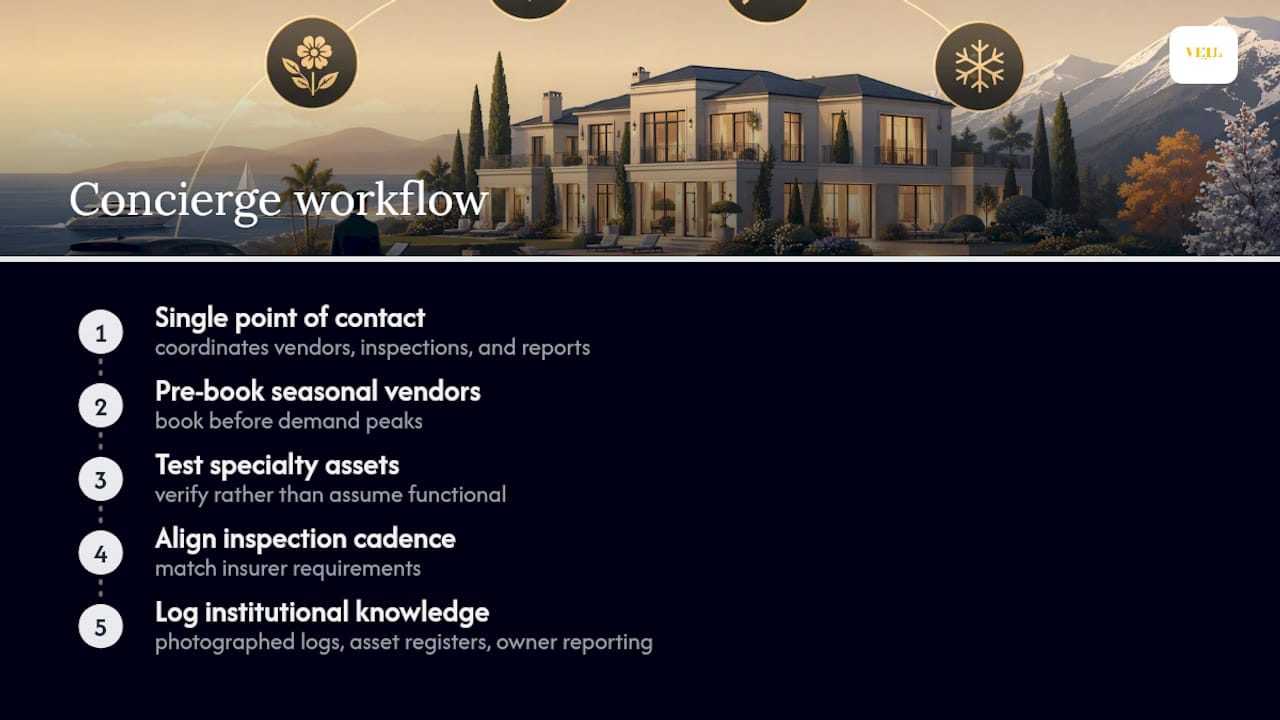
A single point of contact coordinates vendors, inspections, and owner reporting, so no seasonal task depends on one homeowner remembering to make a call. Institutional knowledge lives in asset registers and photographed inspection logs, not in any one person's memory.
Seasonal vendors get pre-booked before demand peaks, specialty assets get tested rather than assumed functional, and inspection cadence gets aligned to insurer requirements. That structure is what turns a seasonal checklist from a document into a system.
Manage every season without managing it yourself
Veil Concierge is the alternative to juggling a dozen separate vendor relationships for a residence you may only visit a few times a year. Instead of chasing down a roofer in spring, a pool technician in summer, and a snow removal contract in fall, one team runs the entire seasonal calendar and reports back only when a decision is actually needed.

That starts with comprehensive home management: scheduled residence checks, contractor supervision, and the documented visit logs that satisfy insurers who require proof, not promises. For owners who want year-round coverage built around their specific property and its specialty assets, Veil Concierge memberships bundle that oversight into one ongoing service relationship instead of a series of one-off calls. Reach out to start with a comprehensive home management assessment, and let the next season's checklist run itself.
Sources
This checklist draws on established property and facility management standards rather than general advice. The Community Associations Institute provides seasonal checklists and condo-manager resources that shaped the spring and fall task lists. The National Institute of Building Sciences informed the lifecycle and total-cost-of-ownership framing behind asset-register decisions.
- CCI resource centre — seasonal checklist
- PEMAC maintenance management resources
- The Facilities Leader’s Seasonal Playbook 2025
- How to winterize your home while away — Morison Insurance
FAQ
What Is a Seasonal Home Maintenance Checklist?
It's a structured schedule of season-specific tasks, from HVAC changeovers to irrigation shutdowns, tied to vendor bookings and documented inspections. For a luxury or secondary residence, it's typically concierge-managed rather than performed by the homeowner directly.
When Should Spring and Fall Maintenance Be Scheduled?
Spring planning should run between March 1 and May 31, per preventive maintenance program standards, with fall work starting early enough to finish before the first freeze. Both windows require vendor bookings well ahead of peak demand.
How Often Should a Vacant Property Be Inspected in Winter?
Many insurance policies require documented checks every 3 to 7 days when water is left on, with different terms for a fully winterized property. The exact cadence depends on the individual policy, so written confirmation from the insurer is essential.
Does Veil Concierge Manage Seasonal Maintenance for Secondary Residences?
Yes. Veil Concierge coordinates scheduled residence checks, contractor supervision, and comprehensive home management for luxury and secondary properties, acting as the single point of contact for vendors and owner reporting.
What Belongs in an Asset Register for Specialty Features?
Each specialty asset, such as a wine room, elevator, or generator, needs its own entry with model, serial number, standard operating procedure, assigned vendor, and service history. This prevents generalist vendors from applying the wrong procedure to a sensitive system.