
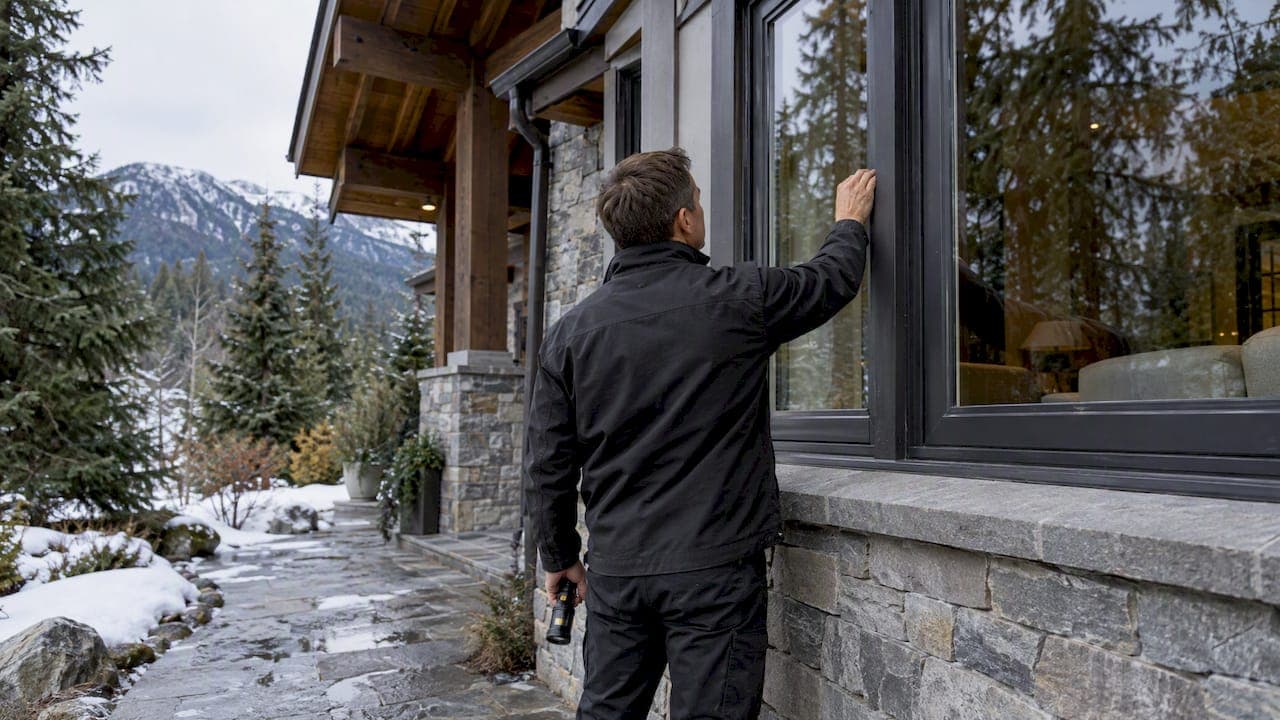
A vacation home inspection is a scheduled, in-person property check performed by a concierge or home-watch professional that documents the home's condition, addresses urgent issues, and prepares the property for arrival. It's a visual, routine check, not a pre-purchase inspection. The deliverable is a documented visit with photos, a clear escalation path for problems and a property that's ready the moment you walk in.
TL;DR:
- Vacation home inspections should be scheduled based on your insurance policy, often requiring checks every three days during winter for extended absences.
- Reports must include timestamped photos, detailed checklists, and signed confirmations to meet insurer documentation requirements and validate visits.
- Choosing a provider involves verifying liability insurance, background checks, and requesting sample reports to ensure quality and compliance with industry standards.
- Pre-departure and post-arrival checklists focus on securing entrances, systems functioning, and property readiness, especially considering seasonal priorities.
- Proper record keeping of repairs, invoices, and contractor credentials prevents claim denials by demonstrating routine maintenance and issue resolution.
- ✓Scheduled residence checks
- ✓Maintenance coordination
- ✓Contractor supervision
- ✓Arrival and departure preparation
Table of Contents
- What a visit actually covers
- How often should a vacation home be inspected
- Choosing and contracting a vacation home inspection provider
- Departure and arrival checklists your concierge should run
- Record keeping that protects your insurance claims
- Running inspections for luxury properties at a distance
- How Veil Concierge supports second-home owners
- FAQ
- Sources
What a visit actually covers
A proper visit has a defined scope, so you and your insurer know exactly what gets checked every time. Inside the home, the attendant confirms water hasn't pooled anywhere, tests HVAC operation, checks plumbing fixtures for leaks, runs a quick look at major appliances and watches for early signs of mould or pest activity. Outside, the checklist covers the roof line, gutters, drainage paths, window seals, storm damage and walkways that could pose a hazard.
A visit also covers presence and appearance: collecting mail and packages, rotating lights on timers, and keeping the lawn or snow clear so the property doesn't look obviously vacant.
- Interior: water intrusion, HVAC function, plumbing leaks, appliance checks, mould and pest signs
- Exterior: roof, gutters, drainage, window seals, storm damage, walkways
- Presence: mail and package pickup, timed lighting, lawn or snow maintenance
What it isn't matters just as much. A home-watch visit isn't a security patrol and isn't a substitute for a monitored alarm system, and it isn't a pre-purchase inspection meant to flag structural defects. Any repair beyond a minor fix should only happen with your explicit authorization first.
How often should a vacation home be inspected
Visit frequency isn't a matter of preference. It's dictated, in large part, by your insurance policy. Owners planning an extended absence, commonly more than 30 days, should contact their insurance representative before they leave, and during winter many policies require checks as often as every three days, depending on the specific wording of the coverage, according to Insurance Bureau of Canada guidance.
Translating that policy language into an actual schedule takes a few steps:
- Read your policy's vacancy and seasonal clauses and note any specific interval it requires.
- Confirm the requirement directly with your broker rather than relying on a neighbour's informal routine.
- Set a calendar of visits that meets or exceeds that interval, with winter checks scheduled more tightly than summer ones.
- Require dated, photographed reports from whoever performs the checks, so compliance is provable, not assumed.
Extended absences typically trigger insurer notification requirements, and failing to document the visits that satisfy them can matter just as much as missing the visits themselves. A concierge's role here is to operationalize what the insurer requires and preserve the evidence, not to interpret your coverage.
Choosing and contracting a vacation home inspection provider
Before you hand over keys, vet the provider the same way you'd vet any trusted party with access to your property. Confirm background checks have been run, ask for proof of liability insurance and bonding, and favour providers accredited through the Canadian Home Watch Group, which sets standards for vetting, insurance and reporting across the home-watch industry.
Your written agreement should spell out:
- Exact visit frequency and what each visit covers
- Duties performed versus duties that require your separate authorization
- A clear escalation path for urgent issues, including who gets called and when
- Rules for supervising outside contractors on your property
- Pricing, including any extras, and a sample report format
Pro Tip: Ask for a sample visit report before you sign anything. If it doesn't include timestamped photos and a signed summary, keep looking.
A provider who can't produce proof of insurance and a sample report on request isn't ready to hold your keys.
Departure and arrival checklists your concierge should run
A disciplined handoff at both ends of your absence prevents most of the problems a vacation home develops unsupervised.
- Before you leave: notify your insurer if your policy requires it, secure all doors and windows, decide whether to maintain heat or fully winterize, shut off and drain water lines where appropriate, and pause mail and deliveries.
- While you're away: stick to the visit schedule set by your policy, with photographed, timestamped reports for every check.
- Before you arrive: confirm heating or cooling systems are running properly, verify cleaning has been completed and supplies restocked, and oversee any contractors finishing work ahead of your arrival.
- On arrival: receive a signed sign-off report with photos showing the home is ready, systems are functioning and nothing was missed.
Seasonality changes the emphasis. Winter departures lean on winterization and storm readiness; summer departures shift focus toward lawn care and pest prevention, both of which Wawanesa's seasonal property guidance treats as standard departure steps, alongside notifying your broker and considering a vacancy permit.
Record keeping that protects your insurance claims
A visit that finds a problem is only useful if that problem gets tracked to resolution. The closed loop looks like this: an issue is discovered, you authorize a response, a contractor is assigned, the work is completed, and a follow-up visit verifies the fix held.
- Photographs and timestamps for every discovery and every repair
- Invoices and contractor credentials kept on file
- Signed completion notes tied to each authorized repair
- A verification visit logged after the work is done
This matters beyond tidiness. Insurers commonly deny claims traced to long-term maintenance failures, and keeping a clear record of routine upkeep is one of the more effective ways to avoid that outcome, according to commentary from the Insurance Institute and Canadian Underwriter.
Running inspections for luxury properties at a distance
Property oversight work sits on top of this same structure: scheduled checks, documented visits and a maintenance loop that closes. The service translates insurer wording into a checklist built around your specific policy, then keeps an audit trail of every visit, photo and contractor sign-off so nothing is left to memory.

For owners managing a second home from a distance, the value isn't the checklist itself. It's having one trusted contact accountable for running it consistently, visit after visit, season after season.
How Veil Concierge supports second-home owners
Getting started is straightforward. Our Comprehensive Home Management service builds a visit schedule around your insurance requirements and property needs, while Veil Home Setups handles the arrival-ready details, from systems checks to stocked supplies, before you land.

Onboarding is simple: you provide access, outline any authorization limits for repairs, and we agree on a reporting cadence that matches your policy's requirements. From there, every visit generates a signed report with photos so you always know exactly what's happening at your property.
- Scheduled checks and maintenance coordination through comprehensive home management
- Arrival-ready preparation through Veil Home Setups
- Ongoing oversight bundled into our membership packages for owners who want year-round coverage
If you're weighing options for a second home you can't check on yourself, reach out through Veil Concierge to discuss a schedule built around your property and your policy.
FAQ
What is a vacation home inspection?
It's a scheduled, in-person visual check of an unoccupied vacation or second home, covering systems, security and general condition. It's not a pre-purchase inspection and isn't a substitute for a monitored security system.
How often does a vacation home need to be checked?
Frequency depends on your insurance policy's vacancy wording. Many policies require more frequent checks in winter, sometimes every three days, and notification to your insurer once an absence exceeds a set threshold, commonly 30 days, according to Insurance Bureau of Canada guidance.
What should a visit report include?
A proper report includes timestamped photos, a summary of what was checked, and a signed confirmation from whoever attended the property. This documentation is what demonstrates to an insurer that required checks actually occurred.
How much does a vacation home inspection service cost?
Pricing varies by provider and scope, so it's worth asking for a written quote tied to your specific visit frequency and duties. Our Comprehensive Home Management and membership packages include property oversight pricing available on request.
What should I look for when hiring a provider?
Confirm the provider carries liability insurance and bonding, has run background checks on staff, and can supply a sample visit report before you sign anything. Accreditation through a recognized body such as the Canadian Home Watch Group is a useful signal of professionalism in an otherwise unregulated field.
Sources
For policy specifics, consult your insurer or broker directly. The Canadian Home Watch Group and the sources below outline accreditation standards, seasonal guidance and claims commentary relevant to absentee ownership, alongside insurance-focused reading from easy-insured.ca on disclosure and vacancy coverage.
- Canadian Home Watch Group | About
- Home away from home: Protecting your seasonal property - Wawanesa Canada