
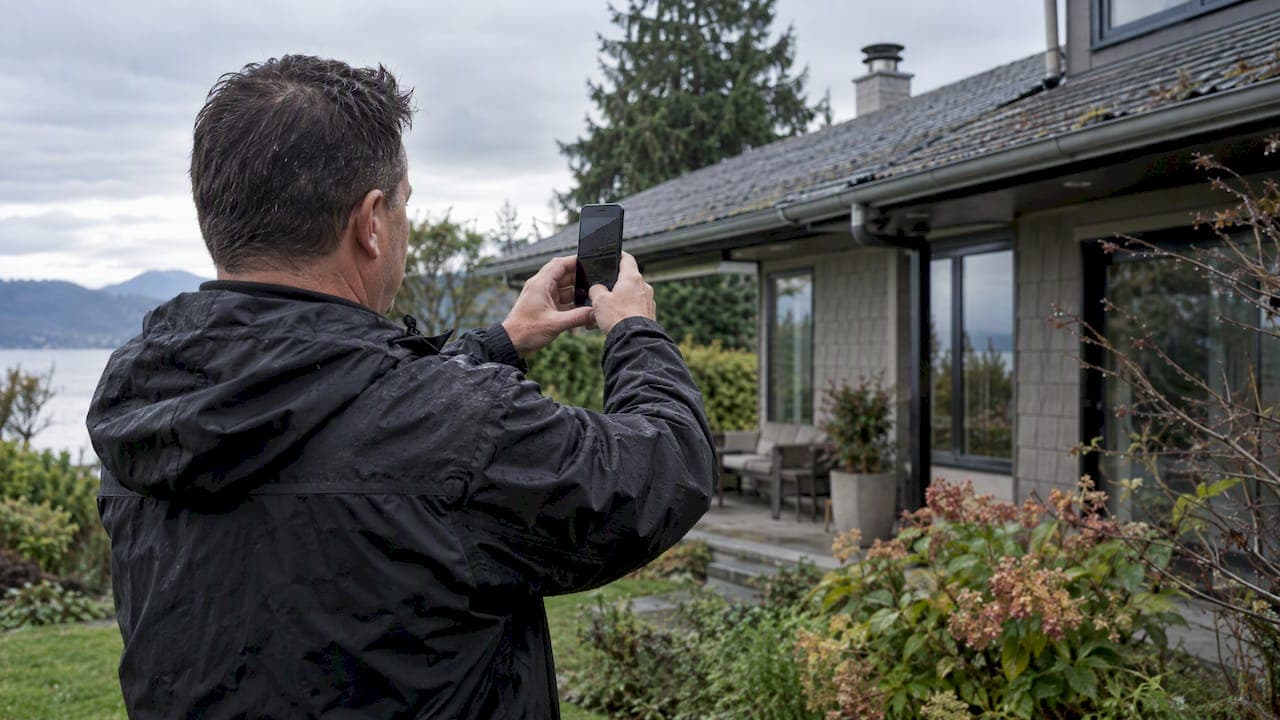
Assemble or audit a 72-hour emergency kit, pack a grab-and-go bag, and secure medications and key documents before conditions turn. PreparedBC and Environment and Climate Change Canada both recommend acting on official alerts rather than waiting for a storm to arrive. From experience coordinating multiple homes, the households that fare best are the ones with a kit already built and a plan already written down.
TL;DR:
- Store 4 litres of water per person per day, enough for at least 72 hours and up to two weeks when sheltering in place.
- Treat official warnings as the cue to act; cold weather calls for backup heat and carbon monoxide alarms, while floods require elevated valuables.
- During the 48 to 72 hours before a storm, clear drains, secure loose items, label utility shutoffs, and use shutters instead of window tape.
- Keep the vehicle tank at least half full during storm forecasts, and leave an evacuation bag with medication, documents, water, and chargers by the door.
- Audit supplies at seasonal clock changes, replace expired food and medication, and test flashlights, radios, and carbon monoxide detectors twice a year.
Table of Contents
- What goes in a complete home emergency supplies kit
- How storm-specific risks change what you pack
- Protecting the property in the 48 to 72 hours before a storm
- Vehicle and grab-and-go bag essentials for fast evacuation
- Keeping your kit current through the seasons
- What property owners can delegate and what to keep in-house
- How Veil Concierge supports storm-ready homes
- FAQ
- Sources
What goes in a complete home emergency supplies kit
A solid kit covers the basics long enough to get your household through the worst of a storm and its aftermath. PreparedBC recommends 4 litres of water per person per day, enough for 72 hours at minimum and up to two weeks if you expect to shelter in place. Store it in food-grade containers, out of direct sunlight, and rotate it twice a year.
Beyond water, a working kit needs:
- Non-perishable food for each household member, plus any baby formula, pet food or medical nutrition your family depends on
- Flashlights and battery banks, a hand-crank or battery radio, and extra batteries in a separate bag so they don't corrode near devices
- A first aid kit and at least a week's extra supply of any regular prescription medications
- Hygiene and sanitation items, including garbage bags, moist towelettes and a portable toilet option for extended outages
- Basic tools: a multi-tool, plastic sheeting, rope and work gloves, kept together in one labelled bin
- Waterproof copies of identification, insurance policies and a small amount of cash, since cards and machines may not work during an outage
A generator can cover essential power needs, but it should always run outdoors, well away from windows and doors, to avoid carbon monoxide buildup.
Keep the whole kit in clearly labelled, waterproof bins near an exit, not buried in a basement or crawlspace you might not be able to reach quickly.

Pro Tip: Store a printed inventory list taped inside the bin lid so anyone in the household, including a house sitter or property manager, can confirm what's there without unpacking everything.
How storm-specific risks change what you pack
A winter storm and a windstorm call for different supplies, even though the base kit stays the same. For cold weather, Government of Canada guidance recommends weatherizing doors and windows, servicing your heating system ahead of the season and identifying a secondary, non-electric heat source. Homes with any fuel-burning appliance need a working carbon monoxide alarm.
For high-wind, flood or hurricane conditions, the priority shifts to keeping water out and valuables up:
- Thermal layers, hand and foot warmers, a snow shovel and ice traction aids for footwear
- Backup heat planning, since losing power often means losing furnace function too
- Waterproof storage containers and elevated shelving for anything that can't get wet
- Sandbags at known entry points and loose outdoor items brought inside or tied down
Watch the colour-coded alert levels and Weather Impact Guides issued by Environment and Climate Change Canada and use them as your trigger. A warning means start securing the property now, not once conditions have already deteriorated.
Protecting the property in the 48 to 72 hours before a storm
Work through these tasks in order as a storm approaches:
- Clear gutters and downspouts, and confirm low spots and drains can carry water away from the foundation instead of toward it.
- Inspect the roof, soffits and siding for loose or damaged sections, and bring in or tie down anything that could become airborne.
- Close and lock all windows and doors, and confirm storm shutters or reinforced coverings are in place where needed.
- Locate and label utility shut-off points, including gas, water and electrical panels, and leave simple written instructions near each.
- Move valuables, electronics and important documents off low shelves and into waterproof containers on higher ground.
- If you plan to run a generator, fuel it ahead of time and confirm it will run outdoors only, at a safe distance from the home.
Taping windows is a common instinct, but it does nothing to strengthen the glass and can increase injury risk from larger shards. Approved storm shutters or reinforced coverings are the safer choice. Never attempt to restore gas service yourself if a meter has been shut off; that work belongs to a licensed gas contractor.
Pro Tip: Photograph the exterior of the home, including the roofline and yard, before the storm arrives. It gives you a clear before-and-after record if you need to file an insurance claim.
Vehicle and grab-and-go bag essentials for fast evacuation
Keep your vehicle's tank at least half full once a storm is forecast, since PreparedBC's winter guide warns that stations can lose power along with everyone else. A vehicle kit should include jumper cables, a shovel, an ice scraper and sand or kitty litter for traction.
Your grab-and-go bag needs to cover at least 24 hours away from home:
- Medications, copies of ID and insurance documents, and a small amount of cash
- Phone chargers, a portable battery bank, water and shelf-stable snacks
- Pet food, leashes and any mobility aids a family member relies on daily
Agree on an out-of-area contact and a meeting place before you need one, and keep the bag by the door so it's ready the moment you have to leave. If you encounter a downed power line, stay at least 10 metres away and call 9-1-1.
Keeping your kit current through the seasons
A kit built once and forgotten loses value fast. Government of Canada guidance suggests auditing supplies at seasonal transitions, such as the twice-yearly clock changes, when it's easy to remember.
- Check expiry dates on food, water and medications, and replace anything that's lapsed.
- Test flashlights, radios and carbon monoxide detectors, and log the date so you know when they were last checked.
- Photograph valuables and store both digital and waterproof physical copies of insurance paperwork.
A twice-yearly audit tied to clock changes keeps a kit from quietly going stale between storms, according to federal emergency kit guidance.
What property owners can delegate and what to keep in-house
Owners of a second home or a property they visit infrequently face a harder version of this problem: a kit does no good sitting empty in a house nobody checks. Scheduled residence checks, contractor coordination and arrival preparation close that gap. What should stay in your hands is the underlying plan: your out-of-area contact, your insurance details and your own household's needs. What you can hand off is the recurring work: confirming keys, vendor lists and document storage are current, and that a kit on-site has actually been audited recently.
— Veil
How Veil Concierge supports storm-ready homes
For households managing a primary residence alongside a secondary or vacation property, storm prep often competes with everything else on the calendar. A property oversight service can cover scheduled residence checks, maintenance coordination and arrival and departure preparation, so a kit doesn't sit forgotten in a property you only visit a few times a year.

Through a vetted network of local trades and service providers, a concierge can coordinate the parts of storm readiness that are easiest to put off:
- Scheduled checks before and after severe weather, with documented visit logs you can share with an insurer
- Contractor coordination for gutter clearing, roof inspection and storm shutter installation
- Home setups that include stocking and organizing emergency supplies so they're ready when needed
If you'd rather have one trusted contact handle the details, our Veil Home Setups service covers the groundwork, and our property oversight page outlines ongoing care for homes you can't always be at in person. For storm damage that needs professional cleanup once conditions clear, Nationwide Maintenance outlines what to prioritize first. Reach out to arrange a residence check before the next system moves in.
FAQ
What should I include in my storm preparation checklist?
A complete checklist covers water at 4 litres per person per day, non-perishable food, medications, first aid supplies, flashlights, a battery-powered or hand-crank radio, and waterproof copies of key documents. It should also include a grab-and-go bag covering at least 24 hours and a written household plan that names an out-of-area contact.
What are the 5 P's of disaster preparedness?
Definitions vary across organizations, but a common version covers people, prescriptions, papers, personal needs and priceless items such as photographs. The goal behind the framework is the same one PreparedBC emphasizes: know your hazards, make a plan and gather supplies ahead of time.
What should I stock up on before a snow storm?
Focus on warmth and backup heat: thermal layers, hand and foot warmers, a snow shovel, ice traction aids and a non-electric heat source, since federal guidance recommends weatherizing your home and installing carbon monoxide alarms wherever fuel-burning appliances are present. Keep your vehicle's tank at least half full in case roads or stations lose power.
What should I buy for storm prep?
Prioritize water, non-perishable food, a first aid kit, flashlights, battery banks, a radio and a week's extra supply of any prescription medications. Round it out with waterproof document storage, a small cash reserve and supplies specific to your household, including pet food or mobility aids.
How often should I check or update my emergency kit?
Audit your kit at least twice a year, ideally at the seasonal clock changes, and again after any storm that required you to use it. Replace expired food and medication, test batteries and detectors, and confirm your insurance and identification copies are current.
Sources
- Build an emergency kit and grab-and-go bag — Province of British Columbia
- Be prepared for winter — Environment and Climate Change Canada