
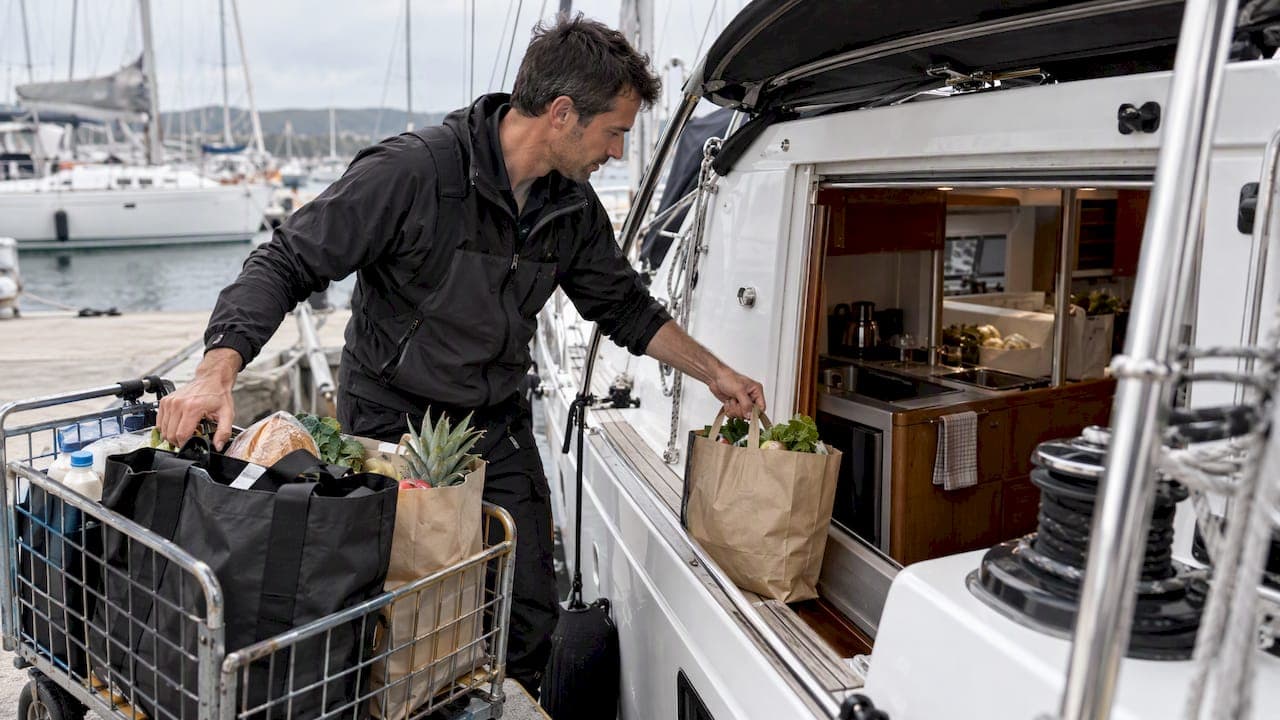
Start from your crew count, route and trip length, then build a day-by-day meal plan from it. Secure drinking water first, and set aside at least one no-cook reserve day. Match perishables to the refrigeration you actually have, and stow heavy items low and secure. This yacht provisioning checklist follows that order, so you can copy it straight into a shopping list.
TL;DR:
- Plan at least 3.5 L of water per person daily for drinking, cooking, and teeth cleaning, then add an emergency reserve and adjust for conditions.
- Check freezer temperatures: food may last only days from freezing to 6°C below zero, versus 15 to 20 days from 6°C to 12°C below zero.
- Keep bottled water separate from the main supply, and stock canned meals the crew will eat if the freezer, watermaker, or stove fails.
- Verify shops, opening hours, and berth access before relying on route stops; border rules vary, so check each destination’s current food and alcohol restrictions.
Table of Contents
- 1. What belongs on a yacht provisioning list?
- 2. How do you plan meals and menus for a charter?
- 3. How much water and drink do you need?
- 4. What keeps in the fridge and freezer?
- 5. How should you pack, label and handle waste aboard?
- 6. What backup supplies should you carry?
- 7. How do you plan resupply stops along the route?
- 8. How do you provision alcohol and drinks?
- 9. What do customs and import rules mean for provisioning?
- 10. Which non-food essentials should you provision?
- 11. Veil's practical perspective on provisioning
- 12. How we can handle provisioning for you
- FAQ
- Sources
1. What belongs on a yacht provisioning list?
A good list starts with people, days and equipment, not with the grocery aisle. Yachting World's provisioning guide suggests building the list from every planned breakfast, lunch, dinner, snack and hot drink, then adding a shelf-stable reserve day. Allergies, dietary restrictions, weather, cooking equipment, refrigeration, water capacity and resupply points all feed into the total.
Work through these categories in order:
- Water and drinks: bottled or containerised water, juice, tea, coffee, mixers
- Breakfast basics: oats, cereal, long-life milk, bread, eggs, spreads
- Dry staples: pasta, rice, couscous, flour, tinned tomatoes, stock cubes
- Proteins: fresh and frozen cuts, plus tinned fish, beans and cured meats
- Fruit and vegetables: hardy produce first, such as onions, carrots, cabbage, apples and citrus
- Condiments and spices: oil, vinegar, salt, pepper, hot sauce, a short spice kit
- Snacks: nuts, bars, crackers, dried fruit for watches and long sails
- Baking and bread: tortillas, wraps and flatbreads keep better than loaves
- Galley consumables: foil, wraps, zip bags, paper towels, bin liners
- Cleaning and toiletries: see the dedicated section below
Scale quantities by multiplying a per-person daily portion by crew and days, then add a delay allowance of a day or two. Choose formats that stow well: resealable pouches, square tubs and multipacks with the outer cardboard removed.
Pro Tip: Write the list in the order the shop is laid out, then tick items off as they reach the boat, not as they reach the trolley.
2. How do you plan meals and menus for a charter?
Plan meals for how the trip will feel, not for a home kitchen. Yachting World recommends easy-to-digest food for the first days, breakfasts needing little cooking, no-cook lunches such as wraps or salads, one-pot dinners such as pasta, curry, rice dishes or soup, and at least one reserve meal that needs no refrigeration. Portion prepared meals for a watch or a group of one to three people rather than freezing one crew-sized block.
Charter template
- Pasta with jarred sauce and a green salad, plain crackers on hand for queasy stomachs
- Wraps with chicken or hummus, then a one-pot chilli
- Eggs and toast, cheese and cold-cut lunch, coconut curry with rice
- Oats with dried fruit, tuna and bean salad, grilled fish if you are at anchor
- Pancakes, leftover curry in wraps, sausage and vegetable stew
- Yoghurt and granola, soup with bread, risotto
- Reserve meal: tinned proteins, crackers, fruit, nut bars
Short-trip template
- Pasta, salad, fruit
- Wraps for lunch, one-pot curry for dinner
- Eggs for breakfast, no-cook lunch, grilled protein and rice
- Reserve meals
Swaps worth stocking:
- Vegetarian: swap chicken for chickpeas, lentils, halloumi or tofu
- Seasickness-friendly: plain biscuits, ginger tea, bananas, dry toast, clear soup
- Happy hour: olives, nuts, hard cheese and cured sausage need no cooking
3. How much water and drink do you need?
Treat water as the one item you cannot improvise. Yachting World gives 3.5 L per person per day as an absolute bare minimum for drinking, cooking and teeth cleaning, plus an emergency reserve.
Heat, exertion, route, tank-water quality and the yacht's systems all change the real total, so treat that figure as a planning floor. Transport Canada's Safe Boating Guide also frames hydration and accessible snacks as part of safe boating, because both reduce fatigue and dehydration risk.
- Use several containers. Fill and label them, and log each fill, so one failed tank does not end the trip.
- Do not trust one gauge. Tank gauges drift, so check the level by a second method.
- Keep bottled water separate. Store it apart from the main supply as your failure-mode reserve.
- Plan ice early. Decide where ice will live, how fast it melts and which drinks it is meant for.
- Count mixers and soft drinks. They are bulky, so buy them in cans or small bottles you can stack.
4. What keeps in the fridge and freezer?
Check your freezer's actual temperature before relying on frozen food. Yachting World notes that units running at 0°C to -6°C may preserve food only for a few days, while -6°C to -12°C units may hold food for around 15 to 20 days. Plan the order of meals around that limit.
- Use frozen stock as ice. A freezer packed with food holds its cold better than a half-empty one.
- Prioritise the fridge. Keep dairy, cooked meals and raw meat in separate zones, with raw meat lowest.
- Ventilate the produce. Hang or net hardy vegetables and fruit in a cool, airy spot, away from the engine and sun.
- Strip packaging at the dock. Cardboard hides pests and wastes space; decant into zip bags or tubs.
- Vacuum-pack or reseal. Portion proteins into meal-sized bags before they go in the cold.
- Stow heavy items low. Tins, bottles and water go low and near the centreline so they cannot shift underway.
Pro Tip: Eat the most perishable food first and freeze nothing you plan to cook on day one.
5. How should you pack, label and handle waste aboard?
A tidy galley is a safe one, especially when the stove is moving. SailStarter advises labelling meals, tracking tank and bottled water, and planning packaging, waste and sanitation before departure.
- Label by day and allergen. Mark each container with the meal day and any allergen, so a guest never has to guess.
- Keep perishables visible. Put items that spoil first at the front and at eye level.
- Bag waste and carry it ashore. Never assume you can discard food at sea; secure sealed bags in a lidded bin and dispose of them at the dock.
- Separate raw and ready-to-eat. Use different boards and wash hands between tasks.
- Secure everything under way. Use fiddles, wedge pans and cook one-pot meals so a hot pot cannot slide.
6. What backup supplies should you carry?
Plan for no freezer, no watermaker and a contaminated tank. Yachting World stresses keeping bottled water and shelf-stable meals separate from the main supply, and choosing backups the crew will actually eat.
- Tinned proteins: tuna, sardines, chicken, beans
- Ready-to-eat meals: pouches, instant noodles, soup in cartons
- Energy bars and crackers: lightweight, eaten without a plate
- Bottled water: kept apart and untouched until needed
If the freezer fails, eat frozen proteins first, keep the lid closed and reorder meals around what thaws. If the stove fails, move to the no-cook list. Include bland foods, since seasickness and low appetite change what people will eat.
Pro Tip: Taste-test your reserve foods before the trip. A backup nobody will eat is not a backup.

7. How do you plan resupply stops along the route?
A town on the chart is not automatically a place to restock. Confirm shops and opening hours before you rely on them, and check berth access, since a shop far from the dock changes how much you can carry. Yacht Consulting Group's delivery planning insights are a helpful reference for realistic range and stop planning.
- Buy fresh late. Make your main fresh purchase shortly before departure, so produce is ripe but not spent.
- Top up water and fuel together. Combine resupply with fuel and water stops to save time at the dock.
- Keep a resupply log. Record what you bought, what you used and what remains.
- Adjust for weather. Rough conditions and delays mean bigger reserves, so add a day or two of margin.
8. How do you provision alcohol and drinks?
Treat drinks as their own provisioning category, with their own weight and storage rules. Wine and spirits are heavy, bottles break, and cans are easier to stack and chill. Count by guest, by evening and by day, then add a modest allowance for hosting.
- Pick formats that stow. Cans and small bottles outlast large glass in a seaway.
- Chill what you will drink first. Fridge space is scarce, so cool only the next day's drinks and keep the rest in a cool locker.
- Plan mixers with the spirits. Tonic, soda and juice take as much room as the bottle they go with.
- Balance every round. Carry plenty of non-alcoholic options, such as sparkling water, iced tea and soft drinks, for guests who prefer them and for the skipper.
- Know the law and the rules aboard. Alcohol while operating a vessel carries legal consequences, so settle expectations with the skipper before departure.
- Mind the heat. Sun and a warm cabin shorten the life of beer and some wines, so shade the locker.
A short drinks list agreed with the crew beforehand avoids last-minute runs and surplus you will carry home.
9. What do customs and import rules mean for provisioning?
Customs rules depend on where you sail and where you buy, so settle them before you shop. As a general principle, food, alcohol and tobacco brought across a border may be restricted or declared, and fresh produce, meat and dairy are often the most tightly controlled. Rules differ by country and change over time, so rely on the border agency of each place you will enter.
Practical steps:
- Check the destination first. Identify the border agency for each country on your route and read its current guidance on food, alcohol and tobacco.
- Declare when asked. Keep receipts and a simple inventory of what you carry.
- Avoid carrying restricted produce across borders. Plan to buy fresh items after you arrive instead.
- Keep medications in original packaging. Carry prescriptions with the person they are for.
- Ask the charter operator. If you are chartering, the base usually knows the local procedure.
We do not assert a specific limit or duty here, because the allowances depend on the jurisdiction and the date. Confirm them with the relevant authority before departure.
10. Which non-food essentials should you provision?
Food gets the attention, but missing soap or sunscreen can spoil a trip just as quickly. Build a short second list for the items guests forget.
- Cleaning: dish soap, sponges, a spray cleaner, bleach wipes, spare cloths, bin liners
- Hygiene: toilet paper that suits marine toilets, hand soap, hand sanitiser, tissues
- Personal care: sunscreen, after-sun, lip balm, insect repellent, shampoo in small bottles
- Medical: a first aid kit, motion sickness remedies, plasters, antiseptic, pain relief, any prescriptions, plus a copy of any allergy action plan
- Galley extras: matches or a lighter, torches, batteries, a tin opener, a corkscrew
Transport Canada's Safe Boating Guide states that required safety equipment applies to pleasure craft and that operators should follow current regulations, so treat this list as a supplement to the vessel's own safety checklist, not a replacement for it. Pack small, decant into travel bottles and keep medications dry and easy to find.
11. Veil's practical perspective on provisioning
The best provisioning plans are the ones guests barely notice: the right food, the right allergens handled, and no afternoon lost to a supermarket. Arranging private chefs, provisioning and charter logistics shows us how much of a list goes unused and how much simply gets eaten. A short, well-made list beats a long, hopeful one.
— Veil
12. How we can handle provisioning for you
If you would rather arrive and step aboard, we can coordinate private chefs, grocery ordering and delivery, and yacht-arrival set-up around your menu and dietary needs. Tell us your crew, dates and preferences, and we will build the plan with you. See our private chef services or cruise and yacht voyage bookings to get started.

FAQ
How much water should I plan per person per day?
Plan at least 3.5 L per person per day for drinking, cooking and teeth cleaning, plus an emergency reserve, as Yachting World recommends. Heat, exertion and your route can raise that total, so treat it as a minimum, not a target.
How long does frozen food last on a yacht?
It depends on your freezer's real temperature. Per Yachting World, units at 0°C to -6°C may hold food only a few days, while -6°C to -12°C units may hold around 15 to 20 days.
What should I do if the freezer or stove fails?
Switch to your no-cook reserve of tinned proteins, ready meals, crackers and bottled water. Eat thawing frozen proteins first, keep the lid closed and reorder the remaining meals around what keeps.
When should I buy fresh food before departure?
Buy your main fresh items shortly before you leave, so they last through the trip. Confirm shop hours and berth access in advance, since a charted town is not a guaranteed resupply point.