
The single rule for charter guests is simple: respect the yacht and the crew, and follow the captain's guidance. Beyond that, the details matter. Tipping typically runs 10 to 15% of the charter fee, footwear rules protect the deck, and privacy norms protect everyone aboard. What follows is the practical checklist and scenario guidance you need before you ever step on the swim platform.
TL;DR:
- Guests should hand gratuities of 10 to 15 percent of the charter fee directly to the captain for proper distribution among the crew, based on service quality.
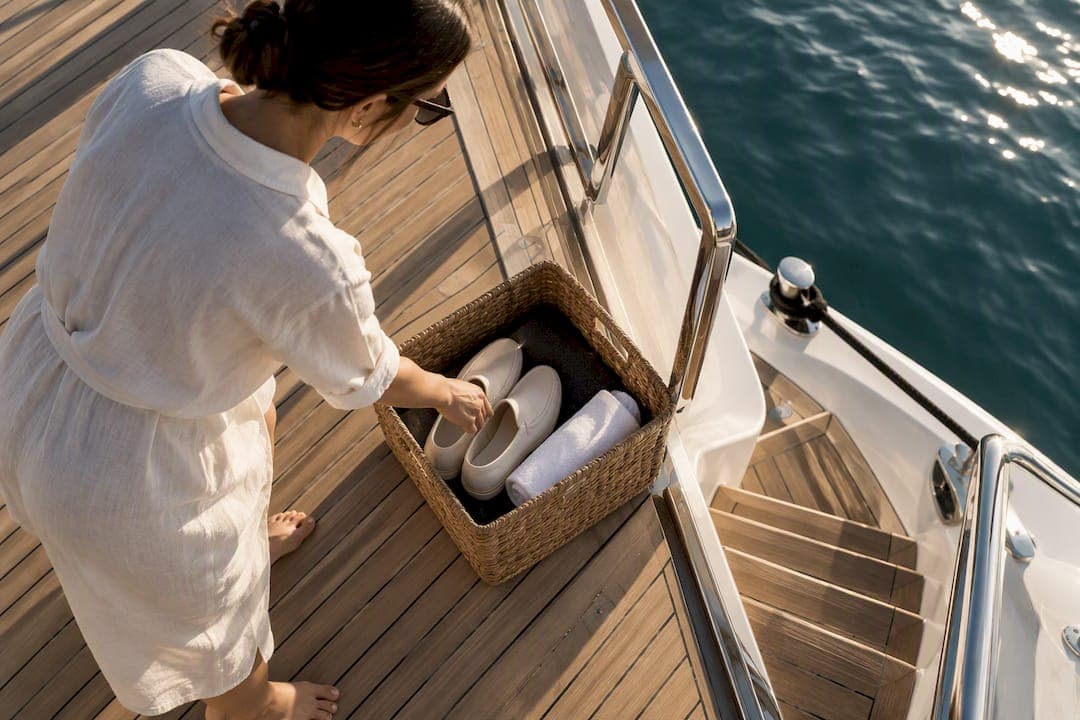
- Shoe removal at the gangway and the use of soft-soled deck shoes are mandatory unless crew advise otherwise for safety reasons or specific indoor rules.
- All requests, including non-urgent questions, must go through designated crew members to avoid disrupting crew workflow and safety procedures.
- The maximum number of paying passengers is generally limited to 12, regardless of the yacht’s size or the number of cabins, and this limit is non-negotiable.
- Photos and social media posts should avoid geotagging if the yacht is high-profile, and ask permission before photographing crew or guests to respect privacy and security.
Table of Contents
- Quick yacht charter etiquette checklist: 10 essential do's and don'ts
- Respecting the crew and staying out of crew-only areas
- Footwear, decks, and protecting the yacht's surfaces
- Packing, luggage, and cabin etiquette
- Smoking, vaping, and prohibited substances
- Yacht tipping etiquette: what's customary and how to handle it
- Privacy, photography, and social media on a charter
- Safety rules, the captain's authority, and the 12-person rule
- Dining, table manners, and special events onboard
- Children, pets, and special requests
- If something breaks or service disappoints: tactful problem handling
- How Veil concierge prepares clients for a seamless charter
- How Veilconcierge handles your yacht charter arrangements
- Sources
- FAQ
Quick yacht charter etiquette checklist: 10 essential do's and don'ts
Most guests get the big things right. It's the small habits, the ones nobody warns you about, that separate a welcome guest from an awkward one. Keep this list handy before you board.
- Remove your shoes at the gangway, or switch into approved soft-soled, non-marking deck shoes. Heels and dark-soled street shoes are typically prohibited outright.
- Fill out preference sheets in full before departure. Crew provision, staff, and plan around what you tell them, not what you assume they'll guess.
- Attend the safety briefing without exception, even if you've chartered before. Every yacht, crew, and route is different.
- Follow captain directions the moment they're given. If the captain shifts anchorage or curtails a shore excursion, there's a reason.
- Never bring uninvited guests or pets aboard without prior written approval from the broker or captain.
- Keep noise reasonable after hours, particularly near crew quarters.
- Hand gratuities to the captain for distribution rather than tipping individual crew members directly.
Treat this less as etiquette in the stiff, formal sense and more as operating knowledge. A yacht is a working vessel with a small crew managing a lot of moving parts, and every rule on this list exists to keep that system running smoothly.
Respecting the crew and staying out of crew-only areas
A charter yacht runs on a tight operational rhythm, and part of that rhythm depends on spaces the crew keeps to themselves. The galley, the bridge, and crew cabins are normally off-limits to guests, and that boundary isn't about secrecy. It's about safety, workflow, and the crew's ability to rest between long shifts. Crew areas need to stay functional because a galley mid-service or a bridge during a navigation check isn't a place for casual visits.
Requests should go through the proper channel, usually the chief stewardess or the captain, rather than being made directly to whichever crew member happens to be nearby. This keeps tasks organized and stops the same request from being duplicated or missed entirely.
- Route all requests, big or small, through the chief steward, stewardess, or captain.
- Avoid entering the galley, bridge, or crew cabins even out of curiosity.
- Save non-urgent questions for daytime hours rather than late at night.
- Thank crew verbally and through gratuity rather than gifts that create obligation or awkwardness.
Pro Tip: If you want to show appreciation beyond the standard tip, ask the captain what the crew would genuinely welcome, some prefer a shared bottle of good wine at the end of the trip over individual gifts that can feel uneven or awkward to divide.
Crew members are professionals running a demanding schedule, often working split shifts with limited personal space. Guests who understand that dynamic tend to get noticeably better service, not because they're currying favour, but because they've made the crew's job easier.
Footwear, decks, and protecting the yacht's surfaces
Teak decking is soft, porous, and expensive to repair, which is exactly why footwear rules exist. Stiletto heels, cleats, and any hard or dark-soled shoe can scuff, dent, or stain the wood, and interior flooring is just as vulnerable to grit tracked in from shore.
Most charter operators expect guests to go barefoot on deck or switch into soft-soled, non-marking deck shoes once they board. The same logic explains why boats undergo regular hull and deck cleaning to manage wear that ordinary use causes over a season, a reminder that these surfaces take a beating even under careful handling.
- Remove shoes at the boarding point, always.
- Pack one pair of soft-soled deck shoes for sun-exposed excursions.
- Rinse and dry your feet after any shore visit before stepping back onto teak.
- Ask crew before wearing shoes indoors, even soft ones, since some yachts prefer bare feet throughout.
The only real exception is safety. If crew ask you to wear closed-toe shoes for a tender transfer or a rocky landing, that instruction overrides the no-shoes norm every time.
Packing, luggage, and cabin etiquette
Storage space on a yacht is finite, and hard-shell suitcases eat up cabin space that soft bags simply don't. Most etiquette guides recommend soft-sided luggage precisely because it collapses, folds, and stows into lockers that a rigid case can't fit into.
Packing light also means planning your wardrobe rather than overpacking for every contingency. A handful of mix-and-match pieces, breathable layers by day, one or two elevated options for dinner, cover far more scenarios than a suitcase stuffed with single-use outfits.
- Bring soft duffel bags instead of hard-shell cases wherever possible.
- Plan three or four versatile outfits rather than packing separately for each day.
- Keep your cabin tidy and treat it as your private space, not a spot for crew to manage on your behalf.
- Report spills, stains, or breakage the moment they happen so crew can address it before it sets in.
Cabin etiquette runs both ways: it's your space to relax in, but it's also part of a vessel the crew is responsible for maintaining. A quick heads up about a knocked-over glass of red wine takes thirty seconds and saves a permanent stain.
Smoking, vaping, and prohibited substances
Smoking indoors, in cabins, or on enclosed decks is banned on nearly every charter yacht, full stop. Designated outdoor smoking areas may be permitted at the owner's discretion, but that's a privilege the crew grants, not a default right. Ask before you light up anywhere on board.
Vaping falls under the same restriction in practice, even though the smoke is less visible and the smell fades faster. Treat it identically to smoking unless a crew member tells you otherwise.
Illegal drugs are an entirely different category. Possession aboard a chartered yacht can trigger serious legal consequences depending on the flag state and the waters you're cruising, and captains are within their rights to end a charter immediately if substances are found aboard.
Yacht tipping etiquette: what's customary and how to handle it
Tipping is the part of yacht charter etiquette that generates the most quiet anxiety, and the guidance is more consistent than most guests expect. A common benchmark sits between 10 and 15% of the total charter fee, with some markets and larger crews trending toward 15 to 20%.
A useful anchor point: across most charter regions, the accepted tipping range runs from 10% to 20% of the charter fee, with the exact figure shaped by crew size, itinerary complexity, and service quality.
A few factors typically push the gratuity toward the higher end of that range:
- A larger crew handling more complex logistics or a longer itinerary.
- Exceptional personal service, custom menus, extra excursions, above-and-beyond problem solving.
- Difficult conditions the crew managed gracefully, poor weather, tight schedules, last-minute changes.
Best practice is to hand the full gratuity to the captain in cash or via the agreed payment method at the end of the charter, and let the captain distribute it according to crew hierarchy and hours worked. If you want to discuss the amount, or you have concerns about service that might affect it, raise that privately with the captain rather than announcing it in front of the crew. That conversation is easiest to have on the final morning, once you have a full picture of the week.
Privacy, photography, and social media on a charter
Discretion matters more on a yacht than almost anywhere else you'll travel, largely because guests, owners, and crew are often in close quarters with few places to step away from a camera. Always ask permission before photographing crew members or other guests, even casually.
The bigger risk is real-time geotagging. Posting your exact anchorage while you're still there broadcasts the yacht's location and your own to anyone watching, a genuine security concern for high-profile charters. Wait until you've moved on or the charter has ended before sharing anything tagged to a specific spot.
If a journalist or curious stranger approaches about the yacht itself, ownership, cost, or crew, direct the enquiry to the captain or the owner's liaison rather than answering yourself. It's rarely your call to make, and the captain will know exactly what's appropriate to share.
Safety rules, the captain's authority, and the 12-person rule
The safety briefing isn't optional, no matter how many charters you've been on. Every yacht has different equipment, exits, and emergency procedures, and the crew needs every guest aboard to know where the lifejackets are and what happens if the alarm sounds.
The captain's authority on safety matters is absolute and non-negotiable once you're aboard. If a route changes because of weather, or an excursion gets cancelled because conditions turned, that decision stands. Arguing with a captain over a safety call is one of the fastest ways to sour a charter for everyone.
Guest capacity is also a hard limit, not a suggestion. Most crewed charter yachts are licensed to carry a maximum of 12 paying passengers under international maritime conventions, and that number can't be exceeded even for a quick dinner guest or a last-minute plus-one.
- Attend the full safety briefing, every time, regardless of experience.
- Accept route or itinerary changes the captain makes for safety reasons without pushback.
- Never invite additional guests aboard beyond the number confirmed in the charter contract.
- Confirm capacity and any day-guest policy with your broker well before departure.
Dining, table manners, and special events onboard
Dining aboard runs smoothly when the crew knows what to expect well ahead of the first meal. Complete menu and allergy forms early, ideally weeks before boarding, so the chef can provision properly rather than improvise around dietary restrictions discovered at the table.
Dress expectations shift through the day. Swimwear and cover-ups suit lunch on deck, but evening meals generally call for smart resort wear unless the crew tells you the night is casual. Showing up to a formal dinner straight off the swim platform reads as careless, not relaxed.
If you're planning a celebration, a birthday, an anniversary, a surprise proposal, tell the broker or captain as early as possible. Cakes, champagne, decorations, and special menus all require lead time to source, and crew can only pull off something memorable if they know what you want well before the day arrives.
Children, pets, and special requests
Family charters and pet-friendly bookings both work, but only when arranged upfront. Confirm with the broker whether the yacht accommodates children, infants, or animals before you book, since not every vessel is set up for car seats, kid-friendly water toys, or a dog on deck.
If you'll need childcare during the charter, arrange a qualified nanny or babysitting service through the broker or your concierge well in advance rather than expecting crew to double as caregivers. The same goes for specialty equipment, diving gear, fishing tackle, baby cots, give the yacht enough lead time to source or hire what you need rather than assuming it will already be aboard.
If something breaks or service disappoints: tactful problem handling
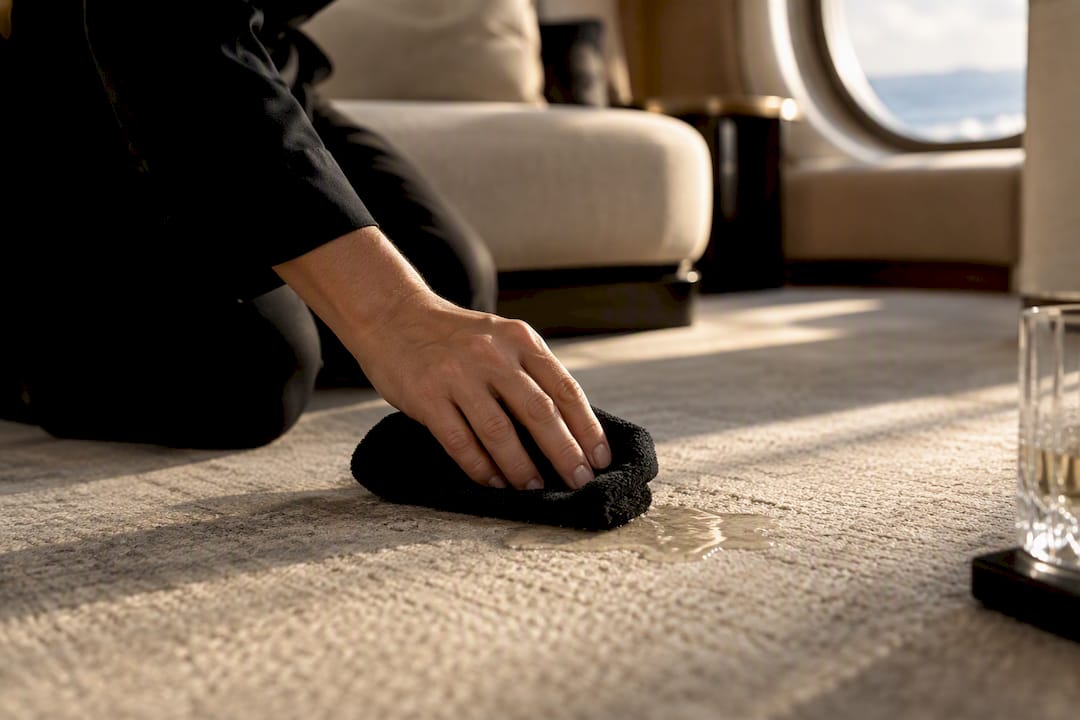
Accidents happen, a dropped glass, a scuff on a cushion, a spilled drink on a rug. Report it to crew immediately and privately so they can address it before it sets or spreads. Crew would almost always rather know right away than discover damage after the fact.
If you have a genuine concern about service, raise it with the captain privately rather than airing it in front of other guests or on social media. Most issues resolve quickly once the captain understands the specifics.
Damage and end-of-charter costs, including advance provisioning allowance (APA) overruns, are typically settled against the charter contract terms agreed before departure, so it pays to understand those clauses before you board.
How Veil concierge prepares clients for a seamless charter
Veilconcierge treats the paperwork side of chartering the same way it treats everything else: as something a client shouldn't have to manage alone. Preference sheets, provisioning lists, staffing requests, transfers to the marina, these details determine whether a charter starts smoothly or with avoidable friction on day one.
We coordinate that groundwork directly with brokers and crew ahead of boarding, so clients arrive to a yacht that already reflects their preferences rather than a blank slate. That lead time is what prevents the last-minute scrambles that tend to sour an otherwise well-planned trip, whether that's a missing dietary accommodation or a provisioning gap discovered mid-charter.
— Veil
How Veilconcierge handles your yacht charter arrangements
Veilconcierge exists so you never have to be the one chasing down a broker, a provisioning list, and a private chef separately while trying to enjoy a trip you're paying handsomely for. Our private charter coordination covers the full arrangement, from yacht sourcing through crew liaison, provisioning, and staffing, so one contact manages every moving part instead of you juggling three or four.

Beyond the charter itself, we arrange the pieces that make the trip feel complete: private chefs for onboard dining, bespoke event planning for celebrations you want to mark properly, and ground transfers to and from the marina so the whole experience runs without gaps. If you're planning a charter and want one trusted point of contact handling the details, reach out through our worldwide concierge services page for a bespoke consultation.
Sources
For readers who want to go deeper on yacht charter norms, these sources carry real weight in the industry:
- Charter yacht etiquette: 24 essential tips every guest should know
- Charter etiquette - how to be a good guest
FAQ
What are the most important etiquette tips for first-time charter guests?
Follow the captain's authority on all safety matters, remove your shoes on deck, and complete your preference sheet before boarding so crew can provision properly. Tipping 10 to 15% of the charter fee at the end of the trip, handed to the captain, is also standard practice worth planning for in advance.
What is the 12-person rule on a yacht?
Most crewed charter yachts are licensed to carry a maximum of 12 paying passengers under international maritime conventions, regardless of the vessel's overall size or number of cabins. This limit is fixed in the charter contract and can't be exceeded with additional day guests or last-minute additions.
What is a normal tip for a yacht charter?
A common benchmark is 10 to 15% of the total charter fee, rising to 15 to 20% in some markets or for exceptional service. Gratuity is typically handed to the captain in a single amount at the end of the charter, and the captain distributes it among the crew.
Can I bring my own guests or pets aboard without asking?
No. Both need prior written approval from the broker or captain because they affect the guest capacity limit, provisioning, and the yacht's pet policy. Confirm accommodations for children, extra guests, and pets before you finalize the booking, not after you arrive at the marina.
Does Veilconcierge help arrange yacht charters directly?
Yes. Veilconcierge coordinates private charter arrangements, including provisioning, crew liaison, private chefs, and event planning for guests who want one point of contact managing the full experience.