
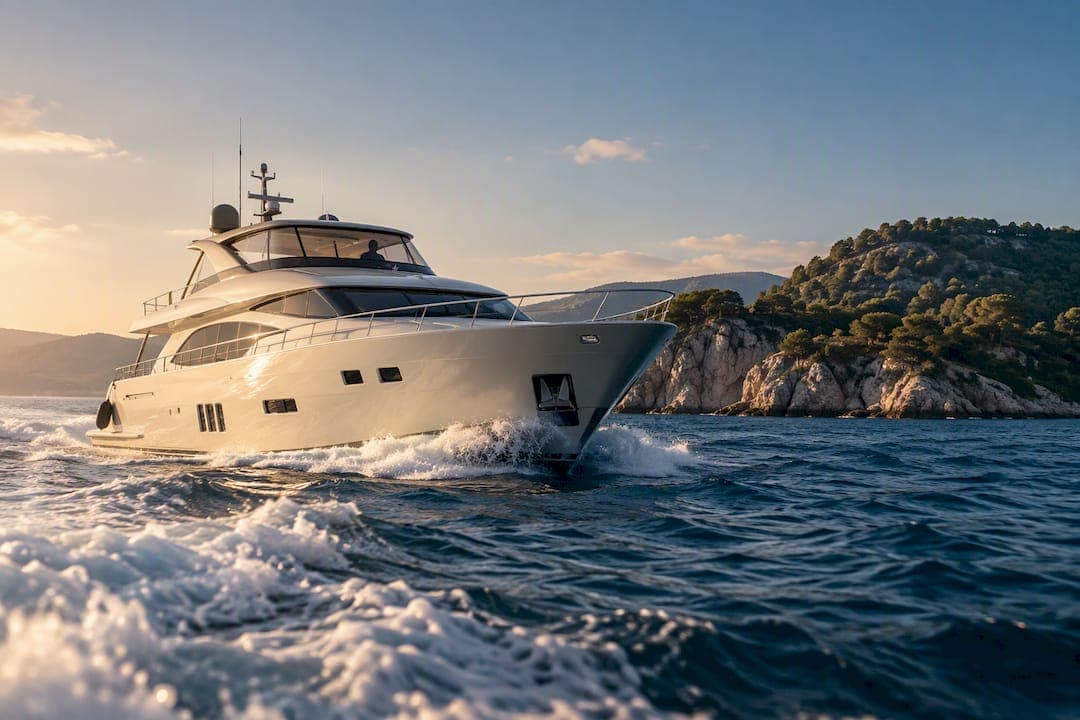
Choose bareboat if you hold a valid sailing certificate and want to skipper your own course. Choose a crewed charter if you want a captain, chef, and stewardess handling every detail while you relax. A hybrid, bareboat with a hired freelance skipper, sits between the two but runs nothing like a true crewed yacht in service or consistency.
TL;DR:
- Bareboat charters require the charterer to handle navigation, docking, and provisioning, with responsibility for safety and operational errors during the trip.
- Crewed yachts come with a permanent team, including a captain and staff, who manage navigation, meals, and logistics, offering a smoother, more service-oriented experience.
- Costs for bareboat charters include the base fee, fuel, marina fees, and provisioning, often with a damage deposit, while crewed yachts typically have an upfront fee plus an optional provisioning allowance and no damage deposit.
- Licensing and liability responsibilities differ: bareboat renters are considered temporary operators liable for incidents, while crewed trips assign operational responsibility to the captain.
- A hybrid option with a hired skipper offers some control and savings but lacks the service consistency of a full crew, making it suitable for relaxed coastal cruising with experienced or confident sailors.
Table of Contents
- Crewed vs bareboat charter: what each one actually includes
- Weighing the trade-offs: cost, control, and service
- What crewed vs bareboat charter actually costs, and how the days break down
- Who's legally responsible for the crewed vs bareboat charter you sign
- Bareboat plus skipper: useful middle ground, not a substitute for a crew
- How to choose between crewed and bareboat charter for your trip
- How Veilconcierge handles the booking and on-trip details
- Veil's take on choosing between the two
- Book your next charter through a single trusted contact
- Sources
- FAQ
Crewed vs bareboat charter: what each one actually includes
A bareboat charter hands the charterer full possession and control of the vessel, with no crew and no provisions aboard. You sign the contract, you take the helm, and you assume the operational and financial responsibilities that normally sit with the owner. A crewed charter runs the opposite way. A permanent live-aboard team, typically a captain, chef, and one or two stewardesses on a mid-sized yacht, handles navigation, meals, housekeeping, and itinerary logistics for the whole trip.
The day-to-day difference is stark. On a bareboat, you plot the course, handle docking, manage fuel and water levels, and cook your own meals or provision a galley before departure. On a crewed yacht, none of that touches you. The operational contrast between bareboat and crewed charters extends to turnover: crewed boats run a polished handover between guest weeks, while bareboat fleets rely on the next charterer to inspect the boat themselves at check in.
There's a structural distinction worth understanding before you book either option:
- Bareboat: no crew included; you may hire a freelance skipper or hostess separately, but that person works a single trip, not a season aboard that specific yacht.
- Skippered/hybrid: a freelance captain (sometimes with a cook or hostess) joins a bareboat contract, but provisioning, maintenance familiarity, and team rapport are assembled fresh for your charter.
- Fully crewed: a permanent crew lives aboard year round, knows the yacht's quirks, and typically already has a working rhythm with each other before you step aboard.
That last point matters more than most brochures let on. A permanent crew has already ironed out who handles what. A freelance pairing hired for one week has not.
Weighing the trade-offs: cost, control, and service
- Bareboat pros: lower total cost, complete autonomy over route and timing, and the satisfaction of actually sailing rather than watching someone else do it. If you've earned your certification and want an active week on the water, this is the format built for you.
- Bareboat cons: you're responsible for navigation errors, docking mishaps, and provisioning runs. A bad weather call is yours to make and yours to live with.
- Crewed pros: a fully serviced holiday where a chef plans the menu, the captain reads the charts, and the stewardess turns your cabin over while you're at lunch. Crew gratuities typically run 10 to 20 percent of the charter fee, which buys a noticeably smoother trip.
- Crewed cons: higher upfront cost and less spontaneity. Deviating from the planned itinerary usually means a conversation with the captain, not a unilateral decision.
- Hybrid as compromise: pairing a bareboat with a hired skipper suits travellers who want to save on the base charter fee but lack certification or confidence for technical passages. It works well for calm coastal cruising; it works less well for a milestone celebration where consistent service matters.
Special occasions tend to tip the scale toward crewed. A honeymoon or a family reunion rarely benefits from someone learning docking procedure mid-week.
What crewed vs bareboat charter actually costs, and how the days break down
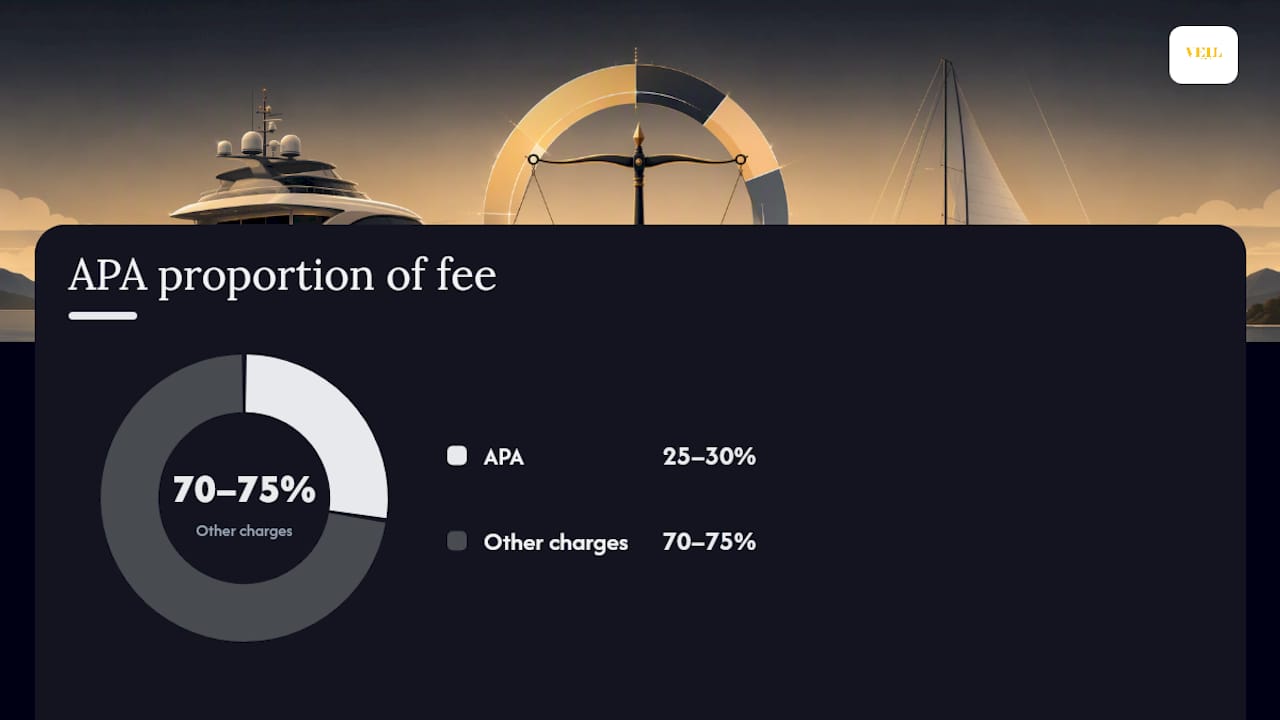
Price drivers differ sharply between the two formats. On a bareboat, you're paying the charter fee plus fuel, marina fees, provisioning, and local taxes, with no service staff to fold into the bill. On a crewed yacht, the base fee typically excludes an Advance Provisioning Allowance (APA), usually 25 to 30 percent of the charter fee, which covers fuel, dockage, food, and drink and gets reconciled at the end with receipts.
Pro Tip: Ask whether the APA is billed as a flat estimate or tracked against actual receipts. A poorly managed APA is one of the most common sources of post-charter billing disputes.
Security deposits work differently too:
- Bareboat charters commonly require a damage deposit held against hull or equipment damage during your control of the vessel.
- Fully crewed charters typically carry no security deposit at all, because the owner holds hull, machinery, and guest liability insurance that covers the trip.
- P&I (protection and indemnity) coverage on a crewed yacht generally protects both the vessel and third-party liability; on a bareboat, confirm exactly what your rented hull cover excludes before signing.
Timing shapes your actual holiday length. Bareboat charters often run Saturday to Saturday with an earlier return time built in for the operator's technical inspection, quietly shaving a few hours off your last day. Crewed charters more commonly use noon-to-noon turnovers and often allow one-way disembarkation for an additional positioning fee, which gives you more flexible use of your final morning.
Who's legally responsible for the crewed vs bareboat charter you sign
Under a bareboat agreement, you effectively become the vessel's temporary operator, sometimes called the disponent owner for the charter period. That status carries real weight: you can be liable for operating expenses, and in some jurisdictions, for incidents at sea, in a way a crewed guest never is. On a crewed yacht, you're a passenger. The captain retains legal command and operational responsibility throughout the trip.
Licence requirements vary by market and operator, but common expectations include:
- A recognized sailing certificate, such as an RYA qualification, an ASA certification, or a local equivalent accepted by the charter company.
- VHF radio operator certification, frequently required alongside your sailing credential.
- Proof of prior sailing experience, sometimes requested even when you hold a valid certificate.
- A charter contract review confirming who is named as legal operator for the period, since this determines liability exposure.
Crewed charters skip nearly all of this paperwork for you. Insurance recommendations still apply either way; ask your operator directly what's covered before you board.
Bareboat plus skipper: useful middle ground, not a substitute for a crew
Hiring a freelance skipper or hostess onto a bareboat contract is genuinely useful, but it doesn't replicate a crewed yacht. A permanent crew has built provisioning systems, service routines, and interpersonal shorthand over months or years together. A freelance pairing assembled for your single week has none of that history, and the difference shows up in consistency more than in any single skill.

The hybrid earns its keep on relaxed, budget-conscious trips where you want a competent hand at the helm but don't need five-star hospitality. It falls short for events where service quality carries the day, an anniversary dinner plated poorly lands very differently than a docking delay.
Before booking a hybrid, confirm:
- Whether the skipper has worked that specific vessel before, or is meeting it the same day you do.
- Who handles provisioning, you, the skipper, or a shared arrangement.
- What happens to service continuity if the skipper needs a break partway through the charter.
How to choose between crewed and bareboat charter for your trip
- Assess sailing ability honestly. If your certification is a few years old and rusty, a bareboat charter in unfamiliar waters is the wrong place to relearn.
- Match the group's expectations. A group split between capable sailors and total beginners usually leans toward crewed, or at minimum a skippered hybrid.
- Set a real budget ceiling. Include the APA, gratuities, and deposit in your math, not just the headline charter fee.
- Rank your service needs. If cooking and cleaning during the trip sounds like a chore rather than an adventure, crewed is the honest answer.
- Map itinerary complexity. Technical passages, tidal waters, or long open crossings favour an experienced permanent crew over a first-time freelance pairing.
Ask the broker or operator directly: what licence do they require, what's the deposit and insurance policy, what are the refund and cancellation terms, are there one-way or positioning fees, and who exactly makes up the crew and handles provisioning?
Pro Tip: A listing that's vague about crew makeup or dodges a direct question about deposit terms is a red flag worth pursuing before you wire a deposit.
How Veilconcierge handles the booking and on-trip details
A concierge service coordinates the parts of chartering that don't show up in a brochure: vetting operators against your sailing ability and itinerary, arranging provisioning and dietary requests, booking a private chef where the charter allows one, and organizing ground transfers to and from the marina. For time-sensitive requests, a last-minute crew change, a special dietary accommodation, or a positioning fee negotiation, a single point of contact means fewer calls and no lost details between vendors.
Veil's take on choosing between the two
Bareboat suits certified sailors who want autonomy and adventure. Crewed suits travellers celebrating an occasion or bringing mixed-ability guests who want hospitality, not homework. When in doubt, or when logistics get complicated, engaging a concierge to vet the hybrid option is worth the call.
— Veil
Book your next charter through a single trusted contact
A concierge service is the alternative to hunting through broker listings and comparing fine print yourself, coordinating the vetting, the provisioning, and the on-trip details so the only decision left is which itinerary you want to sail. Whether you're weighing a bareboat week against a fully crewed yacht for a milestone celebration, it is important to review operator contracts, deposit terms, and crew makeup before signing anything.

Boat and equipment upkeep affects the trip you actually get, and reputable operators typically follow maintenance schedules similar to the hull cleaning routines outlined by marine maintenance specialists, something worth asking about before booking any vessel. If your plans extend beyond the water, from private jet positioning to five-star resort stays around your sailing dates, Veilconcierge's private charter coordination and travel booking services handle the rest of the itinerary too. Reach out to start a booking consultation, or ask about our membership packages if bespoke travel coordination is something you'll want again.
Sources
- Bareboat charter — Wikipedia
- Frontieryachting
- What Is a Bareboat Charter and How Does It Work? - LegalClarity
FAQ
What is the 12-person rule on a yacht?
The rule refers to international maritime regulations that cap most commercially chartered yachts at a specific number of paying passengers before stricter passenger-vessel safety codes apply. It affects both bareboat and crewed charters and is one reason most charter yachts you'll see listed carry that passenger limit.
What are the three main types of charter parties?
The three recognized types are the voyage charter, the time charter, and the bareboat (or demise) charter. A bareboat charter is the only one of the three where the charterer takes full operational control with no crew provided by the owner.
What is the 10 percent rule for yachts?
This commonly refers to the rule of thumb that annual yacht maintenance and running costs average roughly 10 percent of the vessel's value each year. It's a budgeting guideline for owners rather than a charter regulation, but it explains why crewed charter rates run higher, that upkeep is baked into the fee.
What is a ship without a captain called?
A vessel without a captain aboard is generally referred to as unmanned or, in a bareboat charter context, simply crewless. That's precisely the arrangement a bareboat charter creates, the vessel is handed over with no crew, and the charterer or a hired freelance skipper takes command.