
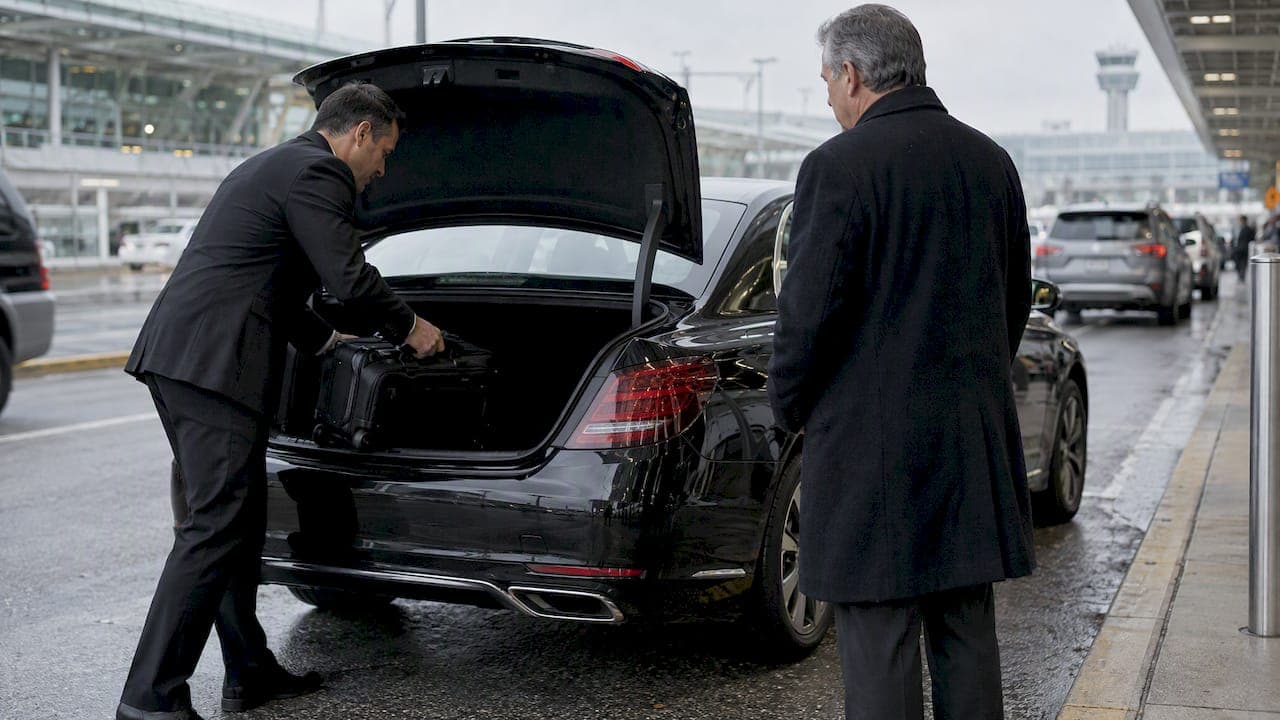
Executive travel coordination means one accountable person or team owns the whole trip: flights or charters, ground transportation, accommodation, meetings, documents, safety information and the fix when something breaks. Done well, the executive arrives rested and informed, and the assistant is not on the phone at midnight. This guide sets out what that looks like in practice, where trips most often go wrong, and how to decide whether to coordinate in-house, through a corporate travel agency, or through a private concierge such as Veil.
TL;DR
- Executive travel is a single, documented trip file: preferences, itinerary, contacts, ground transport, advisories and a backup plan for each leg.
- Most cost and stress come from disruption, not from the booking itself. Someone must be watching the trip while it happens.
- Duty of care is a process. ISO 31030:2021 gives organizations a structured framework for travel risk management.
- A private concierge suits executives and families who want one discreet contact across flights, chauffeurs, hotels, residences and events, in Vancouver, Whistler and beyond.
- Veil publishes chauffeur rates from $128.13 to $410 CAD per hour. Other services are quoted to the request.
Table of Contents
- What executive travel coordination actually covers
- Why disruption management is the real test
- Build the trip file before the trip
- Duty of care: what a coordinator should do
- In-house, corporate agency or private concierge
- Coordinating travel in Vancouver and Whistler
- Perspective: what we see after the booking
- How Veil supports executive travel
- A working checklist for the week before departure
- FAQ
- Sources
What executive travel coordination actually covers
Booking a flight is the smallest part of the job. A coordinated executive trip has five layers, and a gap in any one of them is what the executive remembers.
- Planning. Dates, routing, fare rules, hotel choice, meeting locations and realistic transfer times between them.
- Ground movement. Who meets the executive at arrival, how they reach the hotel or meeting, and how they return to the airport with a margin.
- Accommodation and workspace. A room that suits the person (quiet floor, early check-in, a workable desk), or a private residence when a hotel is not appropriate.
- Information. A single itinerary with confirmation numbers, addresses, local contacts, and emergency numbers, current on the day.
- Monitoring and recovery. Someone tracking flights and connections, ready to rebook, reroute or reschedule before the executive has to ask.
The first four are preparation. The fifth is what separates coordination from administration.
Why disruption management is the real test
A smooth trip hides the quality of the coordination. A cancelled flight reveals it.
The tension is well documented. SAP Concur's global business travel survey describes travellers who have had to take unplanned steps because of disruption, and a share of them willing to decline trips that allow no reasonable comfort or flexibility. For an executive whose time is the scarcest resource in the company, a trip that costs a lost evening or a missed meeting is more expensive than the difference between two fares.
The buyers of travel services are also reassessing. A PhocusWire report from May 2025 on a survey of almost 200 corporate travel managers in the United States and Canada found that 28% were considering switching travel management companies, with rising costs and booking friction among the reasons. Inconsistent service was one of the issues raised. In plain terms, many organizations want more human, more accountable support, not less.
What accountable support looks like in a disruption:
- Flights are monitored from the moment of departure, not from the moment a complaint arrives.
- Alternatives are identified and held while the executive is still in the air or in a meeting.
- Ground transportation, hotel and meeting contacts are told of the change.
- The executive receives one message with the new plan, not five questions.
Build the trip file before the trip
A trip file is the document set that lets anyone on the team run the trip if the primary coordinator is unavailable. It is also the simplest form of the documented preparation that duty-of-care thinking asks for.
Preferences that are written down once
Keep a standing profile and update it after each trip:
- Airline and seat preferences, loyalty numbers, lounge access
- Preferred hotels and rooms, floor, pillow and dietary needs
- Vehicle type, whether a driver should wait or return, preferred route and temperature
- Meeting-day habits: earliest acceptable start, buffer needed between appointments, working time in the car
- Privacy requirements: what may be shared with hotels, venues and drivers
The itinerary
One page per day works better than one long document. For every leg, include the time in local terms, the address, the confirmation number, a contact name and phone number, and the plan B. Show transfer times honestly. A 25-minute drive in the morning can be 70 minutes at 5 p.m.
Documents and devices
Check passport validity, visas or electronic travel authorizations, insurance details, and any device or data requirements before booking, not after. If the executive carries sensitive material, the organization's travel security policy should say what travels and what does not. The Canadian Security Intelligence Service's Far From Home travel security guide warns that assumptions about overseas travel being easy and safe are often wrong, and recommends special precautions.
Contacts
Put one consolidated emergency sheet at the front of the file: the executive's assistant, the coordinator, the hotel, the driver, the nearest embassy or consulate for international trips, the travel insurer's assistance line and the executive's family contact if they wish.
Duty of care: what a coordinator should do
An executive travelling for work is also a person travelling to a place, and the coordinator should treat both facts seriously.
Use a recognised framework. ISO 31030:2021 provides guidance for organizations on managing risks to the organization and its travellers, from policy through to the implementation of prevention and mitigation measures. You do not need to certify anything to borrow its logic: identify the hazards, decide what you will do about them, and write it down.

Check official advisories. For every international destination, review the current advice on travel.gc.ca and note it in the trip file. That page also sets out that Canadian officials provide consular assistance around the clock through points of service in 150 countries and an Emergency Watch and Response Centre.
Consider registration. The Government of Canada's Registration of Canadians Abroad is a free service that lets it notify you of an emergency at your destination or at home. A group registration can include co-travellers, which suits an executive travelling with family or colleagues.
Keep a log. Record what was booked, what advice was reviewed, and who was informed. If something goes wrong, you will want the record, and the executive will want to see that the trip was prepared with care.
These steps are general guidance. For specific legal obligations to employees travelling abroad, or insurance coverage questions, speak with your organization's legal counsel, insurer or a qualified travel risk adviser.
In-house, corporate agency or private concierge
There are three common ways to run executive travel. They solve different problems, and none is right for everyone.
| Assistant coordinates in-house | Corporate travel agency | Private concierge | |
|---|---|---|---|
| Best for | Predictable, repeat itineraries | Policy, cost control, reporting across many travellers | Executives and families whose trips mix business, private and household needs |
| Strength | Knows the executive well | Booking tools, expense data, negotiated fares | One discreet contact, access to private services, personal coordination |
| Typical gap | Alone when a trip fails out of hours | Service can feel standardized | Not built as a corporate expense platform |
| Contact model | One person | Desk or platform | Named point of contact |
| Ground and private services | Arranged ad hoc | Often limited | Core of the offer |
Many organizations combine them: a travel agency for policy bookings and reporting, with a concierge for the trips where comfort, privacy and local execution matter most. The choice depends on whether your main problem is cost visibility or the quality of the trip itself.
Coordinating travel in Vancouver and Whistler
Local knowledge changes the plan. A few points a coordinator should handle for trips into British Columbia:
- Arrival. Vancouver International Airport (YVR) has a dedicated executive terminal for private aviation. Operators there advertise corporate charter programs from YVR for executive teams travelling across the BC and Alberta corridor. If your itinerary includes a charter, the coordinator should confirm which terminal the aircraft uses and brief the driver accordingly.
- Ground transportation. Downtown meetings, North Shore and Richmond appointments and a Sea-to-Sky transfer to Whistler are very different drives. Schedule them with time of day in mind, and have a vehicle and driver confirmed, not requested on arrival.
- Hotels and residences. For stays of a week or more, or for a family, a private residence can be more practical than a suite. Preparing it before arrival (stocking, housekeeping, access) is part of the coordination.
- Seasonal pressure. Whistler winters and Vancouver summers are busy. Book vehicles, restaurants and accommodation early, and confirm again 48 hours before.
Perspective: what we see after the booking
We are asked to coordinate trips that do not fit a booking form. An executive relocating to Vancouver needs a driver, a furnished home and a dinner reservation in the same week. A family with a second residence in Whistler wants the house checked and warm before they land. A visiting principal wants a discreet arrival and a car that is already at the kerb.
Our view is that the value of coordination shows up in the details no one has to ask for. A named contact who knows the executive's preferences. A vehicle that waits when the flight is late. A residence that has been inspected before the executive walks in. Our model is a vetted network of local operators and service providers, managed through one point of contact, so the executive does not have to manage five vendors.

We also believe in documentation. A trip file, a clear itinerary and a record of what was arranged protect the executive and the assistant. Discretion matters equally: we share only what each provider needs to do the job.
A concierge is not a replacement for a corporate expense system or a company's travel policy. It is the layer that makes the trip itself work, and it works best alongside whatever policy and reporting you already have.
— Veil
How Veil supports executive travel
Veil is a Vancouver-based concierge serving Vancouver, the Lower Mainland, Whistler and surrounding areas of British Columbia, as a single point of contact for executives, families, visitors and second-home owners. For executive trips, the relevant services include:
- Chauffeur services, with published hourly rates from $128.13 to $410 CAD. Fleet options include luxury car rentals and transportation and vehicles such as the Sprinter and the Escalade for groups and teams.
- Private jet charters, quoted to the request.
- Hotel, villa and itinerary design, including corporate and group travel and major event travel.
- Event planning for client dinners, retreats and celebrations, plus private chefs and restaurant reservations.
- Home management and Veil Home Setups, so a residence is prepared before an arrival and looked after during a departure.
For ongoing needs, our membership packages (Gold, Platinum and Diamond) are designed around retainer-style support. For international clients, our worldwide concierge services page describes how we act as a trusted local representative.
A working checklist for the week before departure
- Seven days out: confirm the itinerary, documents and visas. Review official advisories for each destination and record them.
- Five days out: confirm hotel or residence details, special requests and workspace needs. Confirm the driver and vehicle, with the flight number shared.
- Three days out: send the executive a one-page-per-day itinerary and the emergency contact sheet. Check weather and airport conditions.
- Day before: reconfirm every pick-up time, check flight status and confirm the plan B for the first leg.
- During the trip: monitor each leg. Decide in advance who may authorize a change, and up to what cost.
- After the trip: log what went well and what did not, and update the executive's profile.
FAQ
What does an executive travel coordinator do?
A coordinator plans and books the trip, arranges ground transportation and accommodation, prepares a single itinerary with contacts and backup options, and monitors the trip while it happens. The last part matters most. They step in when flights change or meetings move.
Is a business travel concierge different from a corporate travel agency?
Yes, in focus. A corporate travel agency typically handles policy, booking tools and reporting for many travellers. A concierge works for the individual or family, with a named contact who can also arrange chauffeurs, private charters, residences, dining and events. Many organizations use both.
How much does a chauffeur cost for executive travel in Vancouver?
Veil's published chauffeur rates range from $128.13 to $410 CAD per hour, depending on the service. Other services, including private jet charters and event planning, are quoted to the specific request, so please contact us with your dates and requirements.
Do I need a travel risk policy for executive travel?
It is strongly advisable. ISO 31030:2021 offers guidance on building one, and official advisories on travel.gc.ca should inform each international trip. For questions about your legal obligations as an employer, consult your legal counsel or insurer.
Can Veil look after my residence while I travel?
Yes. Our home management services can include scheduled residence checks, maintenance coordination, housekeeping, contractor supervision, vehicle checks, and mail and package management, along with arrival and departure preparation.
Sources
- ISO 31030:2021, Travel risk management: Guidance for organizations
- SAP Concur Canada, global business travel survey
- PhocusWire, 28% of travel managers considering switching TMCs
- Canada.ca, Far From Home: A Travel Security Guide
- Travel.gc.ca, Canadian Consular Services Charter
- Travel.gc.ca, Registration of Canadians Abroad
- Air Partners, Vancouver charter flights at YVR