
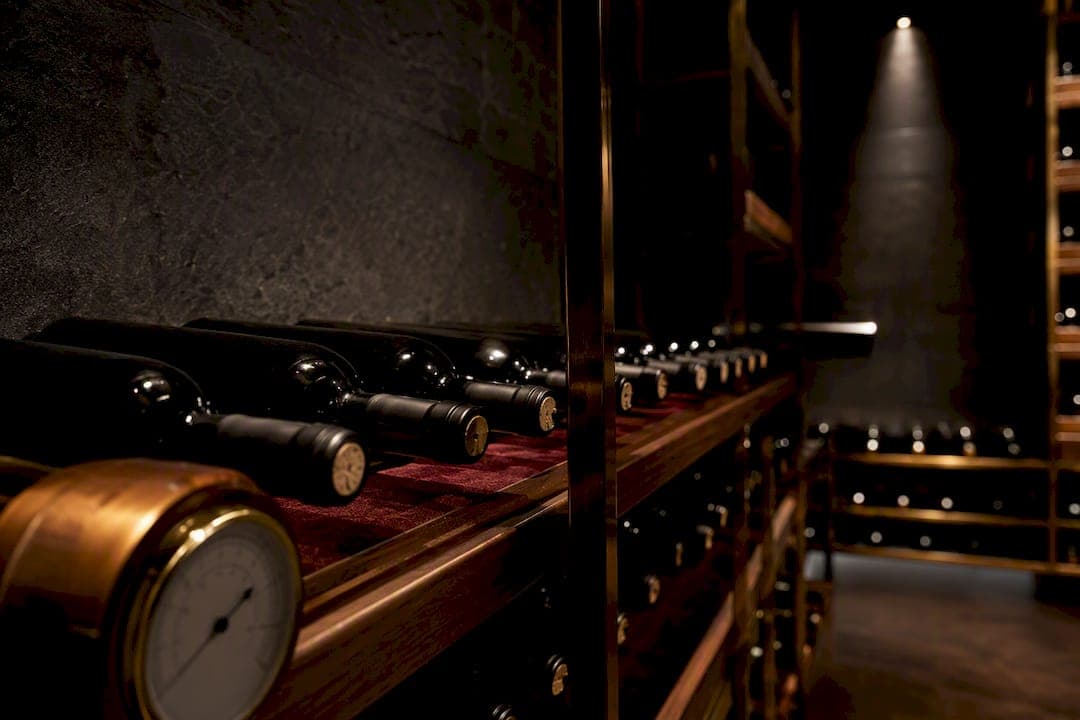
Aim for 50% to 70% relative humidity, with 60% as the working target most cellar designers use. What matters more than hitting that exact number is keeping daily swings within about 5 percentage points. A cellar that holds steady at 58% will protect your bottles better than one that drifts between 40% and 75% chasing an ideal.
TL;DR:
- Maintaining a stable humidity between 50% and 70% with less than a 5% daily swing is crucial for protecting wine bottles over decades.
- Corks dry out and become more permeable in low humidity, increasing oxidation risk, while high humidity can cause mold and label damage.
- Regularly inspect the oldest bottles' capsules and labels to detect early signs of humidity-related deterioration before it spreads.
- Use calibrated digital hygrometers and log data over weeks to accurately monitor humidity trends and avoid reliance on simple analog gauges.
- Proper building insulation, sealing, and vapor barriers are more influential on humidity stability than the humidification equipment itself.
Table of Contents
- Finding the ideal humidity for wine cellars
- Why humidity determines how well your wine ages
- Spotting the damage before it spreads
- How to measure and monitor cellar humidity properly
- Bringing humidity into range and keeping it there
- Why the room itself matters more than the machine
- A simple maintenance schedule that actually works
- What most collectors get wrong about cellar humidity
- Managed cellar oversight for collectors who travel
- Sources
Finding the ideal humidity for wine cellars
Wine storage humidity guidance clusters in a narrower band than most new collectors expect. Industry consensus places acceptable relative humidity between roughly 50% and 70%, with 60% acting as a practical middle ground for cellar designers and homeowners alike. That figure isn't arbitrary. It balances two competing risks: cork drying on the low end and mould or label damage on the high end.
Some experts push the target higher. Decanter notes there's limited definitive research pinning down one perfect number, and several recommend working closer to 65 to 70% RH to keep corks better hydrated over decades of storage. The trade-off is real: richer cork protection at that upper range comes with a higher chance of mould on labels and wood over time.
A few situations call for adjusting the target:
- Short-term fridge storage (drinking within a year or two) tolerates lower humidity since oxygen ingress hasn't had time to matter.
- Sparkling wine, sealed with a mushroom cork and wire cage, is less sensitive to humidity swings than still wine under a straight cork.
- Heavily climate-controlled cellars with tight envelopes can run closer to 55% without cork risk, since temperature stability reduces moisture stress overall.
Why humidity determines how well your wine ages
Cork is a living material, and it depends on moisture to stay pliable. Over years in a dry environment, cork gradually loses hydration, shrinks slightly, and becomes more permeable. Once that happens, oxygen works its way past the seal faster than the winemaker intended, and oxidation accelerates in ways that flatten fruit character and dull colour long before you planned to open the bottle.
The interface at the cork is where all of this plays out. Internal bottle conditions stay fairly stable, but the cork sits exposed to whatever the surrounding air is doing, which is why external relative humidity, not the wine itself, drives the risk.
Moisture affects more than the seal. Paper labels absorb ambient humidity and can curl, discolour, or lose their glue bond in either direction, low humidity leading to brittleness and cracking, high humidity leading to mould and peeling. For collectors who plan to resell mature bottles, label condition often moves the price as much as the wine inside.

Spotting the damage before it spreads
Low and high humidity fail your collection in different ways, and both leave visible clues if you know where to look.
Low humidity (below 50%) signs:
- Cork shrinkage and visible seepage around the capsule
- Faster oxidation, especially in bottles over 10 years old
- Label edges cracking or lifting
High humidity (above 70 to 75%) signs:
- Mould blooming on labels or wooden rack surfaces
- Warped or swollen wood racking
- Corrosion on metal capsules or hardware
Most of this damage accumulates over months and years rather than appearing overnight, which is exactly why it goes unnoticed until a bottle is opened and disappoints. Your oldest and most valuable bottles carry the most risk, since they've had the longest exposure to whatever conditions your cellar has actually held, not what you assumed it held.
Pro Tip: Check your three oldest bottles' capsules and labels every few months. They're your early warning system, since they show cumulative humidity stress well before newer additions do.

How to measure and monitor cellar humidity properly
A cheap analog gauge on the wall tells you almost nothing useful. Get a calibrated digital hygrometer, or better, a multi-day data logger that tracks trends rather than a single snapshot.
- Place the sensor at bottle height, not at the ceiling or floor, and away from supply vents or door drafts.
- In larger cellars, use two or three sensors across different zones rather than relying on one reading.
- Log both RH and temperature for at least 4 to 8 weeks, ideally through a full seasonal shift, so you catch how the room behaves in different weather.
- Verify your hygrometer's accuracy against a salt calibration test once a year.
The number to watch isn't the average. It's the swing. Cellar-design guidance consistently points to keeping daily variation within about ±5% as the real stability benchmark, regardless of where your midpoint sits within the 50 to 70% band.
Bringing humidity into range and keeping it there
Once you know your baseline, the fix depends on how far off you are and how much the room fights back.
Passive methods, open water trays, damp gravel beds, or a bucket in the corner, work for small, minor adjustments. They're cheap and simple, but slow to respond and easily overwhelmed by a leaky room or a hot summer.
Dedicated humidifiers do the heavier lifting. Steam and evaporative units are the standard choice for finished cellars, since they distribute moisture evenly without wetting surfaces directly. Ultrasonic humidifiers are often discouraged in high-end cellars because they can deposit fine mineral dust on nearby labels and wood finishes.
For new builds, an integrated cooling unit with built-in humidity control simplifies things considerably compared to running a stand-alone humidifier alongside a separate cooling system, since the two functions are engineered to work together rather than compete.
If your cellar runs too wet instead of too dry, options include improved ventilation, a desiccant dehumidifier, or a refrigerant unit with reheat to avoid over-cooling the space while pulling out moisture.
- Place the humidistat at bottle height, matching where your hygrometer sits.
- Avoid undersized equipment that short-cycles constantly, which creates the swings you're trying to eliminate.
- Size any unit to the room's actual volume and envelope quality, not a generic square-footage chart.
Pro Tip: If your humidifier cycles on and off every few minutes, it's oversized or your room envelope is leaking. Fix the leak before buying a bigger unit.
Why the room itself matters more than the machine
Most humidity complaints trace back to the building, not the absence of equipment. Cold bridges, gaps around pipe penetrations, and uneven insulation let outside air and moisture move through the assembly in ways no humidifier can fully counteract.
A properly sealed, insulated room with a continuous vapour barrier dramatically reduces the humidification load and keeps readings far more stable through seasonal changes. Before adding equipment, have someone check for these fabric issues specifically, not just general cellar cooling performance. If your cellar shares a wall or ductwork with the main house HVAC system, coordinate the target humidity between both systems, and bring in a specialist when the room fights you no matter what device you install.
A simple maintenance schedule that actually works
You don't need to check your cellar daily, but you do need a rhythm.
- Weekly: Glance at the hygrometer and scan for visible label or rack changes.
- Monthly: Review your logged data for drift or unexpected spikes.
- Seasonally: Inspect door seals, drain lines, and clean humidifier reservoirs or cooling unit coils.
- Anytime: Persistent swings, visible condensation, or any sign of mould mean it's time to call a contractor, not wait for the next scheduled check.
What most collectors get wrong about cellar humidity
The collectors who lose the most value aren't the ones with the wrong RH target. They're the ones who never actually measure what their cellar is doing and only discover a problem when a bottle they've held for fifteen years turns out to be oxidized or the label is stained beyond resale condition.
Veilconcierge sees this pattern often in managed properties: owners install excellent equipment, then leave it unchecked for months while travelling. A humidifier that fails quietly in March can undo a decade of careful storage by September. Scheduled inspections and documented visit logs catch that kind of failure while it's still reversible, not after.
The fabric-first approach matters just as much for absentee owners as it does for full-time residents. A cellar built into a secondary property, checked only a few times a year, needs tighter building performance precisely because nobody's there to notice the humidifier reservoir ran dry.
— Veil
Managed cellar oversight for collectors who travel
Veilconcierge exists for collectors who don't want to be the ones checking a hygrometer every week, especially when the property sits empty for months at a time. Where a DIY monitoring setup depends on you remembering to log readings and catching a failing humidifier before it does damage, a managed approach builds those checks into a routine someone else owns.

Through scheduled property inspections, Veilconcierge tracks cellar conditions alongside the rest of your home, catching a drifting humidifier, a failing seal, or an HVAC issue before it turns into oxidized bottles or mould on your labels. Vendor coordination means a technician gets scheduled and supervised without you fielding the call from another time zone. This kind of oversight makes the most sense for high-value collections, absentee homeowners, and estates juggling multiple service providers who'd rather have one point of contact than a list of numbers to manage themselves.
If your cellar is part of a property that needs this level of attention, explore comprehensive home management through Veilconcierge and get a plan built around your collection and your schedule.