
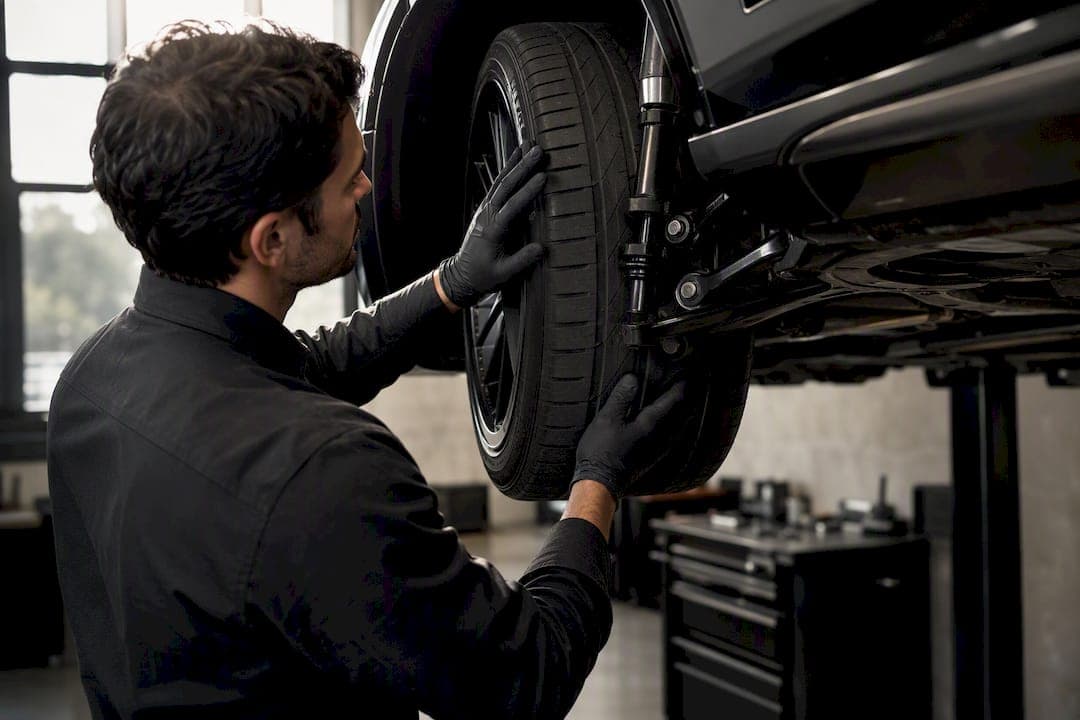
Follow your owner's manual, not a generic internet rule of thumb, and use the severe-conditions schedule if your driving matches it. Most Canadian driving qualifies as severe: short trips, cold starts, or salted roads. Never skip engine oil (unless your vehicle is electric), brakes, tires, or lights. EVs drop the oil changes but still need brake, tire, and battery-system inspections on schedule.
TL;DR:
- Most Canadian drivers should follow the severe-conditions schedule, especially when short trips, cold starts, or salted roads are common, to prevent accelerated wear.
- Regular checks such as tire pressure, fluid top-ups, brake, and tire inspections are needed at least every three months, with longer interval tasks like timing belt replacements around 30, 60, and 90 thousand km.
- Vehicles driven under "severe" conditions require more frequent servicing, and manufacturer schedules combine distance and time to determine the correct service period.
- Electric vehicles still need brake, tire, suspension, and battery system inspections, with a specific focus on battery cooling system health to ensure longevity.
- Neglecting scheduled maintenance increases the risk of costly repairs, safety issues, and reduces resale value, making consistent record-keeping and adherence vital.
Table of Contents
- What a vehicle maintenance schedule actually covers
- What happens at 30,000, 60,000, and 90,000 km
- Why "whichever comes first" decides your schedule
- What changes when your vehicle is electric
- Where to find your real schedule and how to use it
- Simple habits that make the schedule stick
- Signs your car is overdue even if the calendar says you're fine
- What neglecting the schedule actually costs you
- Adjusting the schedule as your vehicle ages
- How Veil sees vehicle upkeep fitting into full property oversight
- Let Veil handle the schedule so you don't have to
- Manuals and guides worth bookmarking
- Sources
What a vehicle maintenance schedule actually covers
A vehicle maintenance schedule is the manufacturer's structured plan for when to inspect, replace, or service specific parts, based on time and distance. It is not the same as a "car maintenance checklist" you'd find printed on a shop wall, though the two work together: the schedule tells you when, the checklist tells you what. Consumer Reports notes that regular basic upkeep does more to extend a vehicle's life than any single repair ever will, which is exactly why the timeline matters more than most drivers assume.
Here's a compact version you can copy, print, or hand to your service advisor.
| Interval | What to check or do |
|---|---|
| Monthly | Tire pressure, headlights and taillights, washer fluid level, visual tire wear check |
| Quarterly (3 months) | Fluid top-ups (oil, coolant, brake, power steering), battery terminal check, wiper blade condition, visual belt and hose inspection |
| Biannual | Oil change if due (or per oil-life monitor), tire rotation, brake pad and rotor inspection |
| Annual | Full service visit, filter replacement (air, cabin), coolant and brake fluid inspection per manual |
| Long-term (multi-year) | Timing belt or chain service where applicable, transmission fluid service, major coolant and brake fluid flushes |
A few of these deserve extra attention:
- Tire rotation roughly every 5,000 to 7,500 miles extends tread life and keeps handling predictable, according to Consumer Reports' maintenance checklist.
- Brake inspections should happen at every oil change, not just when you hear a squeal.
- Wiper blades wear faster than most owners expect, especially through a Canadian winter, and a $20 pair beats a windshield you can't see through in a snow squall.
If you'd rather have a printable version to stick on the garage wall, a home maintenance checklist follows the same logic: simple, dated, and visible.
What happens at 30,000, 60,000, and 90,000 km
Mileage milestones group several smaller jobs into one visit, which is partly about convenience and partly about how components wear together. Treat these as approximate checkpoints, not fixed laws. Your specific model and driving pattern shift the numbers.
- Around 30,000 km (roughly 20,000 miles): air filter inspection or replacement, basic fluid checks, and a first look at brake wear patterns.
- Around 60,000 km (roughly 40,000 miles): spark plug inspection or replacement on vehicles where that's scheduled, coolant service, and a broader mechanical inspection covering suspension bushings and exhaust mounts.
- 90,000 to 120,000 km (roughly 60,000 to 80,000 miles): this is where timing belt replacement often lands on vehicles that use one, along with major inspection items like drive belts, engine mounts, and transmission fluid condition.
The mileage numbers above are common patterns, not guarantees. A 2019 sedan and a 2024 crossover from the same brand can carry different intervals for the exact same job. Always cross-check against your specific model's printed schedule before booking a shop visit based on mileage alone.
Why "whichever comes first" decides your schedule
Every manufacturer schedule pairs a distance with a time, and whichever arrives first is the one that governs. A car that sits in a garage for eight months a year still needs its annual service, because rubber seals, fluids, and belts degrade with age even without kilometres piling up.
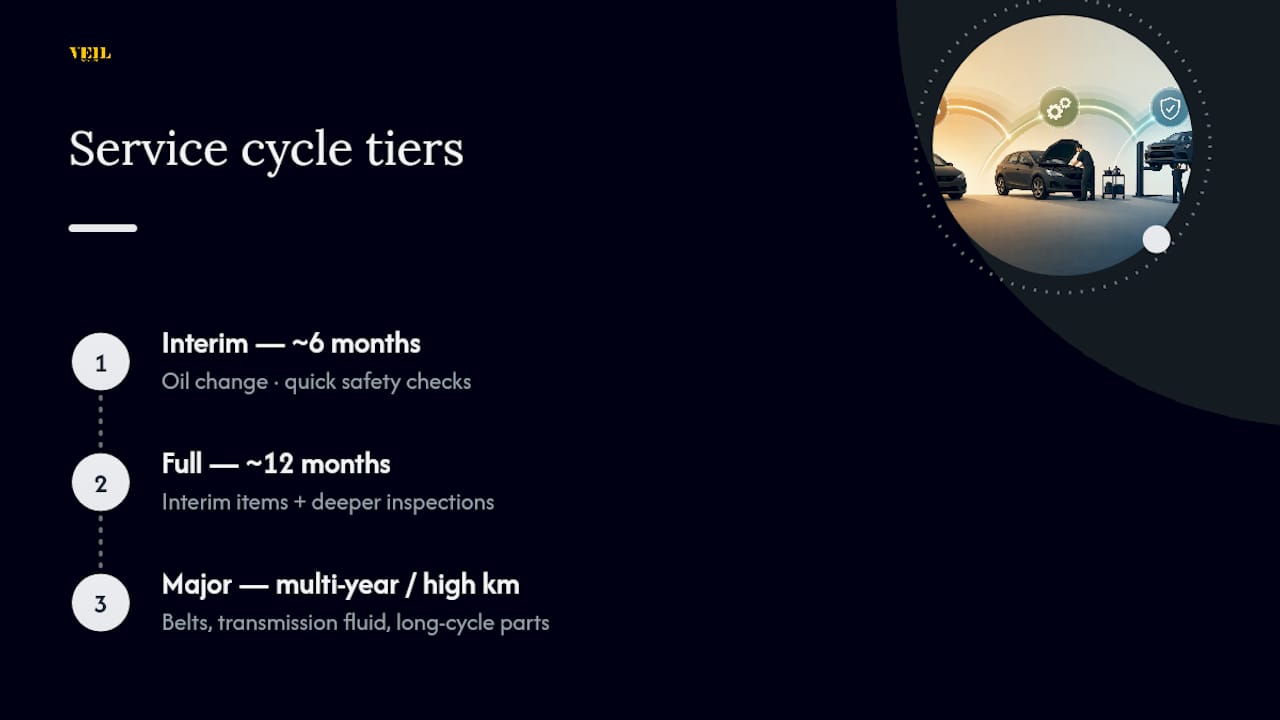
Service cycles generally break into three tiers. An interim service happens around every six months, covering oil and quick safety checks. A full service arrives closer to the 12-month mark and covers everything the interim does plus deeper inspection items. Major services stack up at multi-year or high-mileage points, covering belts, transmission fluid, and other long-cycle components.
Many newer vehicles use flexible, condition-based oil monitors instead of a fixed number. These systems track your actual driving. Short trips and cold starts burn through oil life faster than highway cruising does. Even flexible systems carry a hard ceiling: Mazda's own scheduled maintenance guide caps flexible oil service at 12 months or 12,000 km, whichever comes first, no matter what the monitor displays. Resetting that monitor after every oil change matters too, since a monitor left unreset can mislead you about how much life is actually left.
What changes when your vehicle is electric
Electric vehicles cut out an entire category of upkeep. No engine oil, no oil filter, no fuel filter, no spark plugs. That doesn't mean an EV coasts through maintenance with nothing to check.
Brakes, tires, suspension, and steering components still wear and still need scheduled inspection, and Kelley Blue Book's maintenance guide is direct about it: EVs eliminate combustion-specific service but keep every chassis and safety item on the list. Regenerative braking often extends pad life considerably, but rotors and calipers still need eyes on them.
Pro Tip: Ask your EV service centre about battery-cooling-system inspection specifically. It's easy to overlook because there's no dipstick to check, but a neglected cooling loop shortens battery lifespan.

Battery-health screening deserves its own line item on your schedule, even if your manufacturer doesn't flag it as urgent. A battery pack degrades gradually, and catching a cooling or cell issue early is far cheaper than a pack replacement later.
Where to find your real schedule and how to use it
Your printed owner's manual is the definitive source, and most manufacturers now mirror it on their website or inside your vehicle's infotainment display. If you've lost the manual, a quick search of your model year and "maintenance schedule" on the manufacturer's site will usually surface a PDF.
The harder question is whether you're driving under "normal" or "severe" conditions, because manuals list both, and the difference changes your intervals substantially. Kia's owner documentation lists the severe-conditions triggers plainly: frequent short trips, cold climates, towing, salt-exposed roads, and heavy stop-and-go city driving. Check whether you match any of these:
- Most trips under 10 minutes, especially in cold weather
- Regular driving on roads treated with road salt
- Frequent towing or carrying heavy loads
- Dusty, unpaved, or gravel roads as part of your regular commute
- Extended idling or stop-and-go traffic most days
If two or more apply, follow the severe schedule. Several manufacturer manuals, including Honda's, instruct Canadian owners specifically to default to the severe schedule given the climate and road conditions common across the country.
Pro Tip: Keep every service record in one place, and use the same shop when possible. A consistent history lets technicians spot patterns early and protects you if you ever need to make a warranty claim.
Simple habits that make the schedule stick
A schedule only works if you actually follow it, and that comes down to a few small habits more than any app or reminder system.
- Do a two-minute walkaround monthly: check tire pressure, look for uneven wear, test all lights, and glance under the vehicle for fresh fluid spots.
- Photograph everything at service visits: a picture of the invoice, the odometer reading, and any parts replaced builds a record you can search later.
- Keep digital copies, not just paper: a dedicated email folder or cloud folder means you're never digging through a glovebox for a two-year-old receipt.
- Ask specific questions at the counter: "Is this on my manufacturer's schedule, or is it an upsell?" is a fair question, and a good shop will answer it directly.
Pro Tip: If a shop recommends a service that isn't on your manufacturer's printed schedule, ask them to point to the specific mileage or symptom that justifies it. A legitimate need is easy to explain; a padded invoice usually isn't.
Signs your car is overdue even if the calendar says you're fine
Schedules are averages, and your specific vehicle doesn't always match the average. A few symptoms mean it's time to move up your next visit regardless of what the calendar or odometer says.
A grinding or high-pitched squeal from the brakes means the pads have likely worn past their wear indicator, and waiting risks rotor damage that turns a $150 job into a $500 one. A steering wheel that pulls to one side, or a car that drifts on a straight road, often points to alignment or tire wear that a scheduled rotation alone won't fix. Dashboard warning lights are the most obvious flag, but drivers frequently ignore a check-engine light that isn't flashing, assuming it can wait until the next booked service.
Other overdue signals are quieter. A burning smell after highway driving can mean an overheating clutch or transmission. Fluid spots under the vehicle after it's been parked overnight, particularly if the fluid is pink, green, or dark brown, point to a leak that a scheduled interval hasn't caught yet. A noticeable drop in fuel economy over a few weeks, with no change in driving habits, often traces back to a clogged air filter or underinflated tires. Rough idling or hesitation when accelerating can signal spark plug wear well before the mileage milestone that would normally trigger a spark plug check.
None of these symptoms wait politely for your next scheduled appointment. Treat them as a signal to book early, not a reason to second-guess the schedule itself.
What neglecting the schedule actually costs you
Skipping scheduled maintenance rarely causes an immediate failure. It causes a slow accumulation of smaller problems that eventually converge into an expensive one. An oil change missed by a few thousand kilometres probably won't hurt anything. A pattern of missed changes leads to sludge buildup, accelerated engine wear, and, in the worst cases, engine failure that no amount of catching up can reverse.
Brakes follow a similar curve. Worn pads left unchecked eventually damage rotors, and damaged rotors left unchecked eventually compromise stopping distance in an emergency. That's not a maintenance cost anymore. That's a safety outcome, and it's the exact reason brake inspection sits on every severe-conditions checklist regardless of manufacturer.
There's a financial angle too, beyond the repair bills. A documented service history is one of the first things a used-car buyer or appraiser checks, and a spotty or absent record drags down resale value even when the car itself runs fine. Consumer Reports points out that a consistent service history with a documented shop relationship helps technicians catch developing issues before they become failures, which is a benefit that compounds every year you keep the habit up.
Neglect also erodes resale value in a way many owners underestimate. Buyers, dealers, and appraisers all discount a vehicle with gaps in its history, even a mechanically sound one, because a gap reads as risk they can't verify.
Adjusting the schedule as your vehicle ages
The manufacturer's printed schedule assumes a vehicle in typical condition for its age. As your car passes the five, eight, or ten-year mark, that assumption starts to strain, and a few adjustments usually make sense.
Rubber components, seals, hoses, and belts degrade with age regardless of mileage, so a low-mileage older vehicle still needs the same rubber-related inspections as a high-mileage one of the same year. If your car sits more than it drives, shorten your fluid-check intervals rather than stretching them, since stagnant fluid and dry seals cause their own problems.
Watch for a pattern of repeat issues in the same system. A vehicle that needs its battery checked twice in one winter, or that's had two brake jobs in three years, is telling you that system needs closer attention than the standard interval provides. It's reasonable to move that specific item to a shorter cycle even while leaving the rest of the schedule untouched.
Budget-wise, older vehicles justify a slightly more frequent full inspection, even outside scheduled service points, particularly before a long trip or a change of season. A 15-minute inspection catches small issues while they're still small, and that's worth doing more often than the manual technically requires as the vehicle ages past its original design assumptions.
How Veil sees vehicle upkeep fitting into full property oversight
We think about vehicle maintenance the same way we think about a residence: nothing about it should require the owner's direct attention once the plan is set. When Veilconcierge manages a client's home, vehicle checks and servicing sit alongside inspections, trades coordination, and arrival preparation, not as a separate task list. A client returning from three months abroad shouldn't need to remember when the last oil change happened. Our team, and the documented visit logs behind every service, already know.
That's the standard we hold vehicle oversight to: accountable, discreet, and handled before it becomes a problem you notice.
— Veil
Let Veil handle the schedule so you don't have to
Veilconcierge is the alternative to tracking service dates yourself: one point of contact coordinates the shop, keeps the documented service history current, and books the next visit before you'd even think to. For clients who split time between residences or travel often, that consistency matters more than any reminder app. We vet the shops, manage the logistics, and hand you a record that protects both warranty coverage and resale value, without a single call from you.

If your garage includes a vehicle worth managing at this level, our luxury rental car service shows the standard of care we apply, and it's the same standard behind every scheduled maintenance visit we coordinate. Reach out through Veilconcierge to set up ongoing vehicle oversight as part of your property management plan, and stop being the one who has to remember.
Manuals and guides worth bookmarking
For interval specifics, Consumer Reports' maintenance checklist and Carcare cover general upkeep. For severe-conditions rules, check Honda's owner manual excerpt or Kia's owners manual. For EV guidance, see Kelley Blue Book.
Sources
- Consumer Reports — your car maintenance checklist
- Kelley Blue Book — maintenance guide
- Mazda scheduled maintenance PDF