

A property inspection checklist exists to do three things: catch small problems before they become expensive ones, keep a residence genuinely ready for arrival at all times, and leave a documented, time-stamped record that proves the work happened. Anything less isn't oversight. It's a guess dressed up as a service.
TL;DR:
- Inspections should occur every two to four weeks for seasonal homes, and weekly for properties with extensive mechanical systems or severe weather risks.
- Reports must include timestamped photos, utility readings, access logs, and notes on system status, with consistent documentation to track gradual changes.
- Emergency spending should be pre-authorized up to a set dollar amount, with receipts, photos, and owner notification required after any urgent repair.
- Regular property visits remain essential because sensors miss slow deterioration like corrosion, leaks, or mould that only a physical walk-through can detect.
- Owners should specify a clear scope, reporting cadence, vendor vetting standards, and emergency approval procedures in their management agreements.
Table of Contents
- How often should a manager visit, and what should each report contain?
- What should a concierge check on every property visit?
- How should emergencies be escalated and pre-authorized?
- What counts as real evidence of a visit, and where do sensors fall short?
- What onboarding steps and agreement terms should owners require?
- How should a property be prepared before an owner arrives?
- How do you spot and manage safety hazards during an inspection?
- What defects show up most often, and where do they differ by property type?
- How often should inspection frequency adjust for a property's age and use?
- What legal and insurance rules affect inspection requirements?
- What happens after the inspection is done?
- Why active guardianship matters: an expert viewpoint from a concierge operator
- How Veilconcierge builds and runs this checklist for you
- Sources
- FAQ
How often should a manager visit, and what should each report contain?
Visit cadence depends on vacancy pattern, climate exposure, and how many mechanical systems the residence carries. A coastal property with a pool, irrigation, and full security integration typically needs closer attention than a simple urban condo left empty for a weekend.
Seasonal homes generally warrant an inspection every two to four weeks, tightening to weekly during severe weather windows or when the home sits fully vacant for extended stretches. Properties with substantial mechanical infrastructure, think multi-zone HVAC, backup generators, or wine storage, often justify weekly visual checks paired with a monthly systems review.
The reporting structure matters just as much as the visits themselves:
- Weekly visit note: a short status line covering what was checked, any anomaly, and immediate action taken.
- Monthly summary: utility readings, maintenance items completed, and anything flagged for owner decision.
- Annual condition review: a fuller walkthrough assessing wear, system lifespan, and upcoming capital needs.
A firm that skips this rhythm is usually skipping the visits, too. Silence is the clearest warning sign in absentee property management.
What should a concierge check on every property visit?
A useful walkthrough follows the same order every time, so nothing gets skipped when the manager is tired, rushed, or covering for someone else. The sequence below reflects how Veilconcierge structures a standard residence check.
- Entry and perimeter: test every exterior lock, confirm gate and garage function, review access logs for unrecognized entries, and check exterior lighting timers.
- Water systems: inspect visible supply lines under sinks and behind appliances, check the sump pit and any backup pump, confirm irrigation zones are cycling correctly and not pooling near the foundation.
- HVAC and climate: verify thermostats hold the set temperature, replace or note filter condition, and listen for unusual compressor noise.
- Electrical and life safety: test smoke and carbon monoxide detectors, confirm breaker panels show no tripped switches, and check that GFCI outlets reset properly.
- Interior and guest readiness: scan for musty odours, pest evidence, or discoloured ceiling patches; confirm linens and supplies are stocked if arrival is imminent.
- Exterior and grounds: check roofline, gutters, deck boards, and any structure separate from the main house, like a boathouse or garage.
- Vehicles on site: confirm tyres hold pressure, batteries hold charge, and covered vehicles remain properly ventilated.
Every stop on that route should generate a photo and, where relevant, a meter reading, water, gas, or electrical, logged with a timestamp.
Pro Tip: Photograph the same six angles of each major system on every visit. Consistent framing makes it far easier to spot gradual change, like a slow ceiling stain or a widening hairline crack, that a single snapshot would miss.
Anyone doing electrical checks without formal training should stick to visual inspection only. A structured electrical maintenance checklist helps a manager know exactly where the line between "note it" and "call a licensed electrician" belongs.
How should emergencies be escalated and pre-authorized?
Not every issue deserves the same response speed, and treating them all as urgent burns money and trust. A workable model sorts findings into three tiers:
- Immediate: active water intrusion, security breach, gas smell, or fire risk. Vendor is dispatched same day, owner notified within the hour.
- Urgent: failing HVAC before a heat wave, a cracked window, a malfunctioning gate. Addressed within 24 to 48 hours.
- Routine: cosmetic wear, minor landscaping needs, filter swaps. Bundled into the next scheduled visit or monthly report.
Pre-authorized emergency spending, typically a set dollar threshold written into the management agreement, lets a manager dispatch a plumber at 2 a.m. without chasing a signature first. Every emergency expenditure should generate a receipt, a photo of the completed repair, and a same-day note to the owner explaining what happened and why the threshold applied.
What counts as real evidence of a visit, and where do sensors fall short?
Owners should insist on specific proof, not a vague assurance that "someone checked." Acceptable evidence includes:
- Time-stamped photos from each visit, matched to the checklist item they cover.
- Door and gate access logs showing entry and exit times.
- Utility meter snapshots for cross-checking against reported readings.
- Short video clips for anything ambiguous, a strange sound, a flickering light.
Access logs create an audit trail that deters a caretaker from billing for a visit that never happened, and that alone is worth insisting on in any agreement. Smart sensors are useful for catching an active event, a door left open, a temperature spike, but they miss the slow stuff: hairline pipe corrosion, early mould behind a baseboard, a slab leak that takes months to show. Nothing replaces a trained person physically walking the property.
What onboarding steps and agreement terms should owners require?
A serious concierge engagement starts with paperwork that removes ambiguity before anything goes wrong. Veilconcierge builds every property relationship around what estate managers commonly call an "estate bible", a single reference containing access codes, appliance manuals, warranty documents, and every relevant insurance contact, so continuity survives even if staff changes.
The management agreement itself should spell out:
- Scope of service and exactly which systems fall under routine inspection.
- Reporting cadence, matching the weekly, monthly, and annual structure described earlier.
- Emergency spending authority, with a defined dollar threshold and notification rule.
- Vendor approval process, including who signs off on a new contractor.
Vendor vetting deserves its own line item: background checks, signed non-disclosure agreements, proof of current insurance, and priority response terms for emergency contractor access. Skipping this step is how strangers end up with keys to a second home.
How should a property be prepared before an owner arrives?
Arrival prep runs backward from the touchdown date, and the sequence matters more than any single task on the list.
- 72 hours out: deep clean scheduled, HVAC begins ramping to target temperature, pantry and bar restocked to owner preference.
- 48 hours out: exterior grounds tidied, pool or hot tub balanced, vehicle brought out of storage and charged or fuelled.
- 24 hours out: final security sweep, access codes confirmed working, mail and packages cleared and sorted.
- Day of: manager sends a short status report confirming the home is ready, flagging anything still pending.
Seasonal opening and closing follows a similar discipline in reverse. Winterizing a property properly, draining exterior lines, setting back thermostats without risking freeze, securing shutters, prevents the kind of burst-pipe disaster that turns a vacant month into a six-figure claim. Technical shutdown steps, irrigation blowouts, generator servicing, always belong with a licensed trade, not a generalist caretaker.
How do you spot and manage safety hazards during an inspection?
Every inspection doubles as a hazard sweep, whether or not that's how the visit gets billed. The goal isn't to catalogue every imperfection. It's to catch the handful of issues that could hurt someone or destroy value if left alone.
Fire and gas risk sit at the top of the list. A manager should check that smoke and carbon monoxide detectors have live batteries, confirm no space heater or extension cord shows scorch marks, and note any gas odour near appliances immediately, escalating that finding as immediate-tier, not something to mention in next week's summary.
Structural hazards come next: loose deck railings, cracked steps, shifting retaining walls near a slope. These rarely fail suddenly, but they do fail eventually, and a checklist that tracks the same crack over three visits gives an owner real lead time to schedule a repair before it becomes a liability.
Water-adjacent hazards deserve particular attention around pools, hot tubs, and docks, especially when a property sits vacant between visits with no one to notice a failed pool cover latch or a loose dock board. Electrical hazards, exposed wiring, water near outlets, an overloaded panel, should always trigger a note to a licensed electrician rather than a do-it-yourself fix. Mitigation, in every case, means documenting the hazard with a photo, flagging it at the correct escalation tier, and confirming the fix with a follow-up photo once resolved. A hazard that isn't logged twice, once found and once cleared, isn't actually closed.
What defects show up most often, and where do they differ by property type?
Defects cluster differently depending on what kind of residence is being managed, and a smart checklist adjusts weight accordingly rather than treating every home the same way.
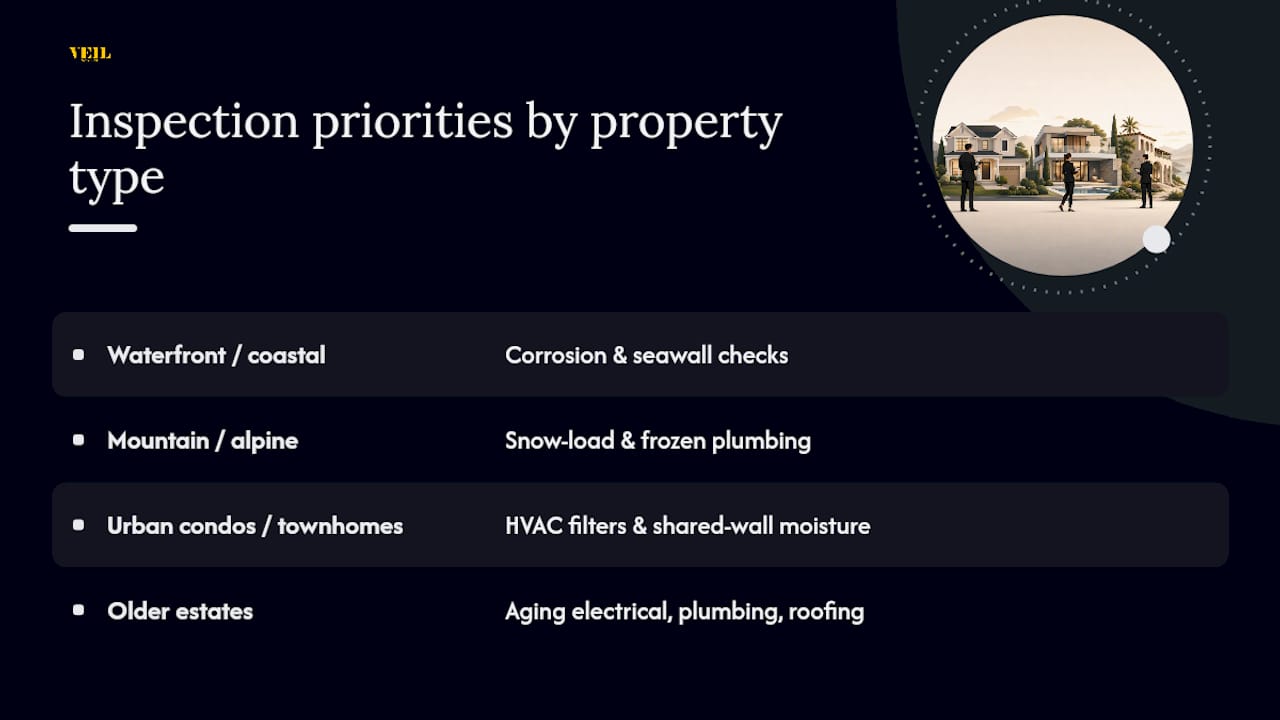
Waterfront and coastal homes show accelerated corrosion on railings, hardware, and exterior fixtures, along with salt-air damage to HVAC condenser coils. Dock and seawall integrity need regular visual checks, since erosion and wave action work slowly until they don't.
Mountain and alpine second homes, common near ski regions, face roof snow-load stress, ice damming along eaves, and frozen or burst exterior plumbing during shoulder-season cold snaps. Deck and railing fasteners also loosen faster under repeated freeze-thaw cycles.
Urban condominiums and townhomes tend toward different issues entirely: HVAC filter neglect, shared-wall moisture from neighbouring units, and building-envelope leaks around windows that show up as subtle staining long before anyone smells mould.
Older estate properties, anything past 25 or 30 years, carry aging electrical panels, original plumbing prone to mineral buildup, and roofing nearing the end of its service life. These homes need a more granular annual condition review specifically because deferred issues compound faster once a system starts failing.
A checklist built for one property type and copied onto another misses exactly the defects that matter most for that home.
How often should inspection frequency adjust for a property's age and use?
Frequency isn't a fixed number. It's a variable that should move with the property's age, its systems, and how often people actually occupy it. Treating a 3 year old smart home and a 40 year old character property on the same schedule wastes budget on one and under protects the other.
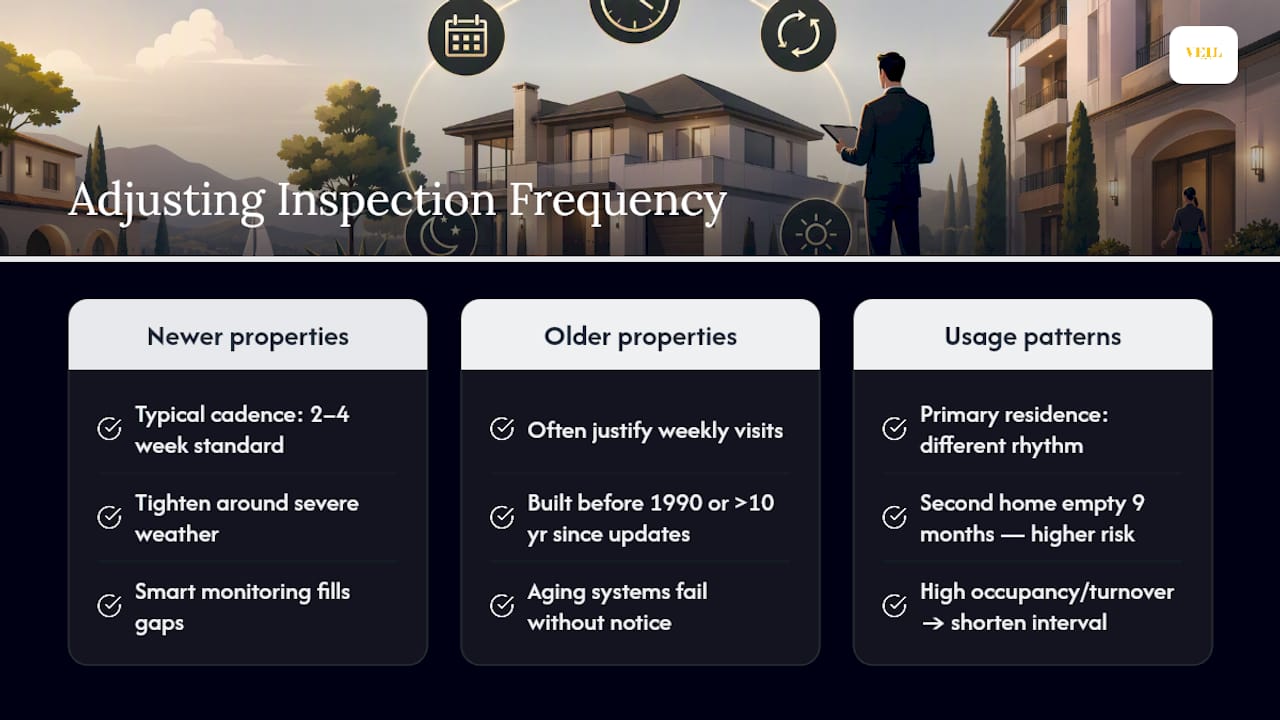
Newer properties with modern systems, updated wiring, tankless water heating, integrated smart monitoring, can often run on the standard two to four week cadence for seasonal homes, tightening only around severe weather or extended vacancy. The systems are less likely to fail without warning, and smart monitoring fills some of the gap between visits.
Older properties need more frequent physical walkthroughs regardless of vacancy pattern, because aging systems fail without much notice and sensors weren't built to catch gradual deterioration in the first place. A property built before 1990, or one that hasn't had major systems updated in over a decade, often justifies weekly visits even during quiet stretches.
Usage pattern matters as much as age. A primary residence occupied most of the year needs a different rhythm than a second home empty nine months out of twelve, where a single missed leak can run undetected for weeks. High-occupancy rental-adjacent use, frequent guest turnover, adds wear that shortens the interval between full system reviews. The right frequency comes from matching the checklist to the actual risk profile of that specific home, not applying a single industry rule of thumb across a portfolio.
What legal and insurance rules affect inspection requirements?
Insurance policies covering vacant or seasonally occupied luxury homes frequently include occupancy clauses that require documented, regular inspections to keep coverage valid. Miss the required visit cadence, and a claim following a pipe burst or fire can be reduced or denied outright, regardless of how the damage occurred.
Owners should confirm the specific interval their policy demands, since it varies by insurer and by how the property is classified, primary residence, secondary home, or seasonal vacancy, and make sure the concierge agreement's reporting cadence meets or exceeds that requirement. A monthly visit satisfies some policies; others demand weekly documentation during defined vacancy windows.
Vendor-side compliance matters too. Any contractor entering the property, plumber, electrician, HVAC technician, should carry current liability insurance and, where the trade requires it, a valid provincial or municipal licence. A manager who lets an uninsured contractor touch major systems exposes the owner to liability that has nothing to do with the original repair.
Privacy and data handling deserve a mention as well. Access logs, security footage, and visit photography all touch personal information, and any concierge firm handling that data should have clear policies on storage, retention, and who can view it. This isn't a substitute for legal advice specific to a given jurisdiction or policy, but it's the baseline every owner should confirm before signing a management agreement.
What happens after the inspection is done?
A checklist that ends when the walkthrough ends isn't finished. It's half done. The value of an inspection lives in what happens with the findings afterward.
Every item flagged during a visit needs a clear next step: scheduled for the next routine maintenance window, escalated to a vendor for urgent repair, or noted for owner discussion at the monthly summary. Nothing should sit in limbo between visits with no assigned action or timeline.
Recurring issues deserve tracking across visits, not just within one report. A stain that appears in March and again in April isn't two separate findings. It's one unresolved problem that needs a different response than a fresh repair note. Building a simple running log by system, roof, plumbing, HVAC, electrical, turns scattered visit notes into a maintenance history that actually predicts failure before it happens.
Scheduling flows from that history. Filter changes, gutter clearing, irrigation blowouts, and seasonal HVAC servicing should sit on a calendar tied to manufacturer recommendations and local climate, not to whenever someone remembers. The annual condition review is the natural point to reset that calendar, comparing what got fixed against what's still pending and adjusting next year's cadence based on what actually failed.
Why active guardianship matters: an expert viewpoint from a concierge operator
Preventive care isn't a nicer version of reactive maintenance. It's a different financial outcome entirely, avoiding the five-figure repair that a $200 visit would have caught early. Discretion matters just as much: a vetted, local vendor network means fewer strangers cycling through a home, and tighter control over who knows it sits empty.
— Veil
How Veilconcierge builds and runs this checklist for you
Everything in this checklist, the cadence, the room-by-room detail, the escalation tiers, the estate bible, is what Veilconcierge already runs for residences across the region every week. One point of contact coordinates scheduled checks, vendor supervision, arrival preparation, and emergency response, instead of piecing together separate contractors and hoping someone remembers to check the sump pump.

The vendor network behind that oversight is vetted for insurance, background, and response time before a single key changes hands, and every visit generates documented photo and log records. If a property is sitting mostly vacant right now with no one confirming its condition on a set schedule, a luxury concierge service can close that gap. Request a property oversight consultation to walk through your residence's specific risk profile, current coverage requirements, and a realistic visit cadence, and find out what a properly documented management agreement looks like for your home.
Sources
- Luxury Property Management for International Owners: How to Run a Home You Are Rarely In - Luxury Real Estate News
- Luxury Property Management 2026 | Vacant Estate Coverage
- Estate concierge services for seasonal homeowners preparing a second home for arrival
FAQ
How often should a luxury property be inspected?
Most seasonal homes need an inspection every two to four weeks, tightening to weekly for properties with extensive mechanical systems or severe weather exposure.
What documentation should an inspection report include?
Time-stamped photos, access logs, utility meter readings, and a written status note covering every system checked and any action taken.
What is pre-authorized emergency spending?
It's a dollar threshold written into the management agreement that lets a manager approve urgent repairs immediately, with receipts and owner notification required afterward.
Can smart home sensors replace physical inspections?
No. Sensors catch active events like an open door or a temperature spike, but they miss slow deterioration such as corrosion, hairline leaks, or early mould growth.
What should an owner require before signing a management agreement?
A defined scope of service, a set reporting cadence, emergency spending authority, and a vendor vetting process covering insurance and background checks, the same structure Veilconcierge builds into every property oversight engagement.