
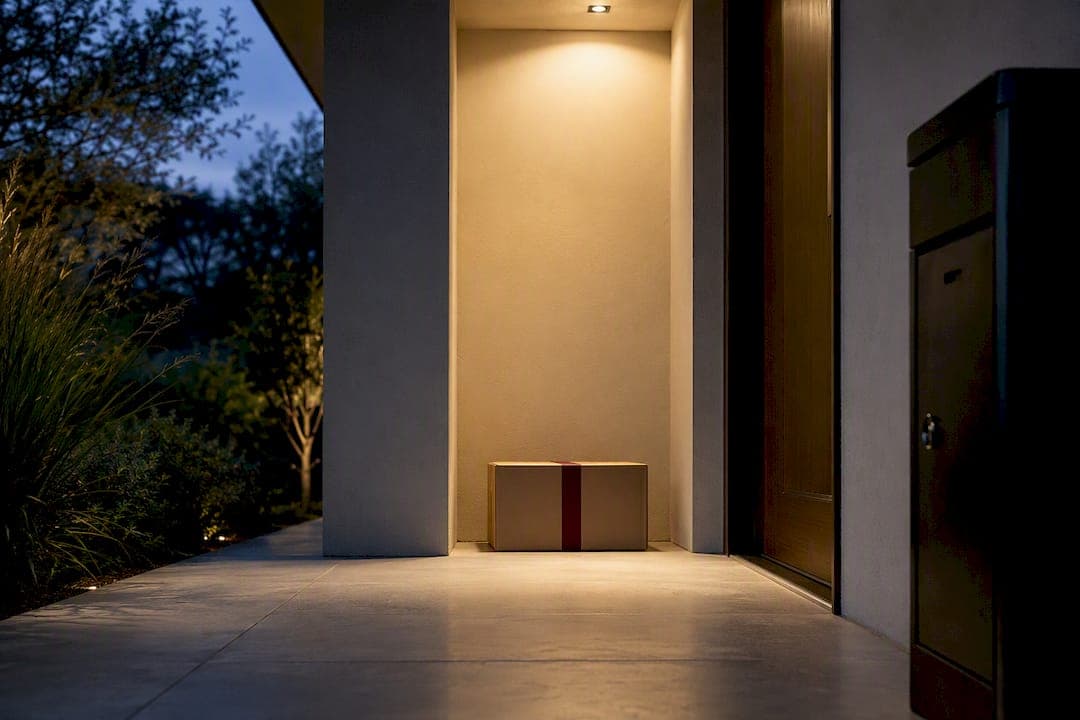
The fastest way to cut your risk is to combine three things at once: a visible deterrent like a camera or motion light, real-time delivery alerts, and a secure receiving option such as a locked box, signature requirement, or held-for-pickup order. Each one closes a different gap in how thieves operate, so together they cut opportunity, time-on-porch, and access all at once.
TL;DR:
- Combining visible deterrents, real-time alerts, and secure delivery options reduces porch piracy opportunities more effectively than using each method alone.
- Installing cameras with package detection zones and motion-activated lighting helps identify and discourage thieves during evening hours when visibility falls.
- Scheduling deliveries, using managed lockers, or enlisting neighbors significantly cuts the window of risk for unattended parcels, especially for unpredictable schedules.
- Lockable parcel boxes anchored securely to the property protect packages from theft, but placement and proper labeling are critical for effectiveness.
- A managed property oversight service offers in-person collection, secure storage, and coordination that hardware alone cannot provide, especially for frequent travelers or absentee homeowners.
Table of Contents
- Package theft prevention: a checklist to start today
- Cameras, doorbells and delivery alerts: choosing the right setup
- Working with carriers and retailers to avoid unattended drops
- Locked parcel boxes and other physical fixes for the porch
- What to do the moment a package goes missing
- How managed property oversight closes the gap DIY tools can't
- Smart locks and secure entry systems for delivery areas
- Neighbourhood watch and community surveillance programs
- Lighting, visibility, and keeping packages out of sight
- Timing deliveries and enlisting a neighbour's help
- Balancing convenience, cost and privacy
- How Veilconcierge keeps deliveries and properties secure while you're away
- Sources
- FAQ
Package theft prevention: a checklist to start today
Package theft prevention works best when you rank actions by effort against payoff, not by how expensive or complicated they sound. Some of the most effective steps cost nothing and take five minutes.
Start with what you can do right now, then build up:
- Turn on carrier alerts. Most major carriers and retailers offer free text or app notifications the moment a package is delivered. This alone shrinks the window a parcel sits exposed.
- Set delivery instructions or require a signature. Add a note like "Please leave behind the porch planter, out of street view" or select signature-required at checkout for anything valuable.
- Ask a neighbour to grab it. If you know your delivery window and won't be home, a quick text to someone next door closes the gap entirely.
- Install a visible camera or doorbell. Even a budget model with a porch view acts as a deterrent, since porch piracy is largely a crime of opportunity and thieves avoid anything that might catch them on camera.
- Add a motion-activated light. Cheap, easy to install, and effective for evening deliveries when visibility drops.
- Get a lockable parcel box. Drivers can leave the item inside and it's out of sight and out of reach within seconds.
- Consider parcel lockers or managed pickup. For frequent travellers or anyone who's tired of managing this daily, shifting deliveries to a locker network or a property oversight service removes the problem at the source.
Consumer Reports recommends this exact sequence: instructions first, alerts second, physical security third. That order matters because the free steps often prevent the problem before you ever need to spend money on hardware.
A good delivery note does more work than most homeowners expect. Try something specific: "Please ring bell and wait 30 seconds, or leave in the black lockbox to the left of the door." Vague notes like "leave at door" give a driver no better option than what they were already doing.
Cameras, doorbells and delivery alerts: choosing the right setup
Video doorbells, spotlight cameras, and floodlight cams solve slightly different problems, and mixing them up leads to wasted money. A video doorbell watches your entry point and works well for identifying who's at the door. A spotlight or floodlight camera covers a wider area, including driveways and side entrances where thieves sometimes stash stolen goods before running.
Battery-powered units install almost anywhere but need regular charging, especially in cold weather when batteries drain faster. Hardwired units run continuously and tend to have faster response times, but they need an electrician or at least some comfort with basic wiring.
Before buying anything, check for these features:
- Package detection zones. Higher-end doorbells can distinguish a delivery drop from a person walking past, cutting down on notification fatigue.
- Notification speed. A camera that takes 30 seconds to alert you after motion is far less useful than one that pings within a few seconds.
- Two-way talk. Lets you speak to a driver or a would-be thief in real time, even from your phone at work.
- Local versus cloud storage. Cloud storage usually requires a subscription but keeps footage accessible if someone damages or steals the device itself.
- Night vision quality. Most thefts near dusk or after dark rely on poor lighting; a camera with weak night vision misses the exact moments you need it most.
Statistic to know: journalists estimate that more than 120 million packages were stolen in a single year across the United States, and most of those thefts happen because a parcel sat visible and unattended for too long. Reducing that window is the single biggest lever you have.
Placement matters more than the camera's price tag. Mount cameras between 7 and 9 feet high, angled slightly downward, so you capture faces rather than the tops of heads. Aim for a clear view of the exact spot where drivers usually leave packages, not just the front door itself, since manufacturer guidance on package detection notes that many false negatives happen when the detection zone misses the actual drop point by even a metre or two.
Pro Tip: Test your camera's package zone by having a friend set a box down in different spots on your porch. Adjust the angle until it triggers reliably in the exact place deliveries actually land, not just where you assumed they would.
Two practical trade-offs are worth weighing before you buy. First, privacy: always-on recording near a shared walkway or neighbouring property can raise questions from neighbours, so keep cameras aimed at your own space and check your municipality's general guidance on surveillance around shared property lines. Second, subscriptions: a camera without cloud storage or extended clip history might deter a thief in the moment but leaves you with nothing to hand a claims adjuster afterward. Ring's own guidance on evidence collection points out that footage retention is often the difference between a resolved claim and a dead end.
Security providers like ADT also recommend pairing any camera with motion lighting, since visible light plus visible recording does more to discourage a thief than either measure alone.
Working with carriers and retailers to avoid unattended drops
Every major carrier gives you tools to stop a package from sitting on your porch in the first place, and most homeowners never use them because they don't know where to look.
Signature-required delivery works well for higher-value items but has real limits. If you're rarely home during business hours, a signature requirement just means multiple failed attempts and a longer wait before you finally pick it up at a depot. Reserve it for packages you genuinely can't risk losing.
Carrier holds and locker pickups solve the scheduling problem directly. Instead of a delivery attempt at your home, the package waits at a secure location until you retrieve it on your schedule. This works especially well for:
- Anyone with an unpredictable work schedule
- Apartment or condo residents without secure building mail rooms
- Frequent travellers who can't guarantee they'll be home on delivery day
- High-value purchases where you'd rather not risk a doorstep drop at all
Consolidating deliveries also shrinks your exposure. Ordering three items separately over a week means three separate windows of vulnerability; batching them into one order, when the retailer allows it, means one delivery to manage instead of three.
For delivery notes drivers can actually use, specificity beats politeness. Compare "please be careful with this package" to "leave behind the recycling bin, not visible from the street." The second version tells the driver exactly what to do; the first tells them nothing actionable. The Office of Inspector General's research on last-mile theft points to exactly this kind of coordination between shoppers, retailers, and carriers as the most effective long-term fix, more effective than any single household buying a better lock.
Locked parcel boxes and other physical fixes for the porch
A lockable parcel box solves the core problem directly: it gives drivers a place to leave a package that isn't sitting in open view. Most models work like a mail slot in reverse. The driver lifts a hinged lid, drops the parcel through a one-way chute, and the lid locks automatically so nobody can reach back in without a key or code.
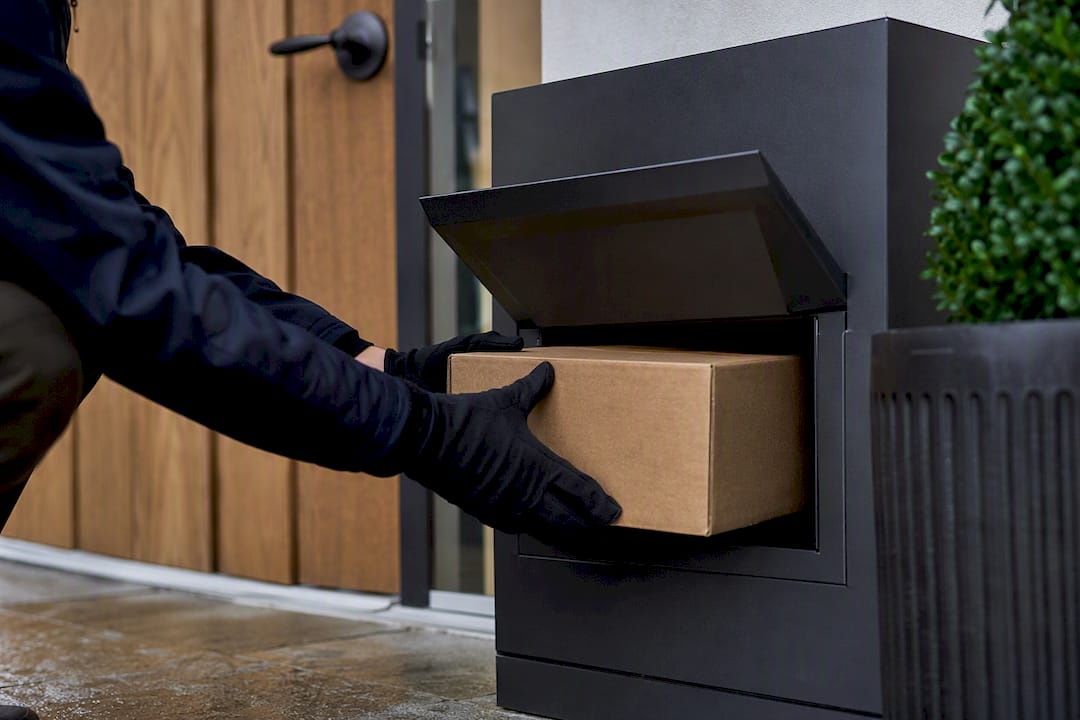
Anchoring matters as much as the lock itself. A box that isn't bolted down or chained to a railing can simply be carried off, box and all. Look for models with pre-drilled mounting holes or a security cable, and secure them to something permanent like a porch post or concrete step rather than a planter or light fixture that could be pried loose.
A few practical notes before you buy:
- Detached homes with a private porch or driveway are the best fit for a standalone locked box.
- Multi-unit buildings often do better with a shared parcel room or a locker system managed by the building, since individual boxes crowd shared entryways.
- Accessibility deserves real thought: a box with a high lid or a stiff chute can be hard for someone with limited mobility to load or unload, so check the opening height and weight of the lid before installing.
- Carrier compatibility varies. Some drivers are trained to use parcel boxes; others default to leaving items beside them if the box looks unfamiliar, so a clear delivery note referencing the box's colour or location helps.
Pro Tip: Paint or label your parcel box clearly and mention it in every delivery note. A box a driver doesn't recognize on sight often gets ignored entirely, which defeats the purpose.
What to do the moment a package goes missing
Move fast, because footage, timestamps, and receipts all become harder to gather the longer you wait.
- Confirm the delivery actually happened. Check the carrier's tracking page for a delivery photo, and search common hiding spots like behind planters, under mats, or with a neighbour who may have taken it in.
- Pull your camera footage immediately. Note the exact timestamp of the drop and download the clip before it's overwritten by newer recordings, since many devices only retain footage for a limited rolling window.
- Contact the retailer and the carrier the same day. Most retailers can issue a replacement or refund once a claim is opened, and carriers may ask for the tracking number, delivery address, and any photo evidence you have.
- File a police report. Even for a modest-value item, a report gives you an occurrence number that insurers and some retailers require before honouring a claim.
- Check your insurance options. Homeowners' and renters' policies sometimes cover stolen deliveries under personal property provisions, and some credit cards include purchase protection for items bought with that card. Mercury Insurance's guidance recommends confirming your deductible before filing, since a $50 item rarely clears a typical deductible threshold.
Given that journalists estimate over 120 million packages were stolen in a single recent year, insurers and retailers have seen enough claims to have established processes, so don't assume a stolen parcel is simply a loss you have to absorb.
How managed property oversight closes the gap DIY tools can't
Cameras, alerts, and locked boxes all help, but they share one weakness: they depend on someone being available to act on the alert. A notification that arrives while you're at work, travelling, or asleep still leaves a package sitting exposed until you can respond.
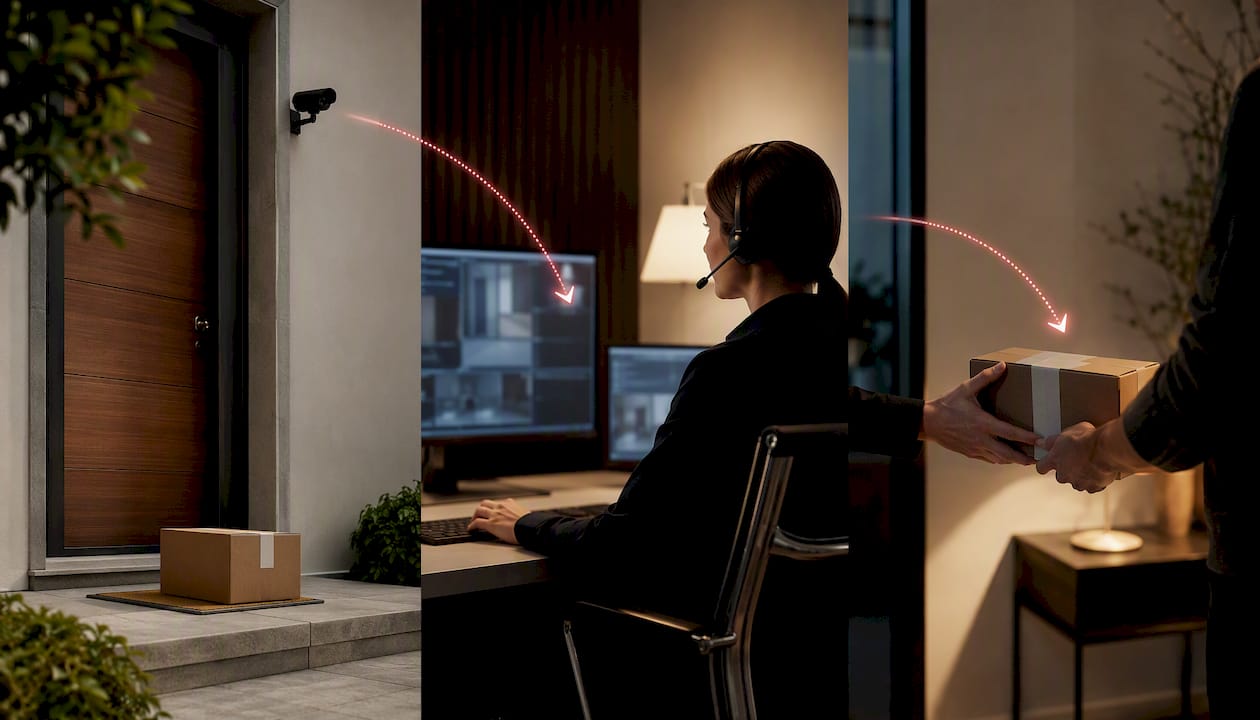
This is the exact gap absentee owners, frequent travellers, and secondary-home owners run into, and it's where a managed service changes the equation. Rather than reacting to an alert, someone is already physically present.
Property oversight built around this problem typically includes:
- Scheduled residence checks that confirm deliveries were received, not just that they arrived.
- Mail and package management, including retrieval, secure storage, and coordination with carriers on your behalf.
- Arrival and departure preparation, so packages are already inside and accounted for before you or guests show up.
- Direct coordination with carriers and building staff, which resolves delivery issues before they become theft risks at all.
The single point of failure in most porch piracy cases is the unattended property itself. Managed oversight removes that variable entirely, which is a meaningfully different approach than any camera or lockbox can offer on its own, since a person checking on your home doesn't need a notification to know a package has arrived.
Smart locks and secure entry systems for delivery areas
A smart lock on a side gate, garage, or secure delivery enclosure gives carriers a way to leave packages inside a protected space rather than an open porch, without you handing out a physical key.
Most systems let you generate a temporary or single-use access code that works only within a specific delivery window and expires automatically afterward. Some integrate directly with camera systems, so unlocking the gate also triggers a recording and a notification to your phone, closing the loop between access and awareness.
The trade-off is complexity. A smart lock adds a device that needs power, connectivity, and occasional firmware updates, and if it fails or loses signal at the wrong moment, a driver might be locked out entirely rather than locked in safely. For homeowners who travel often or manage a secondary residence, this is exactly the kind of detail a scheduled property check or oversight service catches before it becomes a missed delivery or a stranded driver.
If you're considering adding a smart lock to a gate or delivery enclosure, general guidance on safe and reliable access solutions is worth a look before you commit to a specific system, since not every lock handles Canadian winters or power outages equally well.
Used well, a secure entry system turns your porch from an open target into a controlled space, which matters most for homes that receive frequent deliveries or sit empty for stretches at a time.
Neighbourhood watch and community surveillance programs
Package theft is rarely a solo effort to solve, and some of the best results come from coordinating with the people who live around you rather than relying only on your own hardware.
A neighbourhood watch group, whether formal or just an informal group chat among nearby households, creates a second layer of eyes on every porch on the block. Someone home during the day can flag a delivery for a neighbour who works long hours, and a shared understanding of "normal" foot traffic makes it easier to spot someone who doesn't belong.
Some communities go further with shared camera networks or apps that let residents post footage of suspicious activity, which helps identify repeat offenders working a single street or block. This kind of pooled visibility does more collectively than any single household's camera, since a thief who avoids one porch with a visible camera may simply move to the next house, unless the whole block is watching.
If your building or street doesn't already have something like this, starting one can be as simple as a shared messaging thread where residents post "package arrived" or "saw someone unfamiliar near the mailboxes." It costs nothing and often catches what individual cameras miss, since a person on the ground noticing an unfamiliar car idling on the street sees context a fixed lens never will.
Lighting, visibility, and keeping packages out of sight
Visibility is the thief's biggest advantage, and reducing it is one of the cheapest fixes available. A porch package lit up under a bright entryway light, visible from the street, is an open invitation. The same package tucked behind a low wall, a planter, or inside a side entrance is far less appealing, because most porch piracy is opportunistic, and a thief driving past won't stop for something they can't clearly see.
Motion-activated lighting solves the after-dark problem specifically. A porch that stays dark until someone approaches, then suddenly lights up, does two things at once: it startles anyone lingering near the door and it puts them directly in a camera's field of view if you have one installed.
Simple habits help too. Ask drivers, through your delivery notes, to place packages behind a specific piece of furniture or around a corner rather than dead centre on the front step. A city advisory on holiday package protection specifically recommends this kind of low-cost visual concealment as one of the most underused tactics available to homeowners, especially during high-theft periods like the holiday shopping season when porches are more likely to have multiple parcels sitting at once.
Timing deliveries and enlisting a neighbour's help
Scheduling deliveries around when you're actually home removes the exposure window entirely, and it's one of the simplest fixes on this entire list. Many retailers now let you choose a delivery date or window at checkout, so pushing an order to a Saturday instead of a Tuesday afternoon can mean the difference between grabbing it within minutes and it sitting for eight hours.
For anyone with an unpredictable schedule, a trusted neighbour is often more reliable than any piece of hardware. A quick text with your tracking number and expected delivery window lets someone next door watch for the truck and grab the package before it's ever exposed for long. This works particularly well in close-knit streets or buildings where a few households naturally take turns covering for each other.
The trade-off is obvious: this only works if you have a neighbour you trust and who's actually home during the day, which isn't the reality for every household, especially in newer developments or areas with high turnover. For homes that sit empty for longer stretches, whether due to travel or simply demanding schedules, this is exactly the gap a scheduled residence check or managed oversight service is built to close.
Balancing convenience, cost and privacy
Low-effort steps, alerts, delivery instructions, a quick text to a neighbour, are usually enough if you're home most days and order infrequently. Hardware starts paying off once you're ordering weekly or living somewhere with real street-level foot traffic. Cameras raise a fair question about privacy, especially near shared walkways, so weigh always-on recording against your actual delivery volume rather than installing it reflexively. If you travel often, or the property sits empty for stretches, the honest answer is that no camera fixes an empty house. That's a presence problem, not a technology one.
— Veil
How Veilconcierge keeps deliveries and properties secure while you're away
A managed property oversight service acts as an alternative to piecing together cameras, lockboxes, and neighbour favours yourself by providing a trusted contact who handles it all, in person, on a schedule you set. Rather than reacting to a phone alert from wherever you happen to be, a property oversight coordinator is physically present to receive, secure, and log every delivery.

This approach fits absentee owners, frequent travellers, and secondary-home owners best, since these are exactly the households where a missed alert or a delayed pickup turns into an unattended porch for days at a time. Veilconcierge's property oversight and home management services include scheduled residence checks, mail and package management, and coordination with carriers so nothing sits waiting on a doorstep unaccounted for.
If your Vancouver, Lower Mainland, or Whistler property regularly receives deliveries while you're travelling or living elsewhere part-time, reach out through Veilconcierge's home management page to arrange a consultation and see how scheduled oversight fits your property and your schedule.
Sources
- Package Theft in the United States | Office of Inspector General OIG
- Porch pirates stole 120 million packages last year. Here's how you can protect yours : NPR
- Make sure your packages don't get stolen | Consumer Reports
- 7 smart ways to prevent package theft at home | ADT
- How to Prevent Package Theft: A 2026 package protection guide | Ring Blog
FAQ
What do porch pirates do with stolen packages?
Most resell items quickly, either through online marketplaces or in person, since holding onto a stolen parcel raises the risk of getting caught with it.
How likely is it that my package will get stolen?
Journalists estimate more than 120 million packages were stolen in a single recent year in the U.S. alone, and risk climbs with high visibility from the street, infrequent home presence, and lack of any visible deterrent.
How can I protect my packages from porch pirates?
Combine real-time delivery alerts, a visible camera or motion light, and a secure receiving option like a locked box or signature requirement. For absentee or frequently travelling owners, scheduled property checks through a service like Veilconcierge close the gap that hardware alone can't.
Is there anything I can do if someone steals my package?
Yes: pull your camera footage immediately, contact the retailer and carrier to open a claim, and file a police report to get an occurrence number for insurance purposes. Many homeowners' or renters' policies, and some credit cards, offer coverage for stolen deliveries.