
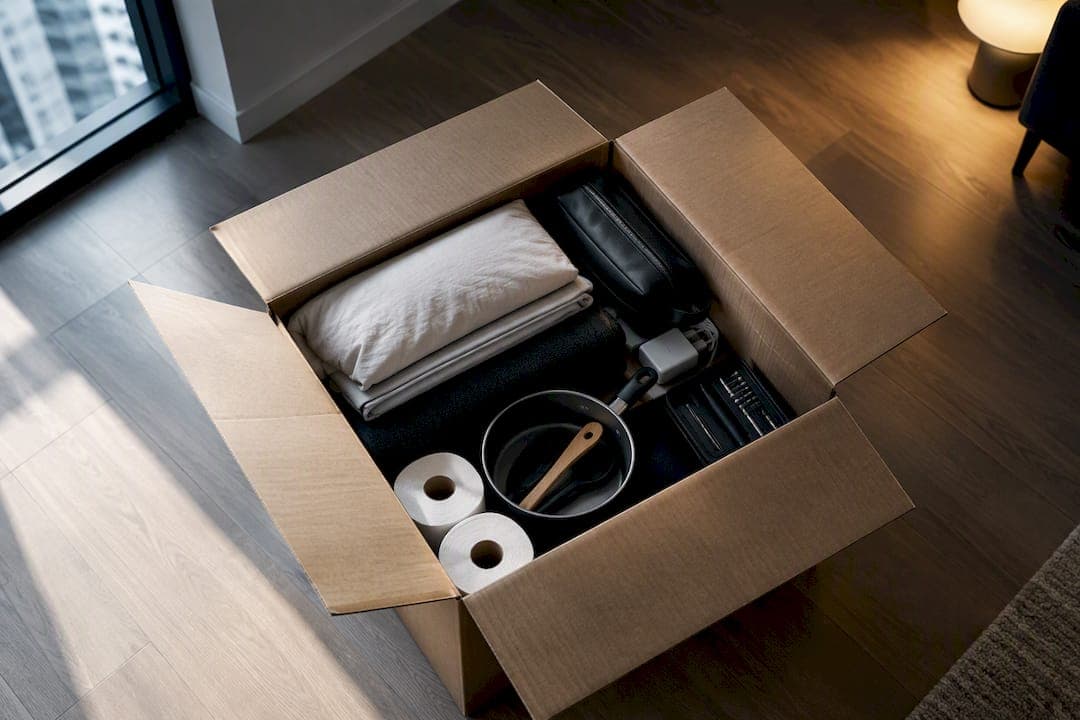
On move-in day, do these three things first: complete a move-in condition walkthrough and document it with timestamped photos, confirm access and logistics for your movers, and unpack your open-first box so you can sleep and eat without digging through boxes. Everything else on this move-in day checklist can wait until those three tasks are done.
TL;DR:
- Confirm elevator and parking reservations to avoid delays and extra charges caused by lack of access during move-in.
- Document pre-existing damage and utility status thoroughly during the move-in inspection to protect your security deposit.
- Pack an open-first box with essentials such as bedding, toiletries, and basic kitchen items to reduce first-night chaos.
- Separate hazardous materials and conduct safety checks for mold, lead, or asbestos risks before moving into a new residence.
- Keep essential tools and valuables in your personal vehicle to facilitate immediate setup and safeguard important items during the move.
Table of Contents
- Getting ready before move-in day arrives
- Hiring movers without insurance surprises
- Your move-in day checklist, hour by hour
- Protecting your deposit with a proper inspection
- What to pack in your open-first box
- Handling hazardous items and safety checks safely
- Basic tools to keep within reach on moving day
- Where most moves actually go wrong
- A fully prepared home when you'd rather not manage it yourself
- Where these checklists and rules come from
- Sources
- FAQ
Getting ready before move-in day arrives
A smooth move-in starts weeks before the truck shows up. The Government of Canada's moving guidance recommends planning 60 to 90 days ahead and budgeting carefully for the upfront costs that come with a new residence, including first and last month's rent, deposits, application fees, and utility setup charges.
- 60 to 90 days out: build a budget worksheet, measure your rooms and doorways, and start requesting quotes from movers or lining up helpers.
- 30 to 14 days out: reserve your building's elevator and parking, order packing supplies, transfer or book utilities and internet, and compare insurance options with your mover.
- 7 to 2 days out: pack your open-first box, label every other box by room, and confirm arrival times, permits, and building access windows.
A common planning guideline cited in federal moving and renting guidance recommends keeping rent at a moderate share of your gross income, which is useful when setting the rest of your move budget around it. Skipping this early planning stage is the most common reason people end up paying rush fees or improvising on moving day itself.
Hiring movers without insurance surprises
Movers rarely carry the coverage most people assume they do. The Office of Consumer Affairs' moving advice notes that a mover's basic liability coverage typically does not cover the full replacement value of your goods, so it's worth asking about separate replacement value protection before you sign anything.
- Ask for a Certificate of Insurance and a written explanation of what replacement value protection costs and covers.
- Build a room-by-room inventory and photograph valuable or fragile items before the movers pick them up.
- Reserve loading zones and elevator access ahead of time, and ask the crew to use floor and doorway protection.
Lack of reserved elevator or parking access is a common, avoidable cause of delays and extra charges on moving day, according to consumer moving advice. A short phone call to your building manager days in advance solves a problem that otherwise costs you hours.
Your move-in day checklist, hour by hour
Move-in day runs smoothly when you tackle tasks in the right order rather than reacting to whatever's in front of you.
- Complete the move-in walkthrough before a single box comes off the truck, and get a signed condition report or create your own timestamped record.
- Supervise the movers as they unload, and have them place the bed frame, mattress, and essential appliances first so you have room to work.
- Test utilities and major appliances, check that smoke and carbon monoxide alarms are working, and confirm boxes are labelled by room so unpacking goes faster later.
Once the truck is empty, a few quick checks save you a frustrating first night:
- Run the taps, flush toilets, and confirm the water heater is working.
- Flip every light switch and test outlets in each room.
- Check that heating or air conditioning responds to the thermostat.
Staying present for these early steps, rather than leaving the crew unsupervised, also matters if a dispute over damage comes up later.
Protecting your deposit with a proper inspection
A move-in condition inspection is your main protection when it comes time to get your deposit back. The Province of British Columbia's tenancy guidance explains that landlords must provide tenants a copy of the signed condition inspection report within a week, and tenants are entitled to at least two scheduling opportunities for the inspection.
- Bring a printed condition inspection form, or use the one your landlord provides.
- Take extensive photos and videos, timestamped, of every room, including closets, appliances, and fixtures.
- Note any existing damage, cleanliness issues, or appliance wear directly on the form before you sign anything.
- Ask the landlord to sign the report and give you a copy within the required timeline.
- If the landlord won't schedule the inspection, complete your own signed record and keep every piece of related communication.
This document becomes your primary evidence if a dispute arises over the state of the unit when you moved in.
What to pack in your open-first box
An open-first box, packed and loaded so it's the first thing off the truck, saves you from digging through a wall of boxes on your first night. Pack it with bedding, toiletries, phone chargers, a basic pot and a few utensils, toilet paper, a small tool kit, and any medications you need daily.
Unpack in this order once the box is open: make the bed, set up the bathroom essentials, unload basic kitchen items, get pet supplies out if you have animals, then work through the remaining boxes by their labelled room.
Pro Tip: Carry important documents, ID, and valuables with you in your own vehicle rather than loading them onto the moving truck.

Handling hazardous items and safety checks safely
Some items don't belong in a standard moving load at all. Paints, solvents, propane tanks, and other fuels should be set aside and taken to a municipal hazardous-waste drop-off site rather than packed with your other belongings, a point Health Canada's home safety guidance makes clear for anyone handling household chemicals during a move.
- Separate hazardous materials from your regular boxes well before moving day.
- Before starting any renovations, check for mould, lead paint, or asbestos risk, and call a certified inspector if you suspect any of them.
- Test or replace the batteries in every smoke and carbon monoxide detector as soon as you arrive.
Basic tools to keep within reach on moving day
A small kit of tools makes the first few hours in a new place far less frustrating. Keep a screwdriver set (both flathead and Phillips), an adjustable wrench, a hammer, a utility knife, and a tape measure in a bag you carry yourself rather than loading onto the truck.
Add a few rolls of packing tape, extra garbage bags, a flashlight or headlamp, work gloves, and a multi-outlet power bar, since new places rarely have enough outlets exactly where you need them. Furniture assembly often calls for an Allen key set, and most flat-pack pieces include one, but a spare set saves you from a stalled bed frame at midnight.

Picture hanging hardware, a small level, and felt furniture pads round out the kit if you plan to mount anything or protect new flooring right away. Keep this bag accessible, not buried in the truck, since you'll likely need it within the first hour of arriving.
Where most moves actually go wrong
The three mistakes that derail move-in day most often are skipping measurements, treating inspection documentation as optional, and underinsuring belongings before the movers arrive. Each one is preventable with a single afternoon of planning.
If you do one thing today, complete a move expense worksheet and pack your open-first box. Readers who want the entire process handled for them, rather than managed alone, may prefer a fully coordinated move-in setup instead.
— Veil
A fully prepared home when you'd rather not manage it yourself

Veil Concierge offers Veil Home Setups for clients who want a residence ready before they arrive rather than a checklist to work through themselves. Our Comprehensive Home Management service coordinates trades, scheduled property checks, and arrival preparation through a vetted network of local providers, so the bed is made and the essentials are in place before you walk through the door. Book a home setup through Veil Concierge and skip the moving-day logistics entirely.
Where these checklists and rules come from
This guide draws on federal moving guidance, the move expense worksheet, BC's condition inspection rules, and consumer mover insurance advice.
Sources
- Government of Canada — moving and renting guidance
- Province of British Columbia — move-in condition inspection
- Office of Consumer Affairs — moving advice
FAQ
What should I include on my moving day checklist?
Your checklist should start with a move-in condition walkthrough, confirmed elevator and parking access, and an open-first box with bedding and toiletries. From there, add utility and appliance testing, smoke and carbon monoxide alarm checks, and room-by-room unpacking by labelled box.
What to write on a move-in checklist?
Write down every pre-existing scratch, stain, or damaged fixture you find during the walkthrough, along with the date and time of the inspection. Include utility meter readings, a room-by-room inventory of valuables, and confirmation that alarms and appliances work.
How to prepare for moving day?
Start 60 to 90 days ahead with a budget worksheet, measuring your furniture and doorways, and booking movers, then reserve building access and confirm insurance in the final two weeks. Pack your open-first box in the last few days so it's ready to unload first.
What should I include on my first-time move-in checklist?
First-time renters should prioritize the move-in condition inspection, since the signed report protects your deposit, alongside confirming utilities are connected and testing smoke and carbon monoxide alarms right away. Keep a small tool kit and your open-first box within reach rather than buried in the truck.