
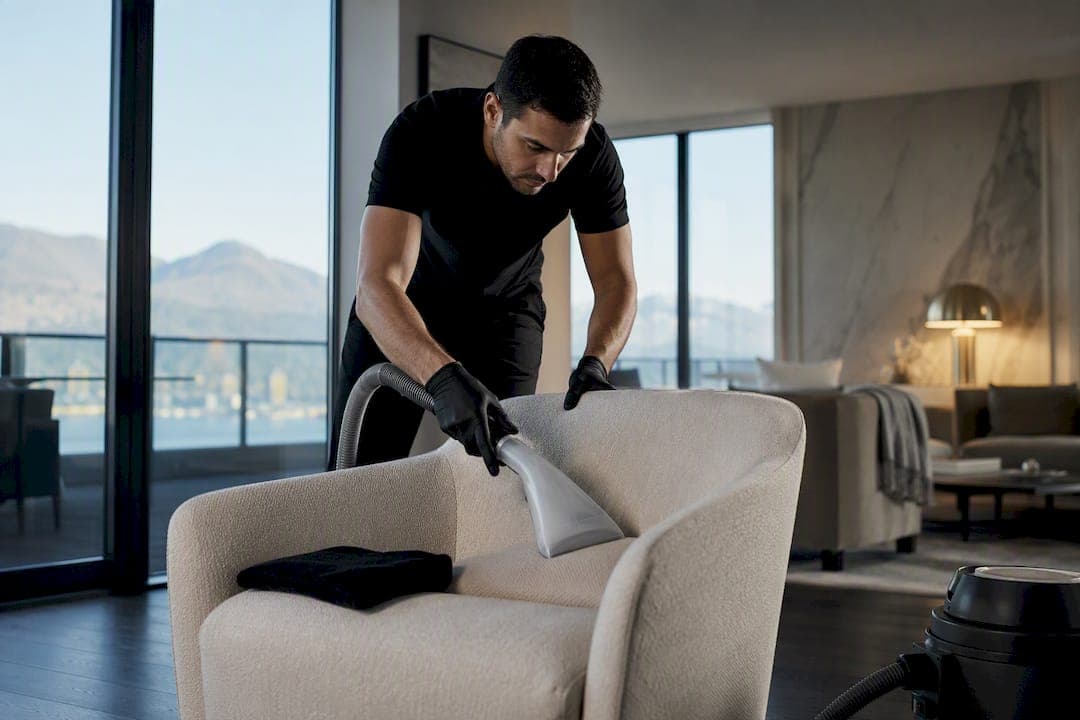
A concierge-arranged hypoallergenic clean is a clinical-grade service that uses HEPA-rated equipment, steam sanitation and materials-safe protocols to strip allergens from air, textiles and hard surfaces without damaging high-value finishes. It suits second homes, occupants with sensitivities, post-renovation resets and seasonal pollution spikes. Done properly, it delivers measurable allergen reduction alongside protected stone, wood and metal.
TL;DR:
- Proper hypoallergenic cleaning focuses on removing allergens from porous reservoirs like mattresses and upholstery using HEPA vacuums and steam sanitation, not just surface cleaning.
- Material-specific protocols require pH-neutral cleaners for stone, low-moisture methods for wood, and HEPA extraction for textiles to protect high-end finishes and fabrics.
- Coordinating HVAC filter maintenance and using correctly placed HEPA air scrubbers significantly reduce airborne pollutants beyond what surface cleaning alone can achieve.
- Frequency varies with occupancy and risks, with weekly for residents with allergies and seasonal, pre-arrival resets for second homes, especially during pollution spikes.
- Hiring a vetted professional service involves verifying insurance, a materials cleaning matrix, staff background checks, and oversight procedures, ensuring quality for luxury properties.
Table of Contents
- What does professional hypoallergenic home cleaning actually include?
- How do you protect stone, wood, metal and textiles while removing allergens?
- Why does HVAC and HEPA filtration coordination matter this much?
- How often should a hypoallergenic clean happen at each property?
- What should you require before hiring a hypoallergenic cleaning provider?
- Which cleaning techniques actually reduce allergen spread room by room?
- How do you keep allergen levels low between professional visits?
- Should you handle hypoallergenic cleaning yourself or hire it out?
- How does moisture control prevent allergen buildup?
- Veil Concierge perspective: coordinating hypoallergenic cleaning for luxury properties
- How Veil Concierge arranges hypoallergenic cleaning for your residence
- Sources
- FAQ
What does professional hypoallergenic home cleaning actually include?
A hypoallergenic clean is not a heavier version of standard housekeeping. It targets specific reservoirs where allergens concentrate and uses equipment designed to trap particles rather than redistribute them. Health Canada's guidance for indoor-air professionals notes that surface-level cleaning often recirculates fine particles instead of removing them, which is precisely why hospital-grade HEPA filtration vacuums and steam systems form the backbone of this service.
Bedrooms and soft furnishings get priority treatment. Mattresses, upholstered headboards and area rugs act as porous reservoirs for dust mites and dander, and true mitigation requires extraction and heat, not a quick pass with a canister vacuum.
Core methods a technician should bring to your residence:
- HEPA vacuuming with sealed filtration on mattresses, upholstery and carpeting
- Steam sanitation at temperatures that neutralize dust-mite allergens in fabric
- Portable HEPA air scrubbers run during and after the visit
- Fabric extraction and professional laundering of removable soft goods
- High-touch-point disinfection using colour-coded microfiber to avoid cross-contamination
Measurable outcomes matter here: a competent provider should be able to describe reduced dust reload between visits and document which rooms received extraction versus a lighter wipe-down. Post-construction cleanup or a wildfire smoke event calls for a different tier of response entirely, often specialised remediation with commercial-grade air scrubbing that goes beyond a routine maintenance visit.
How do you protect stone, wood, metal and textiles while removing allergens?
Allergen removal and finish protection pull in different directions unless the technician knows the material. A clinical approach to residential deep cleaning pairs sanitization-first methods with pH-appropriate products chosen for the surface in front of them, not a single all-purpose spray used everywhere.
Material-specific protocols worth confirming before any technician touches your home:
- Stone (marble, limestone, travertine): pH-neutral cleaners only, dry-buffing rather than wet mopping, no citrus or vinegar-based products that etch polished surfaces
- Wood and millwork: low-moisture methods, humidity-controlled drying, no standing water near seams or inlays
- Metal and hardware: non-abrasive cloths, residue-free finishing sprays that won't leave streaks on brushed nickel or unlacquered brass
- Textiles: HEPA extraction on upholstery, seasonal rotation of area rugs, and a professional laundering schedule for drapery and bedding
Pro Tip: Ask your provider for a written materials matrix before the first visit. It should list each surface type in your home, the approved products for it, and the method used. This one document tells you immediately whether a company understands luxury finishes or is treating your residence like a standard rental unit.
Why does HVAC and HEPA filtration coordination matter this much?
Because the air itself is often dirtier than what you can see on a countertop. Health Canada notes that indoor air can carry significantly more pollutants than outdoor air, thanks to trapped dust, pet allergens and volatile organic compounds with nowhere to disperse. Cleaning the floor without addressing the air moving through your ducts only solves half the problem.
HEPA-rated vacuums and portable HEPA air cleaners capture the fine particulate matter, including PM2.5 and pet dander, that a standard filter bag lets straight through. Sizing and placement matter: an undersized unit in a large great room won't cycle enough air to make a measurable difference, and one shoved in a corner behind furniture underperforms badly.
Coordination points to build into any hypoallergenic cleaning plan:
- Confirm HVAC filter type and swap cadence with your property manager, not just the cleaning crew
- Request a filter-change log so you can verify service dates rather than take someone's word for it
- Deploy HEPA scrubbers on-site during renovations, since construction dust management directly affects how much particulate settles into fabric and flooring afterward
- Increase air-scrubber runtime ahead of arrival if regional air quality has been poor that week
Properly sized HEPA systems reduce airborne contaminants meaningfully when placed and maintained correctly, which is the part most residential cleaning plans skip entirely.
How often should a hypoallergenic clean happen at each property?
Cadence depends on occupancy, not a fixed calendar. A primary residence with pets and regular guests needs a different rhythm than a Whistler second home that sits empty for weeks between visits.
- Weekly maintenance for primary residences with pets, children or occupants managing allergies or asthma
- Quarterly deep-maintenance for secondary homes used a handful of times a year, focused on textile extraction and air-scrubber runs to clear settled dust
- Pre-return resets timed 24 to 48 hours before arrival, so allergen levels drop before anyone walks in the door
- Event-driven adjustments after renovation work, during regional smoke or pollen spikes, or following a new pet joining the household
Coordinating this across multiple properties is exactly where a single point of contact earns its keep. As luxury home care providers point out, busy owners benefit when one contact manages scheduling, access protocols and vendor vetting rather than juggling separate crews and calendars themselves.
What should you require before hiring a hypoallergenic cleaning provider?
Luxury home cleaning standards call for documented competency, not just a polite phone manner and a van with a logo on it. Affluent clients should expect the same paperwork trail they'd request from any contractor working inside a high-value property.
Documents and proofs worth requesting before the first appointment:
- Proof of insurance and bonding, current and specific to the technicians entering your home
- A written materials-specific cleaning matrix covering every major surface type on the property
- Staff background-check summaries and, ideally, references from comparable residences
- A filter-change log for any HEPA equipment left running on-site
- A documented supervision or quality-assurance signoff process for each visit
Pro Tip: Colour-coded microfiber cloths and a signed QA checklist after every visit are inexpensive to provide and hard to fake. If a company balks at showing you either, treat that as a signal worth taking seriously.
Contracts should spell out scope, frequency, a confidentiality clause covering household staff and guests, and a clear damage procedure. A home management team that already coordinates trades and vendors for your property is well positioned to fold this vetting into existing oversight rather than starting from scratch.
Which cleaning techniques actually reduce allergen spread room by room?
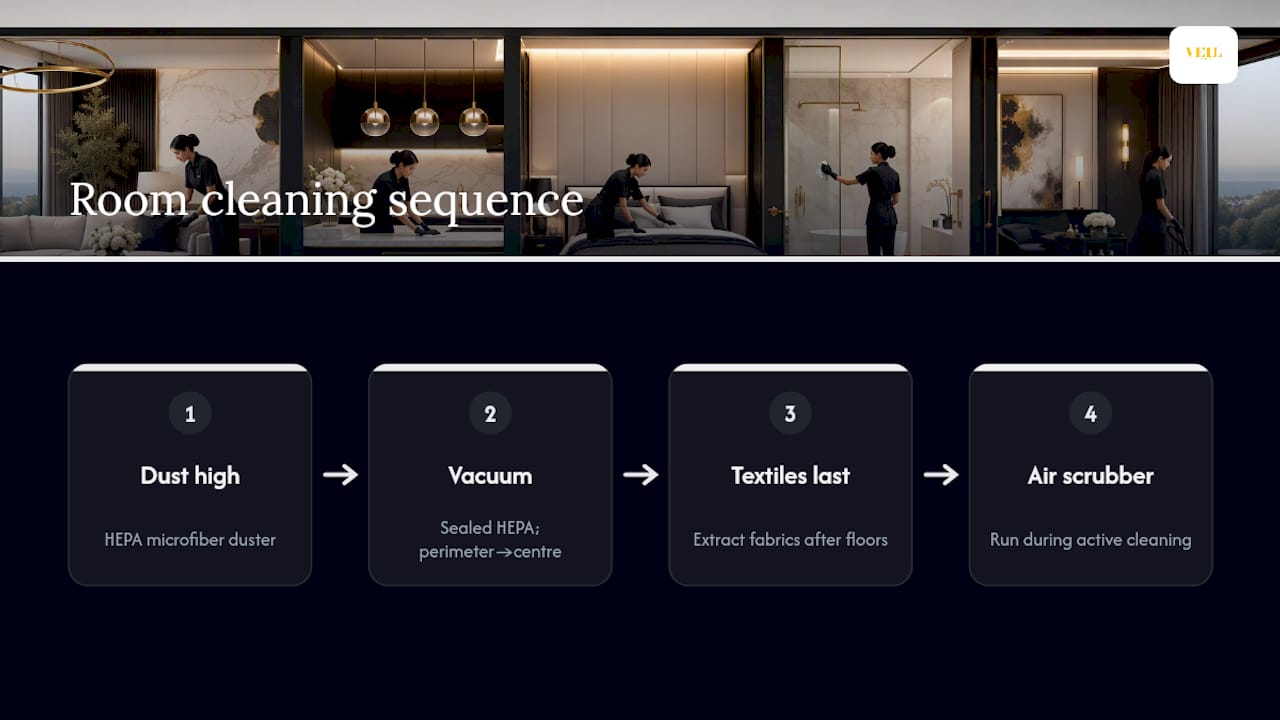
Sequence matters more than most owners expect. Working top-down and dry-to-wet within a room keeps disturbed particles from resettling on a surface you already cleaned.
The order a technician should follow: dust high surfaces (ceiling fans, crown moulding, light fixtures) first, using a HEPA-filtered microfiber duster that traps particles rather than scattering them into the air. Vacuum next, always with a sealed HEPA canister, working from the perimeter of a room toward the centre so displaced dust doesn't migrate into already-cleaned zones. Textiles come after floors, not before, since fabric extraction releases embedded particulate that a follow-up vacuum pass can capture.
Bathrooms and kitchens need a wet-then-dry sequence in reverse: disinfect first with a hospital-grade product on high-touch points, let it dwell for the manufacturer's stated contact time, then dry-buff to prevent residue buildup that attracts new dust. Bedding should be laundered on-site or removed for professional cleaning on the same day as extraction, not left for a separate visit, since re-exposing a freshly cleaned mattress to unwashed linens undoes much of the work.
Air scrubbers run during active cleaning, not just afterward. Particulate kicked up by vacuuming and dusting stays airborne for longer than most people assume, and a scrubber running mid-service catches it before it resettles on furniture you've already finished.
How do you keep allergen levels low between professional visits?
The gap between visits is where most allergen buildup happens quietly. A few habits protect the work your provider just did.
Remove shoes at the door. A meaningful share of outdoor particulate, pollen and residual pesticide tracks in on footwear, and a simple shoe-free policy near entry points cuts what reaches your floors before it ever needs vacuuming. Wash bedding weekly in hot water, since dust mites don't survive the heat and this single habit does more for bedroom air quality than almost anything else short of a full extraction. Run HEPA air purifiers continuously in bedrooms rather than switching them on occasionally.
Groom pets outside or in a dedicated space away from soft furnishings, and wipe paws after outdoor time. Keep humidity between 30 and 50 percent, since dust mites and mould both struggle outside that range, and a simple hygrometer on a nightstand tells you instantly whether your HVAC system is holding the line. Between full-service visits, a light daily tidy targeting entryways, pet zones and bedside tables prevents the kind of buildup that turns a quarterly deep clean into a full remediation job.
Should you handle hypoallergenic cleaning yourself or hire it out?
Some of this work is genuinely manageable without a professional crew. Daily surface wiping, regular vacuuming with a HEPA-filtered household unit, and weekly linen washing are all reasonable DIY tasks for an engaged homeowner.
Where DIY falls short is extraction depth and equipment grade. A consumer vacuum, even a good one, rarely matches the suction and filtration of commercial HEPA equipment, and household steam cleaners don't consistently hit the dwell temperatures needed to neutralize dust-mite allergens in upholstery. Stone and specialty finishes are the other risk zone: a well-meaning homeowner using the wrong product on honed marble can cause etching that costs far more to fix than a professional visit would have cost to prevent.
The practical split for most affluent households: keep the daily and weekly light maintenance in-house, and bring in a professional team for quarterly deep extraction, materials-sensitive surfaces, and anything tied to a second home you're not physically present to maintain. That division protects both your time and your finishes.
How does moisture control prevent allergen buildup?
Mould is one of the most stubborn indoor allergens, and it thrives anywhere moisture lingers longer than it should. Preventing mould growth starts with fixing leaks promptly and drying affected areas fully rather than letting a damp patch air out on its own schedule.
Bathrooms, laundry rooms and basements need the closest attention, since these spaces combine warmth and humidity in ways that favour mould growth within 24 to 48 hours of a leak or spill. Running exhaust fans during and after showers, checking under-sink plumbing quarterly, and keeping gutters clear so water doesn't back up against foundations all reduce the moisture load a hypoallergenic cleaning plan otherwise has to fight.
For secondary residences left unoccupied for stretches, a dehumidifier running continuously in problem zones, paired with a scheduled check from your property team, catches slow leaks before they become mould colonies hidden behind drywall. This is squarely where allergen strategy and property oversight overlap. Moisture control isn't a separate task from hypoallergenic cleaning. It's the maintenance layer that determines whether the cleaning holds.
Veil Concierge perspective: coordinating hypoallergenic cleaning for luxury properties
We scope hypoallergenic cleaning the same way we scope any property service: walk the residence first, catalogue every material, then build the plan around what's actually there rather than a generic checklist. A single point of contact means vetted technicians, contract oversight and one calendar for scheduling instead of three vendors who never talk to each other.
In practice this looks like a pre-arrival reset timed 48 hours ahead of a guest's flight, a seasonal cadence adjustment when wildfire smoke rolls into the region, and a dedicated post-renovation scrub before anyone walks back into a finished room. The value isn't the cleaning itself. It's never having to think about it.
— Veil
How Veil Concierge arranges hypoallergenic cleaning for your residence
A concierge service acts as a single point of contact to arrange vetted technicians, build materials-specific checklists, set schedules, and sign off on quality after visits to simplify coordination of cleaning crews, HVAC technicians, and property checks. That's the discretion and customization owners lose when they try to coordinate multiple vendors on their own across a primary residence and a second home.

We arrange hypoallergenic cleaning as a standalone service, folded into a pre-return package ahead of your arrival, or as part of ongoing comprehensive home management alongside routine property oversight. For a second home you're preparing for the season, our Veil Home Setups service handles the broader preparation work around it, from access coordination to supply management, so cleaning is one piece of a fully managed arrival rather than a separate call you have to make.
If your property needs a hypoallergenic clean scoped and scheduled, reach out through our concierge services page to start the conversation.
Sources
- Health Canada — Guidance for indoor-air professionals
- Beyond the surface: why a clinical approach to residential deep cleaning services is redefining home wellness — Strength Through Strides
FAQ
What is concierge-arranged hypoallergenic home cleaning?
It's a professional service that uses HEPA-grade vacuums, steam sanitation and materials-safe protocols to remove embedded allergens from air, fabric and surfaces, coordinated on your behalf by a concierge or property manager. It differs from standard housekeeping by targeting porous reservoirs like mattresses and upholstery rather than just visible surfaces.
How often should a second home get a hypoallergenic clean?
Quarterly deep-maintenance visits work for most secondary residences, with a pre-return reset scheduled shortly before arrival. Owners in high-pollen or wildfire-prone regions often add an extra seasonal visit to manage air-quality spikes.
Can I do hypoallergenic cleaning myself instead of hiring a service?
Daily tidying, HEPA-filtered vacuuming and weekly hot-water laundering are manageable on your own. Deep extraction on upholstery, dust-mite-level steam sanitation and stone-safe protocols generally require commercial equipment and training that most households don't have on hand.
Does Veil Concierge arrange hypoallergenic cleaning directly?
Veil Concierge arranges and supervises hypoallergenic cleaning through vetted technicians as a standalone service or as part of broader property management. Current pricing and package details are available directly through our site.
What documents should I request before hiring a cleaning provider?
Ask for proof of insurance, a written materials-specific cleaning matrix, staff background-check summaries and, if applicable, a filter-change log for HEPA equipment. These items help identify providers built for luxury finishes rather than standard housekeeping crews.