
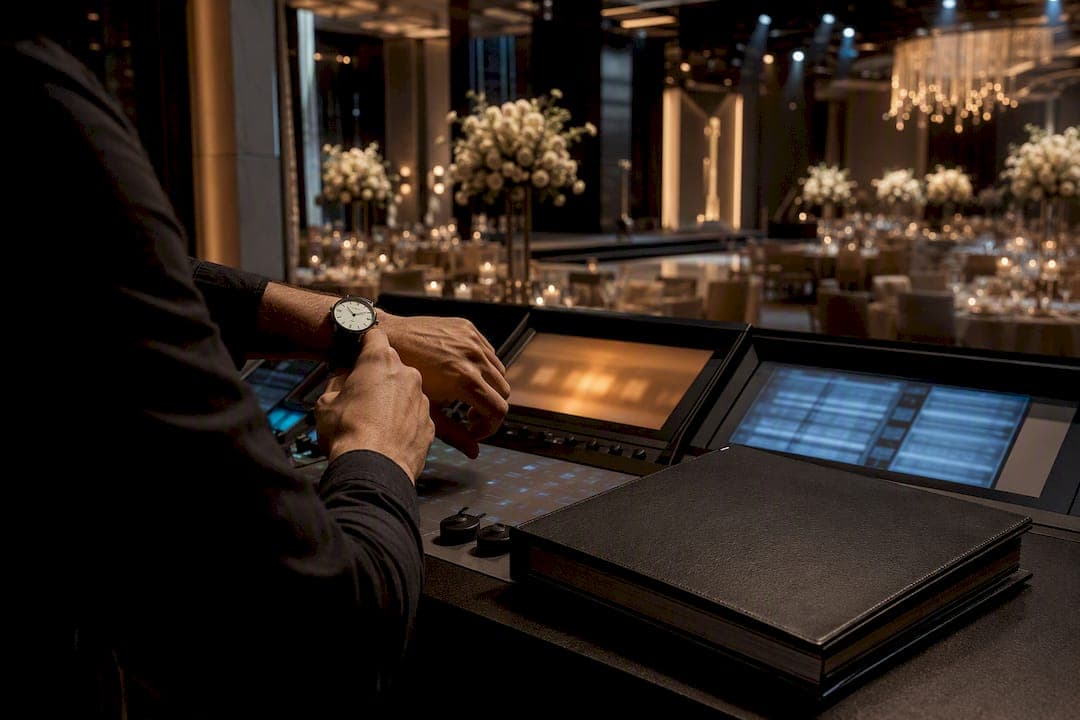
An event planning timeline is a phased schedule of tasks, owners, and deadlines that runs from the date you confirm a venue through post-event closeout. Large events typically need 6 to 12 months; smaller private parties can run on 8 to 16 weeks. The first action, before anything else goes on the calendar, is to lock the date and name one person as the master timeline owner.
TL;DR:
- Starting vendor bookings and sending invitations within four to six weeks is critical for small events, as large conferences require at least six months.
- A single owner must oversee the master timeline, including decision gates, contingency reserves, and weekly check-ins to prevent delays and ensure accountability.
- Compress timelines by parallelizing tasks such as vendor outreach and guest communication, while never skipping essential steps like venue confirmation and permits.
- The run of show should be built separately from the master timeline and finalized in the last month to guide on-the-day execution effectively.
- Using a shared, real-time document organized by phases ensures everyone stays aligned and prevents version confusion that can cause missed deadlines.
Table of Contents
- What does an event planning timeline actually cover?
- Master timeline vs run of show: what's the difference?
- How do you compress a timeline when you're short on time?
- What keeps a timeline from falling apart?
- What should a one-page event timeline template include?
- How does Veil Concierge approach timeline ownership for private events?
- Ready to hand your timeline to someone else?
- Sources
What does an event planning timeline actually cover?
A working event planning timeline is a phased checklist with a named owner and a due date attached to every line. It isn't a wish list of tasks in rough order. Treat it as a dependency network instead: one delayed vendor contract or venue confirmation cascades into every task that depends on it, which is why mapping dependencies before deadlines matters more than most planners assume.
Here's the phase breakdown that applies whether you're running a 400-person conference or a private anniversary dinner, scaled to size.
- 12+ months out: Lock the date, confirm the venue, set the total budget, and appoint the master timeline owner. This is also when you block your own calendar for known blackout periods, like family travel or work deadlines that could collide with critical milestones later.
- 9 to 12 months out: Book major vendors, headline entertainment, or keynote speakers. Draft the guest list or attendee target and open early invitations if the event depends on outside travel.
- 6 to 3 months out: Finalize catering, décor, AV, and staffing contracts. Send formal invitations. Confirm permits and insurance if the venue or activity requires them.
- 1 to 3 months out: Confirm final headcounts, seating or floor plans, and vendor arrival windows. Send reminder communications. Reconfirm every deposit and contract in writing.
- Month of: Finalize the run of show, confirm rehearsal times, and walk the venue with your key vendors.
- Week of: Confirm deliveries, staffing shifts, and load-in times. Print or digitize the run of show for every team lead.
- Day of: Execute against the run of show, not the master timeline. Assign a single point of contact for real-time decisions.
- Post-event: Schedule debriefs, vendor payment closeout, and lead or thank-you follow-up. These belong on the calendar in advance, not left as loose cleanup tasks nobody owns once the event is over.
Budget planning runs alongside every phase above it, not as a separate exercise at the end. Set your total budget in the 12+ month phase and hold back a 10% contingency reserve for the vendor price increases and last-minute additions that show up in almost every event, regardless of size.
Master timeline vs run of show: what's the difference?
The master timeline manages the project: budget tracking, vendor contracts, and approvals across months, owned by one accountable person from day one. The run of show is a minute-by-minute execution document built in the final weeks and used by whoever is calling the event on the day.
- Master timeline: phases, owners, budget lines, decision gates, contract dates.
- Run of show: start and end times, cues, vendor arrival windows, staff assignments, contingency notes.
- The master owner and the show caller can be the same person for a small event, but they answer to different questions: one protects the project, the other protects the minute.
Before you hand off, confirm the run of show includes vendor contact numbers, backup contacts for every critical role, and the exact cue sequence for anything time-sensitive, like speeches or entertainment changeovers.
Pro Tip: Build the run of show as a separate document from the start, even if it's blank for months. Trying to extract a minute-by-minute schedule out of a sprawling master timeline the week before the event wastes hours you won't have.
How do you compress a timeline when you're short on time?
Compression works by protecting serial dependencies and parallelizing everything else. Venue booking and permitting can't happen faster just because you're rushed; approvals and vendor outreach often can run side by side instead of one after another.
- Never skip: Venue confirmation, permits, and any contract with a cancellation deadline. These are the tasks that block everything downstream.
- 6-month runway: Compress the 9 to 12 month phase into 4 to 6 weeks. Book vendors and send invitations in the same window instead of sequentially.
- 3-month runway: Combine vendor booking and guest communication into a single sprint. Use vendors with existing relationships or faster turnaround over ones requiring lengthy proposals.
- 6-week runway: Prioritize venue, catering, and any legally required permit first. Everything else, décor, favours, printed materials, becomes a substitute-or-skip decision made in week one, not week five.
Lead-time research confirms smaller events genuinely can run on 4 to 16 weeks; large conferences rarely compress below 6 months without cutting speaker quality or venue options.
What keeps a timeline from falling apart?
Every phase above needs a decision gate: a defined point where the approver, the definition of "done," and the cleared dependencies are all explicit, not assumed. No gate, no accountability, and that's when timelines quietly slip.
- One person owns the master timeline; workstream leads (catering, AV, guest communications) own their lane and report into that person.
- Hold the 10% budget contingency in reserve and don't touch it for anything but genuine overruns.
- Build 15 to 30 minutes of slack into the run of show for every 2 to 3 hours of programming.
- Set a weekly check-in cadence starting at the 3-month mark, moving to daily standups during event week.
- Keep one shared document as the single source of truth. Version confusion between three copies of a spreadsheet causes more missed deadlines than any single vendor delay.
What should a one-page event timeline template include?
A usable template fits on one page, organized by phase, with three columns: task, owner, and due date, plus a checkbox for approval status.
- 12+ months: Date locked, venue signed, budget set. Owner: master timeline owner.
- 6 to 3 months: Vendor contracts signed, invitations sent. Owner: workstream leads.
- Week of: Run of show distributed, deliveries confirmed. Owner: show caller.
- Post-event: Vendor payments closed, debrief scheduled. Owner: master timeline owner.
Host it somewhere your whole team can see updates in real time, a shared Google Sheet, Asana board, or Notion page all work, since the format matters less than everyone checking the same version. Use the same document for status reporting: colour-code by gate status instead of writing separate update emails every week.
How does Veil Concierge approach timeline ownership for private events?
We run bespoke events on the same single-owner model outlined above: one accountable coordinator, one master timeline, one run of show, from the first vendor call to post-event closeout. A recent client relocation dinner needed vendor orchestration, venue walkthroughs, and a full run of show built inside six weeks, without a single missed cue.
— Veil
Ready to hand your timeline to someone else?
If you'd rather not be the one chasing vendor confirmations and building the run of show at midnight, that's precisely the gap Veilconcierge closes for private and bespoke events. Where a typical planner or venue coordinator hands you a checklist and expects you to chase the follow-through, Veilconcierge assigns one accountable coordinator who owns the master timeline, the vendor contracts, and the day-of execution end to end.

Engagement starts with a consultation to understand your event and timeline, followed by a written brief and a proposed master timeline built around your date and budget, contingency included. From there, we own vendor coordination, decision gates, and the run of show so you're not managing a spreadsheet on top of your actual guest list. If you're planning a private dinner, milestone celebration, or a bespoke event with a tight runway, visit the event planning page to start your consultation and get a proposed timeline built around your date.
Sources
- Event budgeting
- Event production timeline: A 12-month guide
- Dependencies diagram
- Michelle Edgemont design advice