
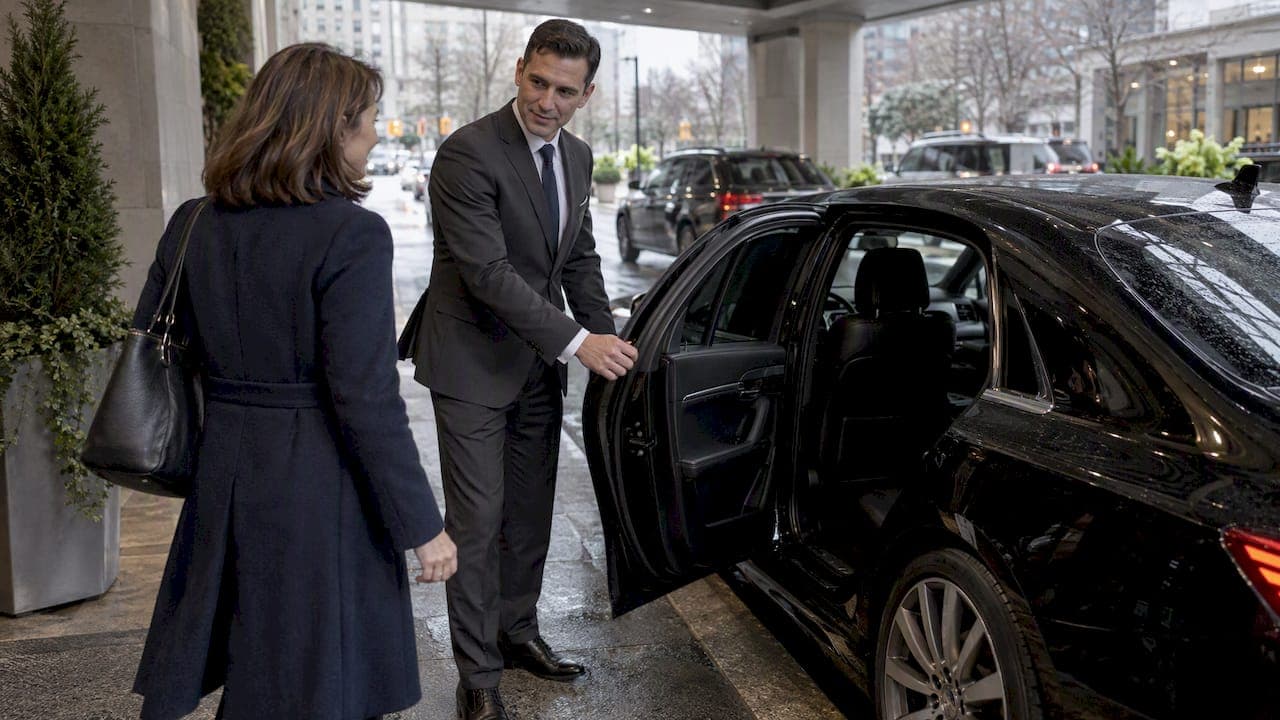
Good chauffeur etiquette comes down to a few habits: greet your driver politely, be ready a few minutes before pickup, let them handle your doors and luggage unless you prefer otherwise, keep personal calls brief, and tip appropriately at the end of the ride. These small courtesies, paired with an understanding of rules like the Accessible Transportation for Persons with Disabilities Regulations, shape a smoother experience for everyone, including providers like Veil Concierge.
TL;DR:
- Canadian transportation personnel must receive role specific accessibility training within 60 days of taking on those duties, and carriers must consult people with disabilities.
- When you request accessibility support, personnel must provide priority boarding, transfer assistance, and an individualized safety briefing; disclose mobility or service dog needs when booking.
- Before adding a gratuity, check whether it is included, especially on corporate accounts or group bookings; cash in Canadian dollars is often easiest.
- Share route changes, extra stops, arrival deadlines, and timing constraints at booking, since advance notice gives chauffeurs time to plan routes and buffers.
- In British Columbia, commercial drivers may refuse service for disorderly conduct, smoking, or similarly disruptive behavior, and must hold appropriate licenses.
Table of Contents
- Essential chauffeur etiquette: greetings, doors, luggage and phone use
- Tipping, payment and gratitude: how much to tip and what methods work best
- Dress code and presentation: what chauffeurs wear and what to expect
- Respecting female chauffeurs and other gender considerations
- Accessibility and legal expectations: training and passenger assistance
- Handling special requests and customization during rides
- Managing waiting times and time sensitivity
- Communication etiquette before and after service
- Emergency procedures and passenger safety protocols
- Etiquette for multiple passengers or groups
- A concierge perspective on chauffeured travel etiquette
- How Veil Concierge can help with private chauffeurs
- FAQ
- Sources
Essential chauffeur etiquette: greetings, doors, luggage and phone use
A chauffeured ride starts the moment you step outside, and first impressions set the tone for the whole trip. A simple nod, a hello, or confirming the driver's name goes a long way. Most chauffeurs will greet you first and open the door, so a brief thank-you is all that's needed in return.
Luggage and doors are part of the job, not a favour. Chauffeurs are trained to handle bags and open doors as a matter of course, so waving them off repeatedly can create an awkward moment rather than save them effort. If you'd rather manage your own bag, a quick "I've got this one, thanks" works fine.
Conversation should generally follow your lead. Some passengers want quiet time to prepare for a meeting or decompress after a flight; others enjoy a chat about traffic or the city. A chauffeur typically matches your tone, so a short "I've got some calls to make" or "happy to just relax" sets expectations without feeling abrupt.
Phone use deserves its own mention. Short calls are fine, but longer business conversations are better kept quiet or taken with headphones rather than on speaker. Asking before photographing or filming inside the vehicle is a simple courtesy, especially when the chauffeur or another passenger might be in frame.
- Confirm the driver's name and greet them when you get in.
- Accept or politely decline luggage help with a short, clear phrase.
- Keep speakerphone calls to a minimum and use headphones for longer ones.
- Ask before taking photos or video inside the car.
Pro Tip: If you need total silence for work, say so at pickup rather than partway through the ride, it's easier for the chauffeur to plan the route and timing around it.
Tipping, payment and gratitude: how much to tip and what methods work best
Tipping culture in Canada treats gratuities as a meaningful part of a driver's income, and chauffeured transportation is no exception. Guidance on tipping in Canada suggests tipping whenever someone personally serves you, carries your belongings, or makes your trip noticeably smoother, which covers most chauffeured rides.
Cash in Canadian dollars is often the easiest way to tip, and tipping guidance notes that larger groups may already have gratuities built into the bill, so it's worth asking before adding more. A modest tip can unintentionally read as dissatisfaction, while skipping a tip entirely is generally reserved for a genuinely poor experience.
- Confirm whether gratuity is already included, especially on corporate accounts.
- Hand cash over discreetly at the end of the ride, or use an envelope for a more formal occasion.
- Say thank you directly, a verbal acknowledgment matters as much as the tip itself.
If your booking runs through a corporate account or a concierge service, ask ahead of time how gratuities are handled so you're not duplicating or missing a tip the company has already arranged.
Dress code and presentation: what chauffeurs wear and what to expect
Professional chauffeurs typically present in a dark suit or tailored uniform, polished shoes, and minimal jewellery, with grooming kept neat and understated. This consistency matters for discretion: a well-presented driver blends into formal settings without drawing attention, which is part of the value of booking a higher-end service.
- Expect a dark suit or company uniform, clean and pressed.
- Shoes are typically polished, and accessories are kept minimal.
- Grooming is neat, with an emphasis on a low-key, professional look.
Formality tends to rise for occasions like weddings or red-carpet events, where a chauffeur may coordinate attire with the event's dress code. For everyday airport transfers or business travel, standard professional dress is the norm, and clients rarely need to match any particular dress code themselves unless the occasion calls for it.
Respecting female chauffeurs and other gender considerations
Female chauffeurs typically wear the same category of professional attire as their male counterparts: tailored suits or uniforms, practical and polished footwear, and minimal jewellery, chosen for safety and a neat appearance rather than anything decorative. The standard of service and presentation stays the same regardless of who's driving.
Clients should extend the same professional courtesy to every chauffeur, which means avoiding personal or gendered comments and directing any requests, from route changes to temperature preferences, the same way you would with any professional service provider. If you need assistance with a bag or a door, simply ask, the request is no different than it would be with any other chauffeur.
Accessibility and legal expectations: training and passenger assistance
Chauffeurs and transportation personnel working in Canada operate under specific training obligations. Under the Accessible Transportation for Persons with Disabilities Regulations, personnel must receive training suited to their role, including assistance with mobility aids, within 60 days of taking on those duties. Carriers are also required to consult people with disabilities when designing that training.
The regulations spell out specific duties: priority boarding, help transferring between a mobility aid and a seat, and an individualized safety briefing when requested. Dialogue at the time of booking is part of the expectation, not an afterthought.
Carriers must provide the assistance a passenger requests without delay, and personnel must be trained to deliver it safely and respectfully.
In British Columbia, the Passenger Transportation Regulation requires commercial drivers to hold the appropriate licensing and prohibits operating a vehicle while impaired. The same rules allow a driver to lawfully refuse service for disorderly conduct, smoking, or similarly disruptive behaviour.
- Disclose mobility needs or service dog arrangements when you book, not at pickup.
- Expect a short dialogue about seating, luggage, or transfer assistance if you request it.
- Understand that disruptive or unsafe behaviour can be grounds for a driver to end the ride.
Handling special requests and customization during rides
Most chauffeur services are built around flexibility, but the easiest way to get a customized experience is to ask early. Route preferences, specific stops, a particular temperature setting, or music choice are all reasonable requests, and chauffeurs generally handle them without issue when given a little notice.
For anything more involved, such as multiple stops, a specific arrival time for an event, or a request to avoid a particular road or neighbourhood, mentioning it at booking rather than mid-ride gives the chauffeur time to plan. Chauffeurs who know your preferences in advance can often anticipate small details, like having water on hand or adjusting the climate before you get in.
If a request changes once you're already on the road, a clear, calm explanation works better than a vague one. "Can we stop briefly at the pharmacy on the way" is easy to act on; "can we make a quick detour somewhere" leaves the chauffeur guessing. Last-minute changes are usually manageable, but they're easier to accommodate gracefully when the request is specific.

Clients who book through a concierge service can often route these preferences through a single point of contact ahead of time, which removes the need to repeat instructions to each new driver. That's a meaningful advantage for recurring travel or regular appointments where consistency matters.
Managing waiting times and time sensitivity
Punctuality works both ways in a chauffeured relationship. Chauffeurs are typically expected to arrive a few minutes early and wait quietly, but passengers also owe a reasonable effort to be ready close to the scheduled time, particularly for airport pickups or tightly scheduled business days.
Most services build a grace period into pickups, especially at airports where flight delays and customs lines are unpredictable. If you know you'll be significantly late, a short message to your provider lets the chauffeur adjust rather than wait without context. The same courtesy applies in reverse: if a driver is delayed by traffic, a quick update rather than silence keeps the trip on track.
For multi-stop itineraries or a day of back-to-back meetings, flagging the schedule in advance helps the chauffeur plan routes and buffer time between stops. Chauffeurs who understand the full itinerary tend to manage traffic and timing far more smoothly than those reacting stop by stop.
Communication etiquette before and after service
Clear communication starts with the booking itself. Confirming pickup time, location, number of passengers, and any special requirements in writing, whether by text, e-mail, or an app, avoids confusion later and gives the chauffeur or dispatch team time to prepare.
If plans change, a short, timely message is far more useful than a last-minute phone call once the driver is already en route. Letting your provider know about a delay, a change in pickup location, or an extra stop as soon as you know about it keeps the ride running smoothly and respects the chauffeur's schedule for other clients.
After the ride, a brief note of thanks, whether in person or through the booking platform, is appreciated but not required. If something went particularly well, or if there's feedback that would help future trips, most concierge or chauffeur services welcome that information directly rather than through a public review, especially for recurring clients who want consistency on future bookings.
Emergency procedures and passenger safety protocols
Chauffeurs are trained to prioritize passenger safety above all else, which includes knowing how to respond to a medical issue, a mechanical problem, or an unexpected road hazard. If something feels wrong mid-ride, whether it's discomfort, an urgent need to stop, or a safety concern, say so immediately rather than waiting until the destination.
Seatbelts are non-negotiable, and chauffeurs will generally ask passengers to buckle up before the vehicle moves. In the rare case of a breakdown or accident, professional drivers are trained to move passengers to a safe location first and handle the vehicle situation second.
If you have a medical condition that could require quick action during a ride, mentioning it at booking, the same way you'd disclose a mobility need, allows the provider to prepare. This isn't about sharing more than you're comfortable with, just enough so the chauffeur knows what to watch for and how to respond if needed.
Etiquette for multiple passengers or groups
Group bookings add a layer of coordination that benefits from a little advance planning. Designating one point of contact for communication with the chauffeur, confirming pickup location, and agreeing on stops ahead of time prevents the back-and-forth that can slow a group down.
Inside the vehicle, basic courtesy applies: let the chauffeur know if the group includes someone who needs extra space, a specific seat, or help boarding. For formal events like weddings or corporate functions, a short briefing beforehand on timing and seating order helps the chauffeur manage the group smoothly rather than improvising on the spot.
Tipping for groups is often handled by whoever organized the booking, so confirming who's responsible beforehand avoids an awkward moment at drop-off. A single, clear thank-you from the group, rather than several passengers independently trying to tip, tends to be simpler for everyone.
A concierge perspective on chauffeured travel etiquette
When we arrange chauffeured transportation for clients, we brief the driver on preferences, timing, and any assistance needs well before pickup, so the ride feels effortless rather than scripted. Clients who note special instructions, whether it's a mobility requirement or a preferred arrival time, when they book give us the room to plan properly and keep everyone informed along the way.
— Veil
How Veil Concierge can help with private chauffeurs
We arrange private chauffeur services through a vetted network of local operators, handling the coordination so you don't have to repeat preferences every time you book. Whether it's a single airport transfer or an hourly chauffeur booking, a formal event that calls for a more elevated vehicle through our luxury transportation options, or a recurring arrangement for business travel, we act as the single point of contact who keeps timing, special requests, and accessibility needs organized from booking to drop-off.

- We confirm pickup details, vehicle type, and any assistance requirements directly with the operator on your behalf.
- We relay special instructions, dress code expectations, or event-level formality so nothing gets lost between bookings.
- We keep gratuity and billing details clear upfront, particularly for corporate or recurring accounts.
Chauffeur Services pricing ranges from $128.13 to $410 CAD per hour, depending on vehicle and service level. If you'd like a chauffeur arranged for an upcoming trip or event, book a chauffeur with us and let us handle the details.
FAQ
Why do chauffeurs walk around the front of the car?
Chauffeurs typically walk around the front of the vehicle to check the approach for obstacles, confirm it's safe for you to cross, and give the car a quick visual check before opening your door. It's a small safety habit that also positions them to greet you properly at the curb.
Am I supposed to tip my chauffeur?
Tipping is customary and often forms a meaningful part of a chauffeur's income, so a gratuity at the end of the ride is generally expected unless one is already included in your bill. Tipping guidance for Canada suggests confirming whether a service charge is already applied, especially for group bookings or corporate accounts, before adding your own tip.
What is the dress code for a chauffeur?
Professional chauffeurs typically wear a dark suit or company uniform with polished shoes and minimal accessories, keeping grooming neat and understated. More formal events, like weddings, may call for a more elevated level of dress, while standard transfers call for the usual professional look.
What does a female chauffeur wear?
Female chauffeurs generally wear the same category of professional attire as male chauffeurs: a tailored suit or uniform, practical and polished footwear, and minimal jewellery. The emphasis is on safety and a neat, professional appearance rather than any difference in standard.
Can a chauffeur refuse to help with my mobility aid?
No, under the Accessible Transportation for Persons with Disabilities Regulations, trained personnel are required to assist with mobility aids and other accessibility needs when requested. Letting the provider know about your requirements at booking helps them prepare the right vehicle and support in advance.
Sources
- Personnel training and assistance to travellers with disabilities: A guide — Transportation Canada
- SOR/2019-244 — Accessible Transportation for Persons with Disabilities Regulations — Justice Laws Website
- Passenger Transportation Regulation — BC Laws
- How much to tip in Canada — Go Kanada Travel